

In a significant procedural ruling, the Supreme Court of India has allowed a hotel owner to be heard in an ongoing dispute over building regulations in Punjab. The Court held that a party directly affected by an interim order cannot be kept out of proceedings where that order is being applied against it.
Background of the Case
The dispute arose after M/s Chopra Hotels Pvt. Ltd., owner of a property in Jalandhar, faced sealing and demolition action by municipal authorities.
The company argued that its building complied with the newly notified Punjab Unified Building Rules, 2025, particularly regarding front setback requirements. However, the authorities relied on an interim order passed by the Punjab and Haryana High Court on December 24, 2025, which had kept certain provisions of the 2025 Rules in abeyance.
Read also:- No Double Fine for Same Transaction: Supreme Court Orders Release in NDPS Case After 11 Years in Jail
As a result, the appellant’s revised plans and representations were rejected, and demolition proceedings were initiated.
Seeking relief, the appellant attempted to intervene in the main writ petition challenging the 2025 Rules but was denied impleadment by the High Court on February 26, 2026.
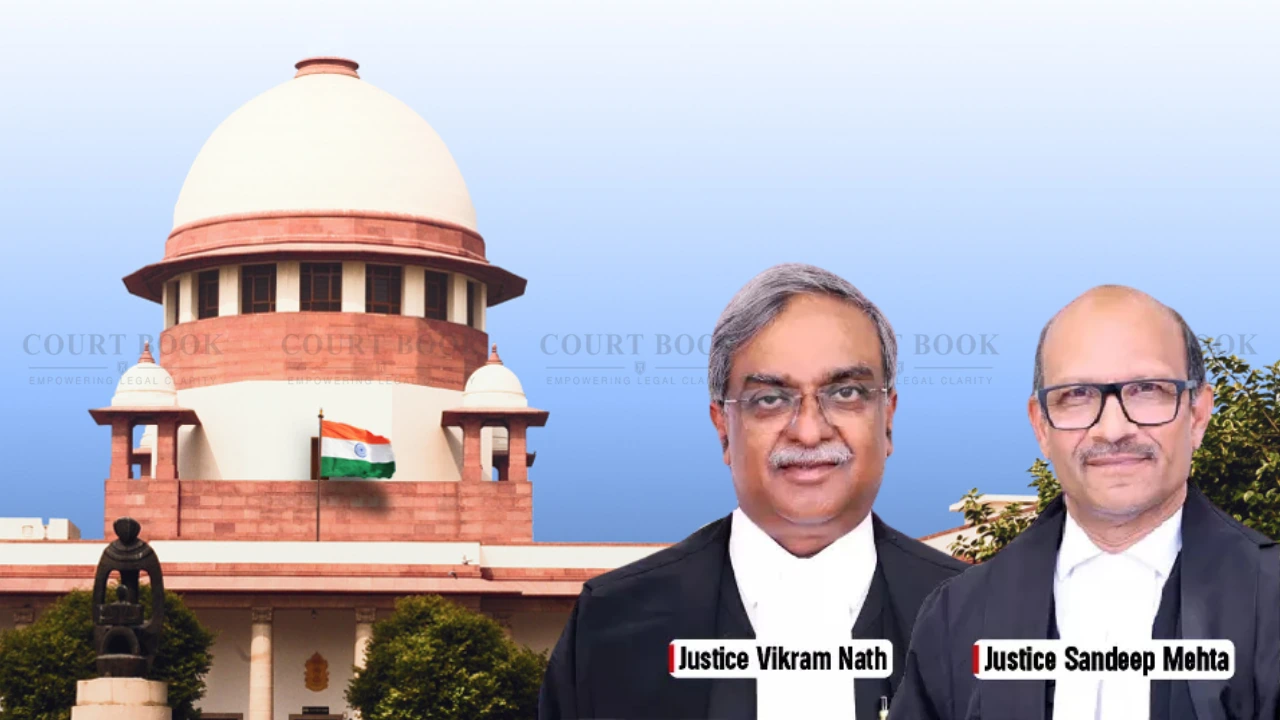
A bench led by Justice Vikram Nath examined whether the High Court was right in refusing to hear the appellant.
The Court emphasized that even in writ proceedings, fairness requires that parties directly impacted by an order should be heard. It noted that the interim order of December 24, 2025 was not merely theoretical but had real consequences for the appellant’s property.
“The record clearly shows that the interim order… was being relied upon by the authorities to the detriment of the appellant,” the bench observed.
Rejecting the High Court’s view, the bench said the appellant could not be treated as a “stranger” to the proceedings. At the very least, it was a “proper party” whose presence would help the court decide the matter more effectively.
The Court also found fault with the refusal to clarify the interim order, noting that the appellant’s grievance arose directly from how that order was being interpreted and applied.
The bench carefully addressed multiple parallel proceedings, including appeals and revision petitions related to demolition and building plan rejection.
It clarified that while these matters are interconnected, they are legally distinct and should not be unnecessarily delayed. The Court observed that keeping such proceedings pending indefinitely could make legal remedies ineffective.
At the same time, it refrained from expressing any opinion on whether the appellant’s building actually complies with the 2025 Rules.
Read also:- No Pension Without 20 Years’ Service: Supreme Court Dismisses SBI Employee’s Claim
Decision
Setting aside the High Court’s order dated February 26, 2026, the Supreme Court allowed the appeal.
The Court directed that:
• The appellant be impleaded as a party in the pending writ petition before the High Court.
• The High Court may proceed independently with the main writ case.
• Related proceedings, including appeals and revision petitions, be heard together but decided on their own merits.
• Status quo be maintained regarding the property until those proceedings are concluded.
The bench made it clear that all substantive issues remain open for adjudication.
Case Details
Case Title: M/s Chopra Hotels Private Limited vs Harbinder Singh Sekhon & Ors.
Case Number: Civil Appeal arising out of SLP (C) Nos. 9321–9322 of 2026
Court: Supreme Court of India
Bench / Judges: Justice Vikram Nath and Justice Sandeep Mehta
Decision Date: April 8, 2026
Download Judgment

