

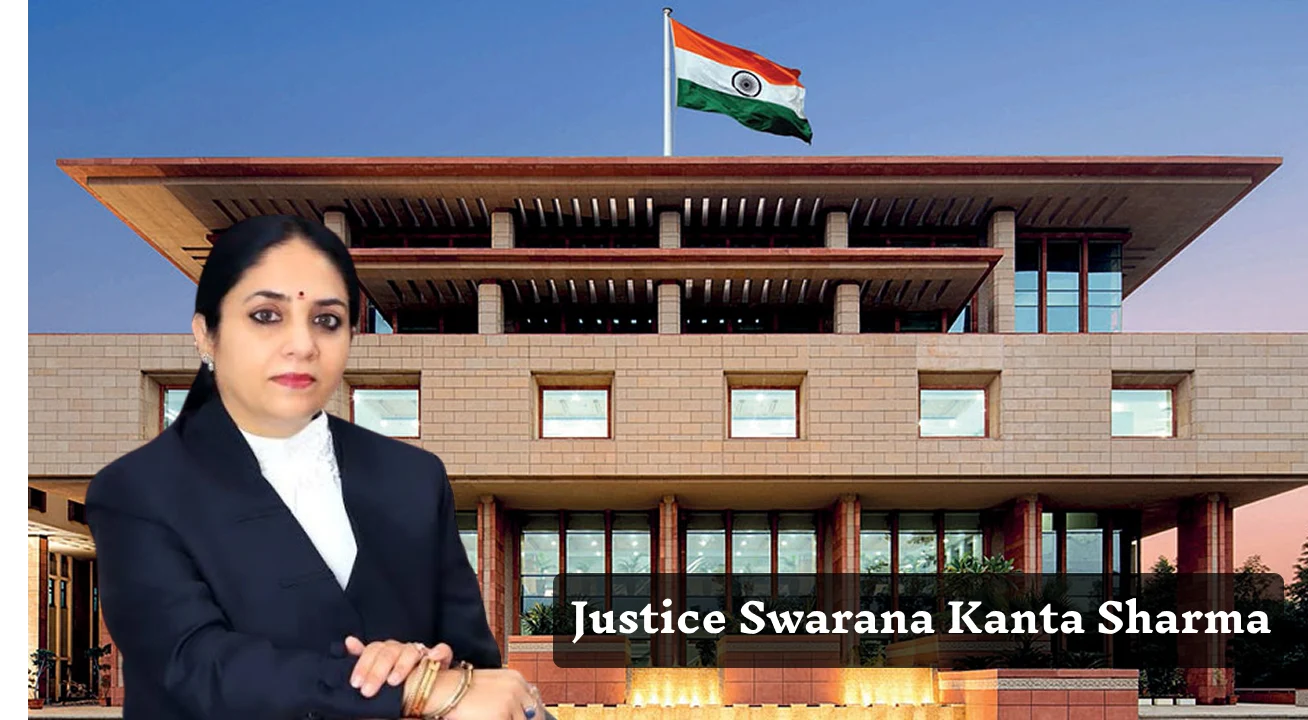
The Delhi High Court has ruled that interim maintenance granted to a wife and her two daughters must be payable from the date they filed their maintenance petition, not from a later date fixed by the Family Court. The Court modified an earlier order of the Family Court and directed that the maintenance be calculated from March 2016, when the petition was first filed.
Background of the Case
The dispute arose between Sanyogita Gupta and her husband Ashok Kumar Gupta. The couple married in 2001 according to Hindu rites and later had two daughters. Over time, marital relations deteriorated, and the wife began living separately with the children.
Read also:- Supreme Court Orders SSC and CAG to Consider PwD Candidates for Group C Posts in Auditor Recruitment Dispute
In 2016, the wife approached the Family Court under Section 125 of the Criminal Procedure Code (Cr.P.C.), claiming that the husband had neglected to provide financial support despite having sufficient income. She told the court that she had no independent income and depended on loans and assistance from relatives to manage household expenses and the children’s education.
In September 2019, the Family Court granted interim maintenance of ₹5,500 per month to each petitioner - the wife and the two daughters - totaling ₹16,500 per month.
However, the court directed that the payments would begin only from 1 January 2019, rather than from the date the maintenance petition was filed in March 2016. This part of the order was challenged by the wife and daughters before the Delhi High Court.
Read also:- Animal Welfare Case: Punjab & Haryana HC Flags Poor Diet for Shelter Dogs at Chandigarh SPCA
The petitioners argued that the Family Court had deviated from the normal legal rule without providing valid reasons. They contended that the maintenance application had remained pending for years through no fault of theirs, leaving them financially dependent on others for survival.
The husband opposed the plea, stating that the Family Court had exercised its discretion properly and that maintenance need not always be granted from the date of the application. He also claimed that his financial circumstances had worsened over time and pointed to various financial resources allegedly available to the wife.
Justice Swarana Kanta Sharma examined the legal position regarding the starting date of maintenance payments. The Court referred to Supreme Court rulings which emphasise that maintenance should ordinarily be granted from the date the application is filed, particularly because delays in court proceedings are beyond the control of the claimant.
“The normal rule… is that such maintenance should relate back to the date of the application,” the bench observed while noting that Section 125 of the Cr.P.C. is a social welfare provision meant to prevent destitution of wives and children.
The Court also noted that the Family Court had not given any clear reasons for postponing the start of maintenance payments by nearly three years. According to the High Court, discretionary powers must be exercised with clear reasoning; otherwise, such decisions can be set aside.
On the issue of the amount awarded, the Court held that ₹5,500 per month for each petitioner was not excessive considering the respondent’s assessed income of about ₹35,000 per month at the time and the needs of two school-going daughters.
The Delhi High Court partly allowed the revision petition. It modified the Family Court’s order to direct that interim maintenance of ₹5,500 per month for each petitioner be payable from 5 March 2016, the date when the maintenance petition was filed, instead of 1 January 2019.
The Court clarified that any amount already paid by the husband would be adjusted against the arrears. The revision petition was disposed of accordingly.
Case Title:- Sanyogita Gupta & Ors. vs Ashok Kumar Gupta
Case Number:- CRL.REV.P. 520/2024 & CRL.M.A. 17787/2023
Judgment Pronounced On:- 27 February 2026
Advocates:
• For Petitioners: Mr. S. D. Windlesh, Advocate
• For Respondent: Mr. Nitin Saluja and Ms. Ishita Soni, Advocates
Download Judgment

