

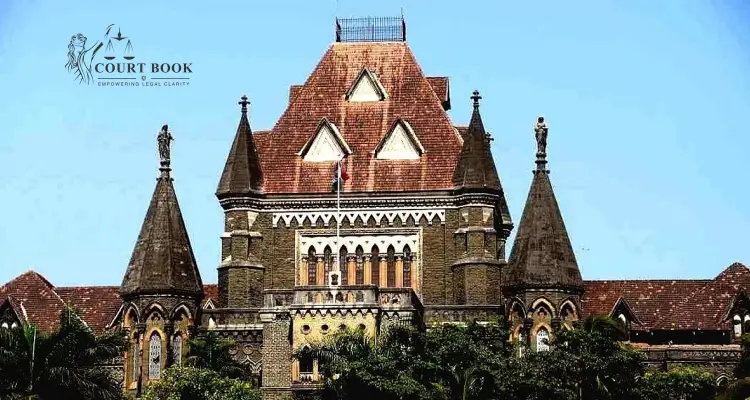
The Nagpur Bench of the Bombay High Court has dismissed a writ petition filed by a contractor challenging the rejection of its technical bid in a municipal road repair tender in Amravati. The Court found no arbitrariness or illegality in the tender evaluation process.
Background of the Case
The case arose from a tender issued by the Amravati Municipal Corporation for road maintenance and repair work across multiple zones in the city, valued at approximately ₹1.59 crore.
The petitioner, a registered partnership firm engaged in civil construction, participated in the bidding process. However, its technical bid was rejected during evaluation, while another contractor was declared eligible and later emerged as the lowest bidder.
Read also:- Allahabad High Court Denies Maintenance to Doctor Wife, Says She Can Earn “Handsomely” on Her Own
Challenging this decision, the petitioner approached the High Court, seeking to set aside the rejection of its bid and alleging unfair treatment in the tender process.
The petitioner argued that it had fulfilled all eligibility criteria, including prior work experience exceeding ₹1 crore over the past three financial years. It contended that the tender condition allowed cumulative experience across three years, not necessarily within a single year.
It also alleged cartelisation, claiming that two competing bidders-related as father and son-had participated using shared resources, thereby undermining fair competition.
Further, the petitioner submitted that its work completion certificate, issued by the municipal authority itself, was wrongly disregarded. It maintained that the rejection of its bid was arbitrary and violated principles of fairness.
The municipal corporation opposed the plea, stating that the petitioner failed to meet the eligibility requirement of executing work worth ₹1 crore in any single financial year.
According to the authorities, despite being given an opportunity to submit additional documents, the petitioner could not provide satisfactory proof of qualifying experience. The evaluation committee, therefore, found the bid technically non-responsive.
On the allegation of cartelisation, the corporation argued that mere familial relationship between bidders does not establish collusion, especially in the absence of concrete evidence.
The Division Bench of Justice Urmila Joshi-Phalke and Justice Nivedita P. Mehta emphasized the limited scope of judicial review in tender matters.
“The Court does not sit as an appellate authority over technical evaluations,”
the bench observed, adding that interference is warranted only when decisions are arbitrary, mala fide, or violate tender conditions.
Read also:- Bombay High Court Upholds LARR Orders in Godrej Land Case, Allows State & NHSRCL to File Pleas
On the interpretation of eligibility criteria, the Court noted that the tender clause was capable of more than one interpretation. However, it held that the authority issuing the tender is best placed to interpret its requirements.
“The interpretation adopted by the tendering authority cannot be interfered with unless it is shown to be perverse or unreasonable,” the bench stated.
The Court also found that the petitioner had been given an opportunity to cure deficiencies in its documents, satisfying the requirement of fairness.
On cartelisation, the bench was clear:
“Mere relationship between bidders cannot lead to an inference of collusion in the absence of cogent material.”
After reviewing the records, the Court concluded that the rejection of the petitioner’s bid was based on objective assessment and did not suffer from arbitrariness or illegality.
It held that the tender process was conducted fairly and transparently, and the petitioner failed to establish any mala fides or bias.
Accordingly, the High Court dismissed the writ petition and declined to interfere with the tender process. The request to stay the judgment was also rejected.
Case Details
Case Title: M/s G.H. Khandelwal v. Amravati Municipal Corporation & Ors.
Case Number: Writ Petition No. 293 of 2026
Judges: Justice Urmila Joshi-Phalke & Justice Nivedita P. Mehta
Decision Date: 23 April 2026
Download Order

