

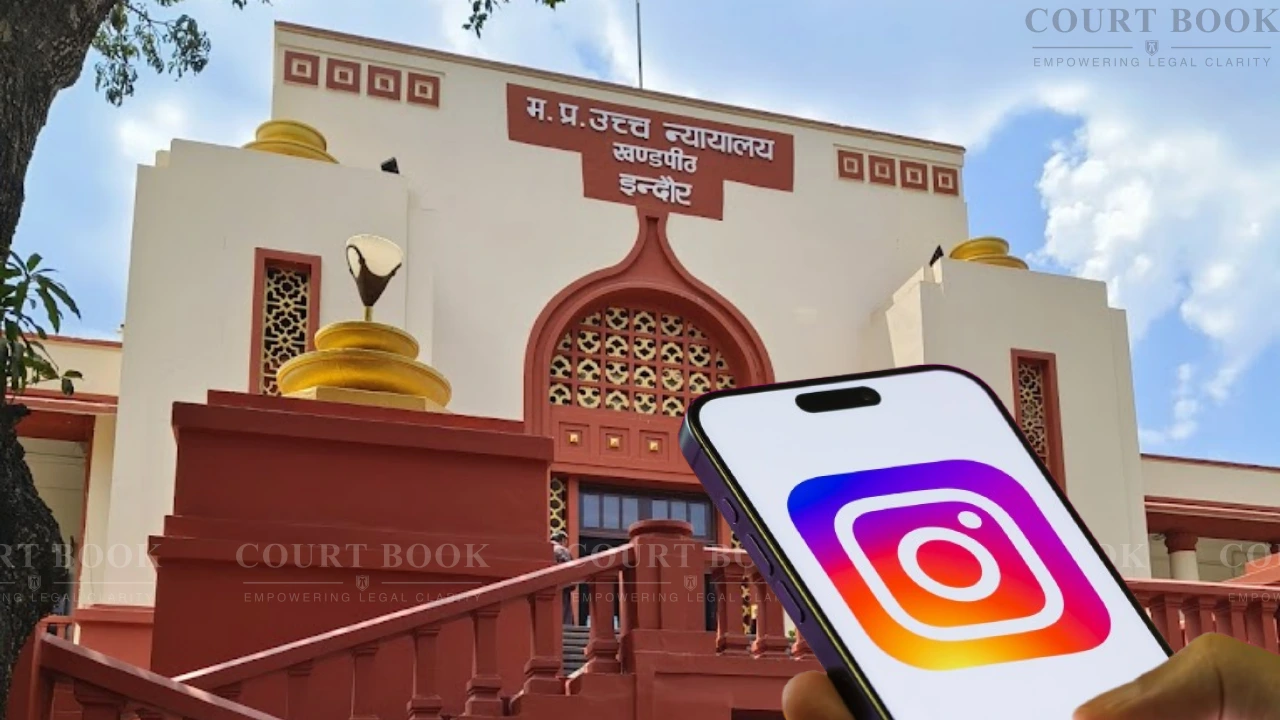
The Madhya Pradesh High Court on Thursday declined to entertain a petition against Meta Platforms’ decision to end end-to-end encrypted messaging on Instagram from May 8, 2026. The court said the petitioner must first take the issue to the Data Protection Board of India.
Background of the Case
A Public Interest Litigation (PIL) was filed by Advocate Parth Sharma before the Indore bench of the High Court. The petition challenged Instagram’s notification stating that “end-to-end encrypted messaging on Instagram will no longer be supported after May 8, 2026.”
The petitioner argued that removing encryption violates the fundamental right to privacy under Article 21 of the Constitution. He said encryption is a vital privacy safeguard, and its withdrawal would expose private conversations to surveillance and misuse.
Appearing for the Union government, Additional Solicitor General Sunil Kumar Jain raised a preliminary objection. He argued that the PIL was not maintainable at this stage because the petitioner had not approached the statutory authority created under the Digital Personal Data Protection Act, 2023.
Read also:- Supreme Court Cancels Bail of Life Convict in Bihar Murder Case, Flags Misuse of Sentence Suspension
He told the court that Parliament had set up the Data Protection Board specifically to address grievances related to data protection and privacy, and the petitioner should first use that mechanism.
A division bench of Justice Vijay Kumar Shukla and Justice Alok Awasthi agreed with the Centre’s objection.
The bench observed that a statutory body exists to examine such disputes, and the High Court should not bypass that process at the outset. The judges refrained from commenting on the merits of the privacy arguments and confined themselves to the procedural issue.
Read also:- Allahabad High Court Says Police Can Freeze Bank Accounts Only Up To Suspected Amount, Not Entire Account
The bench directed the petitioner to submit a representation before the Data Protection Board of India within seven days. It further directed the Board to hear the petitioner and pass a “reasoned and speaking order” within 15 days, and in any case before May 6.
“The petitioner shall approach the Board constituted under Section 18 of the Act of 2023 within seven days,” the court ordered, adding that the Board must decide the matter after giving the petitioner an opportunity of hearing.
The court has listed the matter for further hearing on May 6, by which time the petitioner must place the Board’s decision before the bench.


