

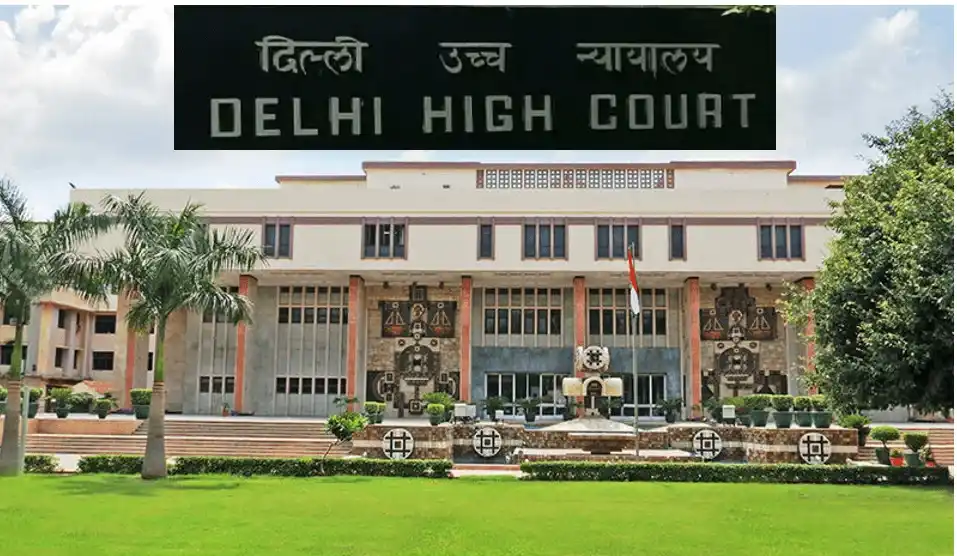
The Delhi High Court has upheld the conviction of a husband, his mother, and brother in a 2000 dowry harassment and burn case, but reduced their jail sentence to the period already undergone after the survivor told the court she had resumed a peaceful family life with them.
Justice Vimal Kumar Yadav passed the order on May 4, 2026, while deciding three connected criminal appeals filed by Raju, Bardi Devi and Shambhu.
Background Of The Case
According to the prosecution, Savita was allegedly set on fire in November 2000 at her matrimonial home in Delhi over dowry-related disputes. The case stated that she was harassed for not meeting the expectations of her husband and his family regarding dowry demands.
The court noted that Savita was pregnant at the time of the incident. Instead of being taken to a hospital immediately, she was reportedly sent to her parental home where she received local and Ayurvedic treatment. An FIR was later registered at Dabri Police Station in April 2001.
The trial court convicted all three accused under Sections 307, 498A and 342 read with Section 34 of the Indian Penal Code. They were awarded up to seven years’ rigorous imprisonment in 2004.
Survivor Told Court She Had Reconciled
During the hearing of the appeals, Savita personally appeared before the High Court along with her husband and brother-in-law. The court recorded that she had filed an affidavit stating she no longer wanted action against them and had resumed married life with her husband Raju.
The judgment noted that the couple later had three more children and were now living together peacefully.
Counsel for the appellants informed the court that they were not challenging the conviction anymore and were limiting their request only to reduction of sentence. They argued that the accused had already spent substantial time in custody.
The High Court observed that cases involving dowry harassment reflect “the evils of dowry system” and the greed for material possessions. At the same time, the court said it was also faced with a situation where the parties had chosen reconciliation after years of conflict.
Quoting Mahatma Gandhi, the court remarked, “An eye for an eye will only make the whole world blind,” while discussing the survivor’s decision to forgive her husband and his family.
Justice Yadav also referred to Supreme Court precedent allowing courts to consider settlements while deciding the quantum of sentence, even where offences are technically non-compoundable.
“The acceptance by her brother-in-law and mother-in-law and her forgiveness for them has resulted in the family coming together,” the court observed.
The High Court ultimately upheld the 2004 conviction of all three accused but modified the sentence. It ruled that the period already spent in custody would be treated as sufficient punishment in the case.
The appeals were disposed of accordingly.
Case Details
Case Title: Raju vs State & Connected Appeals
Case Number: CRL.A. 329/2004, CRL.A. 330/2004, CRL.A. 535/2004
Judge: Justice Vimal Kumar Yadav
Decision Date: May 4, 2026
Download Judgment

