

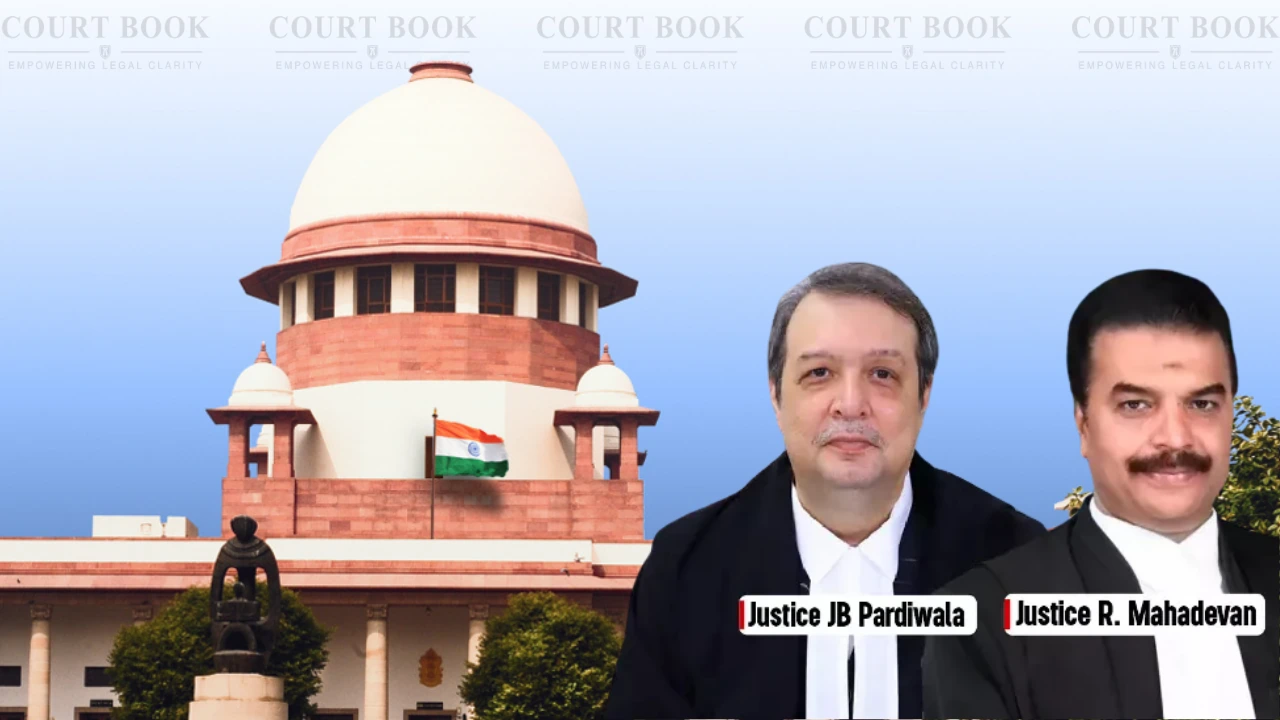
The Supreme Court of India has ruled that courts must carefully examine pleadings at the very beginning of a civil suit and reject cases that are clearly barred by law, even if the plaint is drafted in a way that creates an “illusion” of a valid claim.
In a significant judgment dealing with alleged benami property transactions and rejection of plaints under the Civil Procedure Code (CPC), the top court allowed the appeal filed by the legal heirs of late K. Raghunath and restored the trial court’s order rejecting the suit filed by D.A. Srinivas.
Background of the Case
The dispute arose from a suit filed by D.A. Srinivas claiming ownership over certain agricultural properties on the basis of a Will allegedly executed on April 20, 2018, by K. Raghunath. The plaintiff sought declaration of title, correction of alleged mistakes in the Will schedule, and injunction relief.
The defendants - Manjula and others, who are Raghunath’s wife and children - opposed the suit. They argued that Raghunath had already executed an earlier registered Will in 2016 in favour of his wife and that the plaintiff’s claim was effectively an attempt to enforce a benami arrangement prohibited under the Prohibition of Benami Property Transactions Act, 1988.
Read also:- SHO Suspended After Gambling Raid At IAS Officer’s Farmhouse Gets Relief From MP High Court
The trial court accepted the defendants’ objection under Order VII Rule 11 CPC and rejected the plaint in October 2023, holding that the suit disclosed no valid cause of action and was barred by law. However, the Karnataka High Court later restored the suit for trial, prompting the appeal before the Supreme Court.
The bench led by Justice J. B. Pardiwala and Justice R. Mahadevan extensively examined the legal principles governing rejection of plaints under Order VII Rule 11 CPC.
The court reiterated that trial courts are not expected to mechanically register every suit placed before them. Instead, they have a duty to meaningfully read the plaint and determine whether the claim is legally maintainable at the threshold itself.
“The plaint cannot be read in an incomprehensive manner,” the bench observed while stressing that courts must identify whether clever drafting has been used to conceal a legal bar.
The judgment relied on earlier rulings including T. Arivandandam v. T.V. Satyapal, where the Supreme Court had warned courts against permitting “illusionary” causes of action to proceed to trial.
The bench noted that the plaintiff’s own pleadings indicated that the properties were allegedly purchased using his funds but registered in the name of late K. Raghunath because of restrictions under Karnataka land laws. According to the court, such averments directly raised issues under the Benami Act.
The court also clarified that while deciding an application under Order VII Rule 11 CPC, courts can examine not only the plaint but also documents relied upon by the plaintiff.
On Trial Courts’ Duties
In one of the key portions of the judgment, the Supreme Court emphasised that courts have the power to reject frivolous or legally barred suits even before issuing summons to defendants.
“A trial Court cannot mechanically admit the plaint and register the suit,” the bench said, adding that courts must prevent abuse of judicial process at the earliest stage.
The judgment further explained that suppression of material facts or drafting aimed at hiding statutory bars could justify rejection of a plaint
The Supreme Court examined whether the plaint was liable to be rejected under Order VII Rule 11 CPC in light of the Benami Act and extensively discussed the principles governing rejection of plaints.
The court observed that a meaningful reading of the plaint and accompanying documents was necessary while examining whether the suit was barred under the Benami Act and liable to rejection under Order VII Rule 11 CPC.
Case Details
Case Title: Manjula and Others v. D.A. Srinivas
Case Number: Civil Appeal No. 7370 of 2026
Judge: Justice J. B. Pardiwala and Justice R. Mahadevan
Decision Date: May 8, 2026
Download Judgment

