

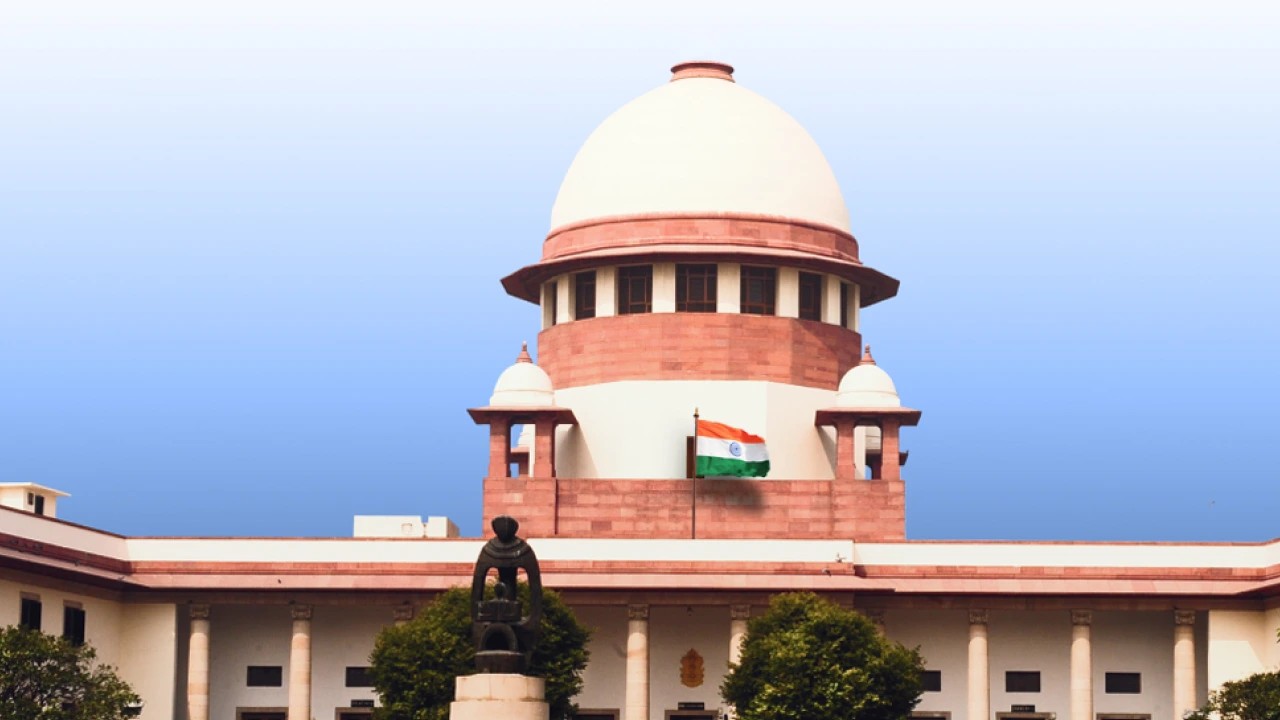
The Supreme Court on Thursday restored the dismissal of a Jharkhand Police constable who was accused of fraudulently obtaining another constable post in Bihar Police under a different name and parentage.
A Bench of Justice R. Mahadevan and Justice Ahsanuddin Amanullah allowed the appeal filed by the State of Jharkhand against a Jharkhand High Court Division Bench ruling that had earlier set aside the constable’s dismissal.
The Supreme Court held that departmental authorities had relied on sufficient material to conclude that the constable had indulged in impersonation, forgery and dual employment in two police forces.
Background of the Case
The dispute arose from disciplinary proceedings initiated against Ranjan Kumar, who was appointed as a constable in Jharkhand Police in 2005. According to the State authorities, he went on compensatory leave in December 2007 but never returned to duty.
During the period of absence, he allegedly joined Bihar Police as “Santosh Kumar”, son of Kamta Sharma, using forged certificates and fabricated credentials. The Jharkhand government claimed that he secured simultaneous employment in two police departments by using separate identities.
Following a departmental enquiry, the Superintendent of Police, Garhwa dismissed him from service in August 2010. His departmental appeal and revision petition were also rejected.
Although a Single Judge of the Jharkhand High Court upheld the dismissal, a Division Bench later interfered and held that the charges were unsupported by evidence.
What Happened During the Hearing
Before the Supreme Court, the States of Jharkhand and Bihar argued that documentary evidence, photographs, recruitment forms and official enquiry reports clearly established that the same individual had secured appointments in both States under different names.
The constable, however, contended that no material witness from Bihar had been examined during the departmental proceedings and that the case was based on unproved documents. He argued that the findings were based on “no evidence.”
During the pendency of the appeal, the Supreme Court directed Bihar Police to conduct an independent verification into the identities of “Ranjan Kumar” and “Santosh Kumar.”
Court’s Key Observation
The Supreme Court noted that forensic comparison of fingerprints, biometric records and photographs confirmed that both identities belonged to the same individual.
The Bench observed:
“Public employment, particularly in the police service, cannot be converted into an instrument of fraud.”
The Court further reiterated that High Courts exercising jurisdiction under Article 226 cannot reappreciate evidence in disciplinary matters as if sitting in appeal.
According to the judgment, departmental proceedings are governed by the principle of “preponderance of probabilities” and not the strict standards applicable in criminal trials.
Court’s Decision
Setting aside the Jharkhand High Court Division Bench judgment, the Supreme Court restored the dismissal order passed against the constable.
The Court, exercising powers under Article 142, quashed the Bihar Police appointment obtained in the name of ‘Santosh Kumar' and directed the Director Generals of Police of both Bihar and Jharkhand to examine the criminal aspects of the matter and take action in accordance with law.
Case Details:
Case Title: The State of Jharkhand & Ors. v. Ranjan Kumar & Ors.
Case Number: Civil Appeal No. 7364 of 2026
Court: Supreme Court of India
Judge: Justice R. Mahadevan and Justice Ahsanuddin Amanullah
Date: May 8, 2026
Download Judgment

