In an important ruling on civil procedure, the Supreme Court has revived a family property dispute pending in Chennai and set aside the Madras High Court’s decision that had rejected the suit at the threshold.
The bench held that the legal bar under Order II Rule 2 of the Code of Civil Procedure (CPC) cannot automatically become a ground to reject a plaint under Order VII Rule 11(d).
Background of the Case
The dispute arose within a family over multiple properties, including assets in Chennai, Ooty and Pudukottai.
The appellants, comprising the widow and daughters of late M. Sokkalingam, filed a civil suit in 2013 seeking a declaration that a power of attorney executed in 2011 was illegal, void and allegedly obtained through misrepresentation, coercion and undue influence.
They also sought an injunction to prevent transfer of the properties.
Earlier, another suit had already been filed in 2012 concerning separate reliefs related to possession of a Chennai property and operation of a bank account.
The respondents argued that the second suit was barred because the plaintiffs should have claimed all reliefs in the first case itself.
The trial court had refused to reject the second suit and granted interim protection against alienation of the properties.
However, the Madras High Court later reversed that order and held that both suits arose from the same cause of action. It rejected the plaint under Order VII Rule 11 CPC.
That order was then challenged before the Supreme Court.
Read also:- Working Mother’s Contribution Beyond Money, Father Must Pay More: Bombay HC Doubles Child Maintenance
The Supreme Court closely examined the distinction between two legal provisions.
The bench observed that Order II Rule 2 CPC deals with splitting claims or omitting reliefs, while Order VII Rule 11(d) concerns suits barred by law on the face of the plaint.
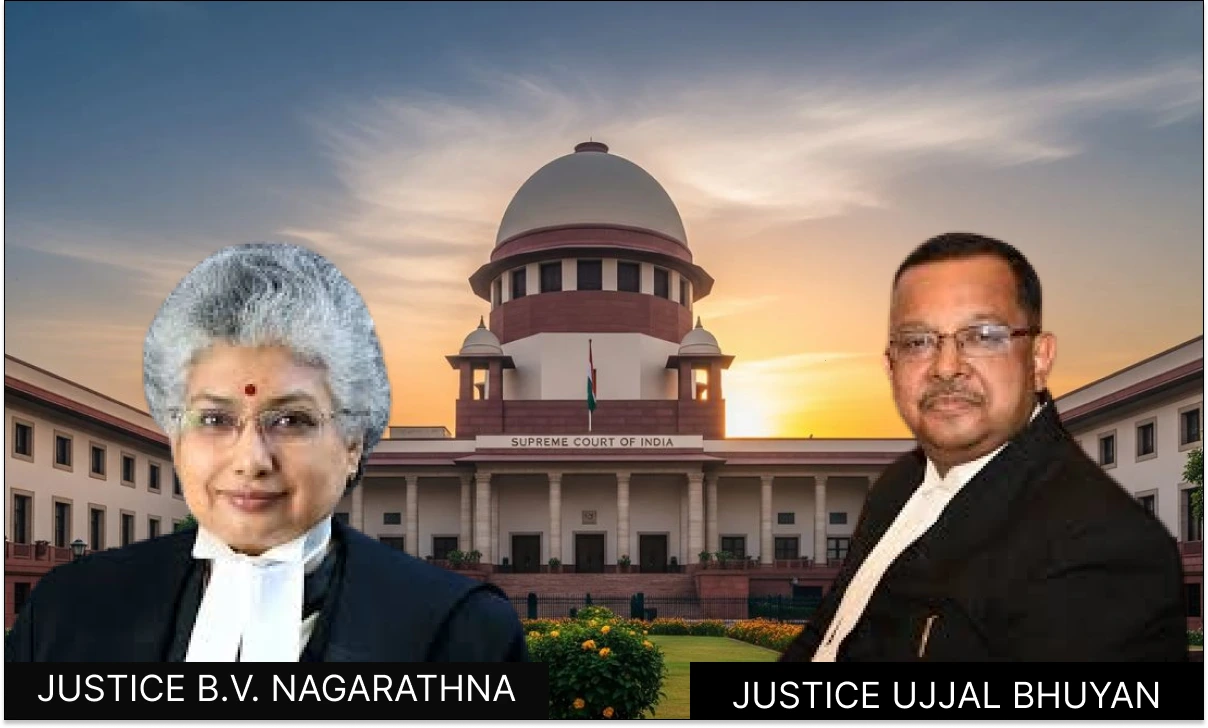
Justice B.V. Nagarathna, writing for the bench, explained that the two concepts are different in law.
The Court observed,
“There is a subtle but distinct difference between the two.”
It further held that whether a later suit is barred under Order II Rule 2 often requires factual examination and evidence. Therefore, it cannot automatically justify rejection of a plaint at the initial stage.
The bench also found that the High Court went too far by analysing disputed facts as if evidence had already been led during trial.
Allowing the appeal, the Supreme Court set aside the Madras High Court judgment and restored the trial court’s order.
As a result, the 2013 civil suit and the plaint stand revived and will proceed before the trial court on merits.
The Court clarified that all observations made in the appeal were only for deciding the present issue and should not influence the final trial. Parties were directed to bear their own costs.
Case Details
Case Title: S. Valliammai & Others v. S. Ramanathan & Another
Case Number: Civil Appeal No. 3624 of 2024
Judge: Justice B.V. Nagarathna and Justice Ujjal Bhuyan
Decision Date: April 16, 2026
Download Judgment



-300x169.webp)
-300x169.webp)