

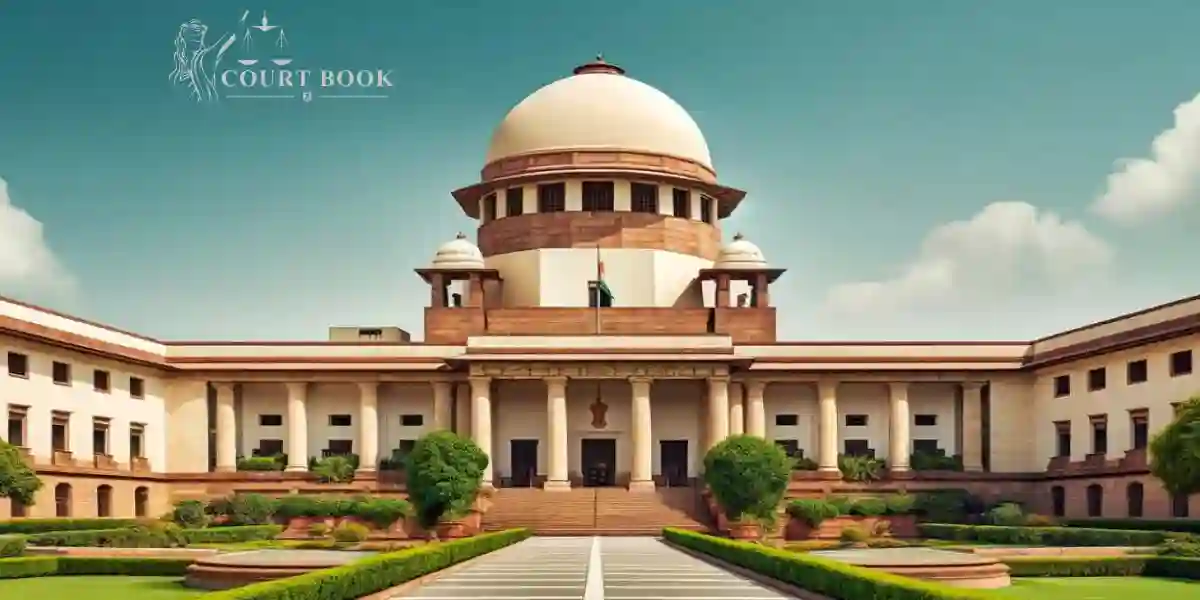
The Supreme Court has directed the Delhi Development Authority (DDA) to refund over ₹164 crore to a private company after the underlying land acquisition was declared lapsed. The Court also clarified the scope of summary judgment in commercial suits, emphasizing efficiency without compromising fairness.
Background of the Case
The dispute arose from a 2007 public auction conducted by DDA for a commercial plot in Jasola, New Delhi. Reliance Eminent Trading and Commercial Pvt. Ltd. emerged as the highest bidder and paid the full consideration along with stamp duty and other charges.
However, in 2016, the Delhi High Court declared that the land acquisition itself had lapsed due to non-payment of compensation to the original landowners under the 2013 land acquisition law. This finding was later upheld by the Supreme Court.
Read also:- Bombay High Court Refuses to Quash Child Abuse Case, Says Threats and Assault on Minor Not “Trivial”
Despite this, the DDA neither re-acquired the land within the time granted by the Court nor refunded the amount to the purchaser. The company eventually approached the High Court seeking recovery of its money, along with interest.
The buyer sought a summary judgment under Order XIII-A of the Civil Procedure Code, arguing that there was no real dispute requiring a full trial.
The High Court, however, refused to grant summary judgment. It held that issues such as possession of the plot required oral evidence and could not be decided without a full trial.
This order was challenged before the Supreme Court.
The Supreme Court closely examined whether the case warranted a summary judgment. It noted that the core facts were undisputed-particularly that the land acquisition had lapsed and the DDA failed to initiate fresh acquisition within the prescribed time.
The bench observed that the defence raised by DDA regarding possession was legally irrelevant to the claim for refund.
“The defence… is fanciful as they seek to claim the possession… whereas it is now for the erstwhile owners to seek appropriate remedies,” the Court noted.
It further clarified that once acquisition lapses, the transaction based on that acquisition loses its foundation. In such a situation, the buyer cannot be forced to remain bound by a failed transaction.
On limitation, the Court rejected DDA’s argument that the claim was time-barred, holding that the right to seek refund arose only after expiry of the six-month period granted for fresh acquisition.
The Court took the opportunity to explain the principles governing summary judgment in commercial cases. It stressed that courts should avoid unnecessary trials where there is no “real prospect” of a defence succeeding.
At the same time, it cautioned that courts must not conduct a “mini-trial” while deciding such applications.
The judgment described summary judgment as a tool to ensure timely and cost-effective resolution of disputes, particularly where facts are clear and undisputed.
Allowing the appeal, the Supreme Court set aside the High Court’s order and granted summary judgment in favour of the appellant.
The Court directed:
• Refund of ₹164.91 crore (sale consideration) to the appellant
• Interest at 7.5% per annum from July 2007 till payment
• Setting aside of the conveyance deed executed in favour of the appellant
The Court also permitted the appellant to withdraw ₹186 crore already deposited before the High Court, with the remaining amount to be paid within eight weeks.
The appeal was allowed with no order as to costs.
Case details
Case Title: Reliance Eminent Trading and Commercial Pvt. Ltd. vs Delhi Development Authority
Judges: Justice J.K. Maheshwari and Justice Atul S. Chandurkar
Decision Date: 29 April 2026
Download Judgment

