

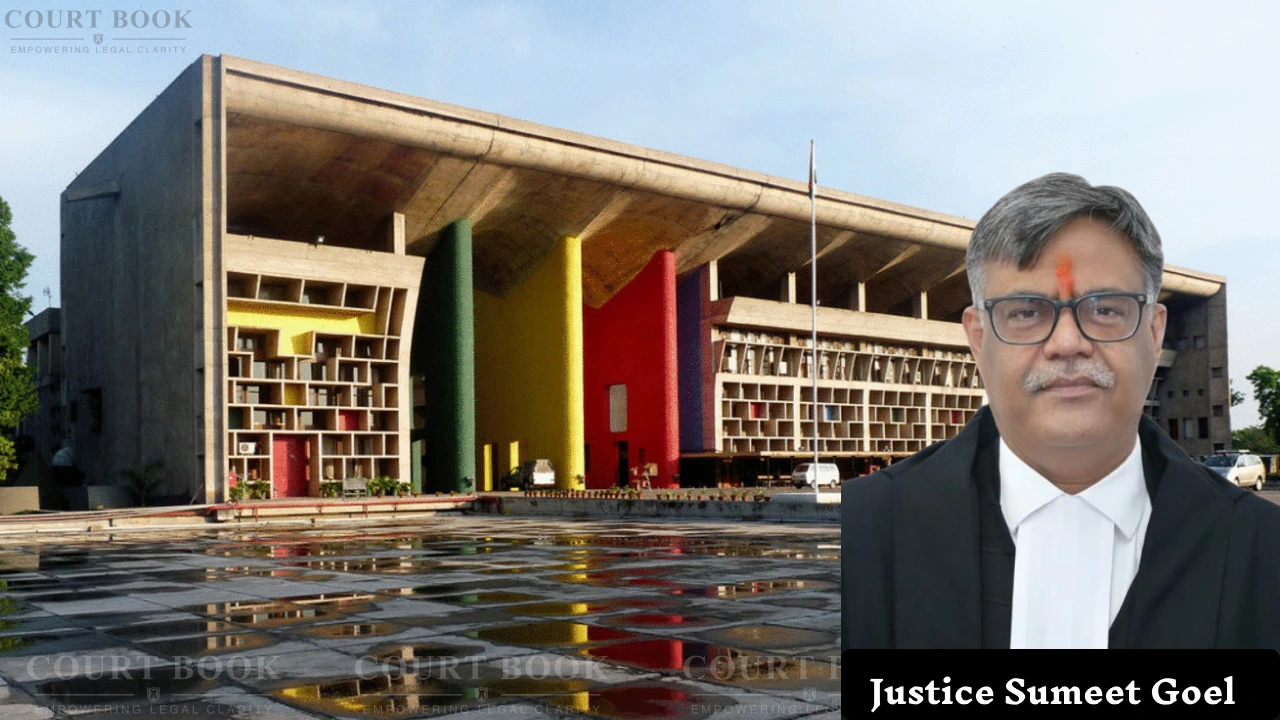
In a sharply worded order, the Punjab and Haryana High Court refused to recall its earlier decision in a murder case, holding that a litigant cannot later disown statements made by his own lawyer in court. The Court not only dismissed the plea but also imposed costs of ₹20,000 on the petitioner.
Background of the Case
The case stems from FIR No. 166 dated September 30, 2023, registered at Police Station Bapoli, Panipat, involving serious charges including murder. The prosecution alleged that on the night of September 29, 2023, a group of assailants attacked Tasavar and another individual with sticks and sharp weapons, leading to Tasavar’s death.
Read also:- Driving Licence Process Under Scanner: MP High Court Issues Notice on Road Safety Concerns
During investigation, police recovered weapons, blood-stained clothes, and CCTV footage. The petitioner, Ankit Rawal, was later implicated based on investigation findings.
Earlier, his anticipatory bail plea was dismissed as withdrawn after his counsel stated before the Court that he would appear before the trial court within seven days and seek regular bail.
The petitioner approached the High Court seeking recall of that order. His counsel argued that the earlier lawyer had made the statement about appearing before the trial court “without proper instructions.”
It was contended that the petitioner had only agreed to withdraw the bail plea if relief was unlikely not to give any undertaking regarding appearance within seven days.
The defence also claimed false implication, pointing out that the petitioner’s name did not appear in the FIR and no specific role or recovery was attributed to him.
Opposing the plea, the State argued that the earlier statement was made voluntarily in open court and duly recorded in the judicial order. It stressed that the case involved a grave offence murder and that custodial interrogation was necessary for effective investigation.
Justice Sumeet Goel rejected the petitioner’s claim, observing that such pleas undermine the judicial process.
“The ground that the counsel acted without instructions does not inspire confidence and appears to be an attempt to circumvent the consequences of the earlier order,” the Court noted.
Read also:- Procedure Must Be Followed: Supreme Court Quashes UP Gangsters Act FIR Against Alleged Gang Leader
The Court emphasized that statements made by counsel are presumed to be authorized and binding on the client. Allowing litigants to later disown such statements would make judicial proceedings uncertain.
In strong words, the bench said:
“A litigant cannot be permitted to treat court proceedings as experimental litigation or take a second bite at the apple.”
The Court also highlighted that recall of such orders is legally restricted under Section 403 of the Bharatiya Nagarik Suraksha Sanhita (earlier Section 362 CrPC).
On merits, the Court noted that the allegations involved a brutal group assault leading to death, and the investigation was still at an early stage. Granting anticipatory bail, it said, could hamper the probe.
Dismissing the application, the High Court imposed a cost of ₹20,000 on the petitioner, directing that the amount be deposited with the Chief Judicial Magistrate, Panipat within four weeks.
The Court further directed that in case of non-payment, the amount would be recovered as arrears of land revenue through the Deputy Commissioner.
It clarified that observations made in the order would not affect the merits of the trial.
Case Title: Ankit Rawal v. State of Haryana
Download Order

