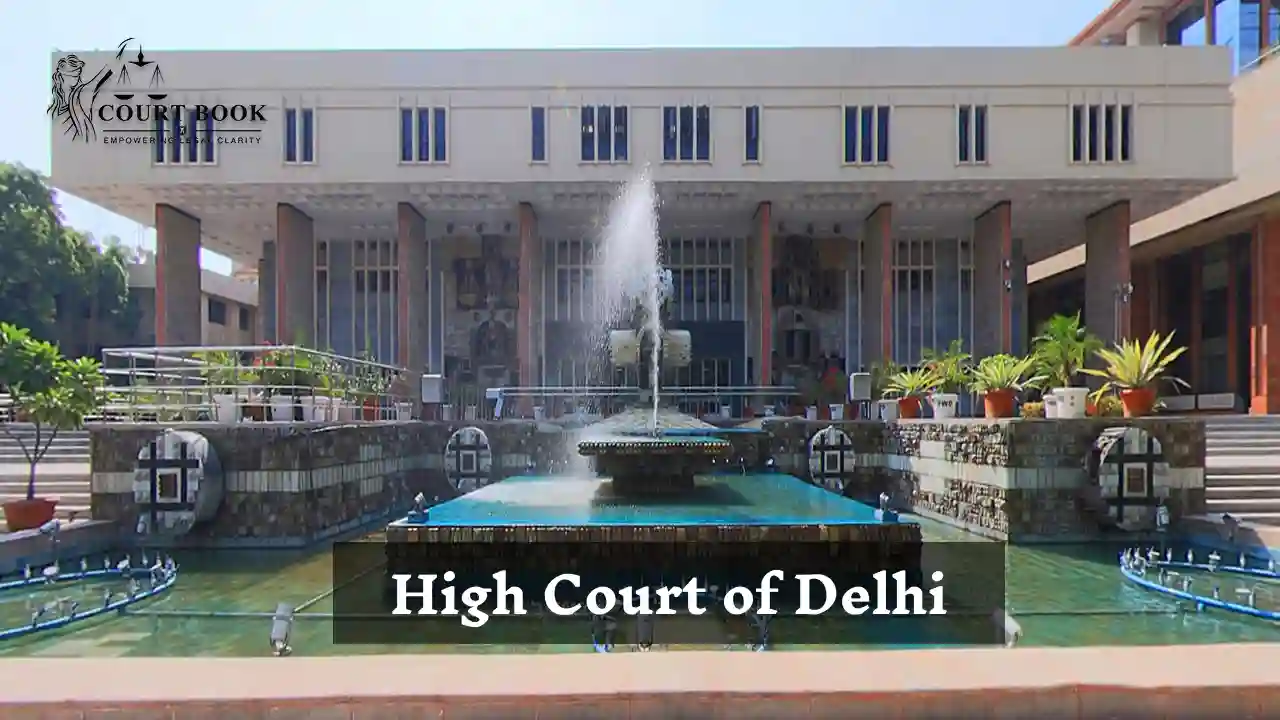
The Delhi High Court has ruled that a candidate’s alleged false statement about his own educational qualification in nomination papers does not automatically amount to a “corrupt practice” under election law. The court was hearing an election dispute arising from the 2020 Delhi Assembly polls from Karol Bagh constituency.
The matter was decided by a Division Bench of Justice Dinesh Mehta and Justice Vinod Kumar on April 24, 2026.
Background of the Case
Petitioner Yogender Chandolia challenged the election of Vishesh Ravi, who was declared elected from Assembly Constituency-23, Karol Bagh in the 2020 elections.
The petition alleged that the returned candidate gave false information regarding his educational qualification in Form 26 and the affidavit filed with nomination papers. It was claimed that this misled voters and affected the election result.
Reada also:- Delhi High Court Sets Aside DU Principal’s Suspension, Says Parallel PoSH Probe Panel Was Illegal
The petitioner also argued that similar incorrect declarations had been made in earlier elections.
The High Court closely examined Section 123(4) of the Representation of the People Act, 1951, which deals with false statements harming another candidate’s prospects.
The bench said the provision concerns publication of false statements about another candidate, not a candidate’s own personal claim in nomination papers.
“The allegation against the respondent does not constitute corrupt practice within the meaning of sub-section (4) of Section 123,” the bench observed.
The judges further said that merely filing a declaration in a nomination form or affidavit cannot automatically be treated as “publication” under the law.
The court also stressed that election courts must follow the exact language of the statute and cannot expand meanings through broad interpretation.
“We are firmly of the view that the High Court is bound by the letter of law,” the bench stated.
The court also considered an earlier ruling in Nand Ram Bagri. However, it held that the earlier case was based on different legal grounds and would not apply to the present facts.
Read also:- Telangana High Court Upholds ED Action in ₹1000+ Crore Gold Smuggling Case, Dismisses All Petitions
The bench clarified that to the extent the earlier ruling treated incorrect educational details in nomination papers as corrupt practice under Section 123(4), it was “not good law.”
Since the term of the 2020 Assembly had already ended and fresh elections were held in 2025, the court said the petition had become infructuous.
Even if the allegations were assumed correct, the court held the respondent could not be found guilty of corrupt practice on the pleadings made.
The reference was answered accordingly, and the election petition was directed to be listed before the appropriate bench for further formal orders.
Case Details
Case Title: Yogender Chandolia v. Vishesh Ravi & Ors.
Case Number: EL.PET. 10/2020
Judge: Justice Dinesh Mehta and Justice Vinod Kumar
Decision Date: 24 April 2026
Download Order


-300x169.webp)
 Act (UAPA)-300x169.webp)