

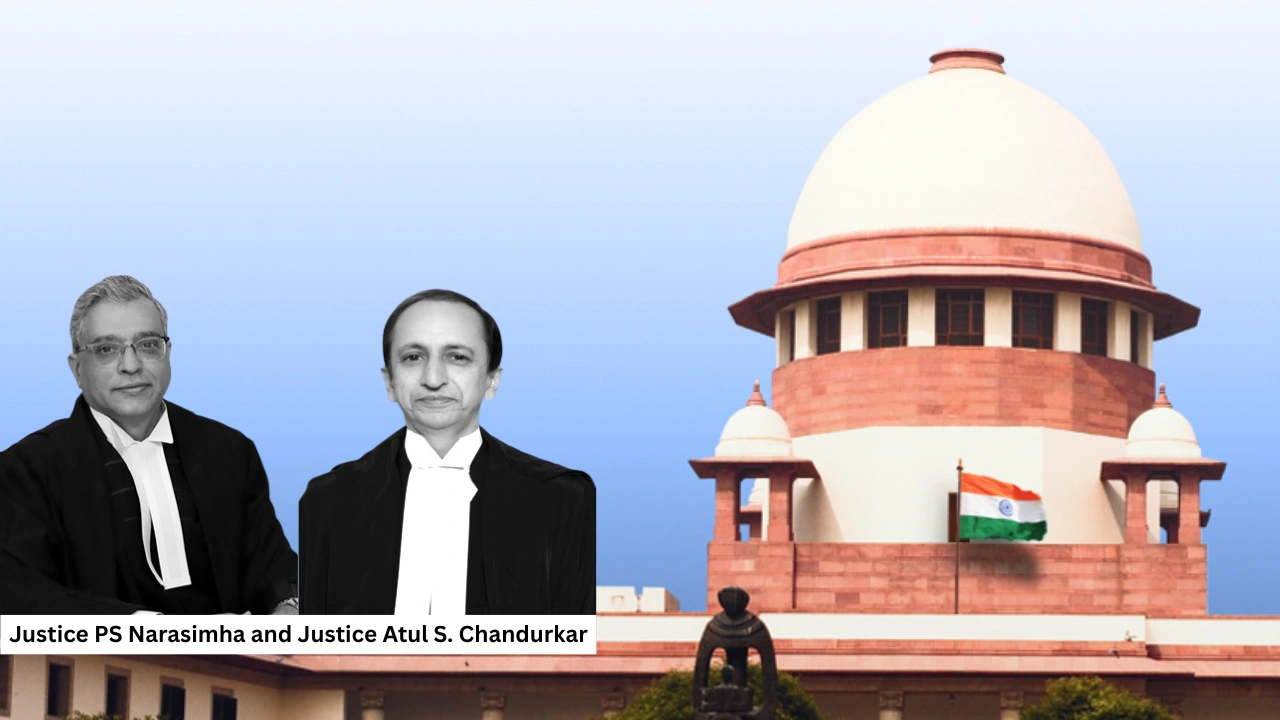
In a significant ruling, the Supreme Court of India has partly upheld and partly struck down Haryana’s controversial policies for regularising contractual and ad hoc employees. The Court clarified the limits of such regularisation while protecting certain employees already in service.
Background of the Case
The case, Madan Singh & Ors. vs State of Haryana & Ors., involved a batch of appeals challenging a 2018 judgment of the Punjab and Haryana High Court.
The High Court had quashed multiple notifications issued by the Haryana government in June and July 2014, which aimed to regularise Group B, C, and D employees working on contractual, ad hoc, or daily wage basis.
Read also:- J&K High Court Upholds Notional Seniority, Old Pension for Engineer Wrongly Denied Appointment
These policies were framed as “one-time measures” to address staffing shortages and long-serving employees. However, they were challenged for allegedly bypassing regular recruitment procedures.
A bench comprising Justice Pamidighantam Sri Narasimha and Justice Atul S. Chandurkar closely examined the legality of the notifications in light of established constitutional principles and prior rulings such as Umadevi.
The Court made a clear distinction between different sets of notifications:
June 16 and June 18, 2014 Notifications:
The Court found that these were intended to extend benefits to employees who had been left out of earlier regularisation policies. These employees were working against sanctioned posts and met eligibility criteria. The bench observed that such measures were not arbitrary and aligned with the legal framework.It noted that there was no evidence suggesting that ineligible employees were being favoured.Read also:- Birth Certificate Prevails Over Medical Test: Allahabad HC Grants Student Admission Relief
July 7, 2014 Notifications:
These were treated differently. The Court found serious flaws, particularly because they allowed regularisation of employees who:• Were not selected through proper advertisement or interview, and
• Were to be considered based on a future cut-off date (31 December 2018).
The bench remarked that such a policy raised doubts about fairness and transparency.
“The absence of any record of the manner of engagement does not inspire confidence,” the Court noted.
It further held that fixing a future cut-off date lacked any rational basis and could block regular recruitment opportunities.
Read also:- Supreme Court Quashes Abetment to Suicide Case, Says No Proof of Instigation or Intent Against Accused
The Supreme Court partly modified the High Court’s judgment:
• The June 16 and June 18, 2014 notifications were upheld as valid, restoring the benefits of regularisation to eligible employees under these policies.
• The July 7, 2014 notifications were declared arbitrary and illegal and struck down.
However, the Court took a balanced approach considering the passage of time and the situation of employees:
• Those already working under the July 2014 policy will not be removed from service.
• They will instead be placed at the lowest pay scale applicable to their posts.
The Court exercised its powers under Article 142 of the Constitution to ensure fairness, noting that many employees had continued in service for years and settled in their roles.
All appeals were disposed of with these directions, bringing long-pending litigation to a close.
Case Details
Case Title: Madan Singh & Ors. vs State of Haryana & Ors.
Case Number: Civil Appeal No. 1996 of 2024 & connected matters
Judges: Justice Pamidighantam Sri Narasimha, Justice Atul S. Chandurkar
Download Judgment

