

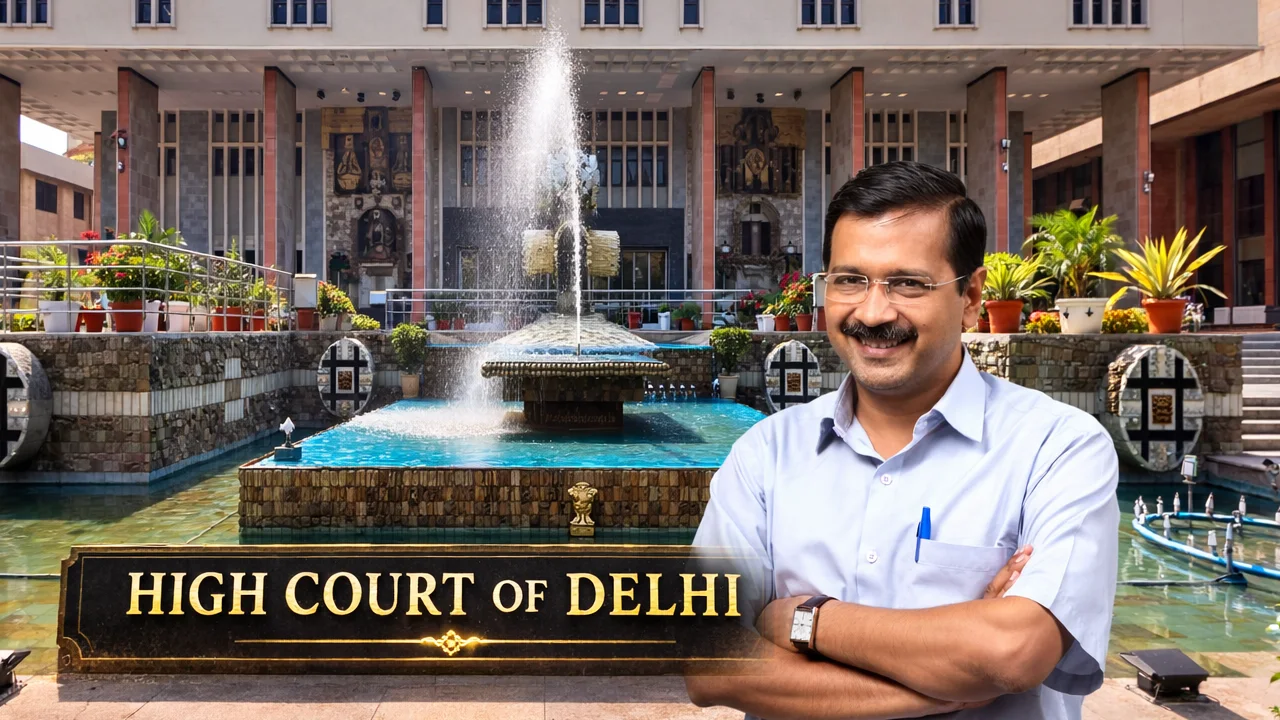
In a significant ruling, the Delhi High Court has clarified that a public assurance made by a Chief Minister without being formalised into an official policy cannot be enforced in law. The case arose from a statement made during the COVID-19 lockdown regarding payment of rent for struggling tenants.
Background of the Case
The dispute traces back to March 29, 2020, when Delhi Chief Minister Arvind Kejriwal addressed the public during the peak of the COVID-19 lockdown. In that press conference, he urged landlords not to evict tenants unable to pay rent and stated that the government would step in to cover such rent if necessary.
Following this, a group of petitioners including daily wage workers and a landlord approached the High Court seeking enforcement of this assurance. They argued that many tenants relied on the statement and expected relief during the lockdown period.
Read also:- Advocate’s Claim of Not Understanding Order No Ground to Condon Delay: Delhi High Court
A Single Judge of the High Court earlier held that the assurance created a legitimate expectation and directed the Delhi Government to consider implementing it through a policy.
Hearing the appeal, a Division Bench examined whether such a statement could be treated as a legally enforceable promise.
The Court drew a clear distinction between:
• A formal government decision or policy, and
• A public statement made during a press conference
The Bench acknowledged the seriousness of statements made by elected officials. It noted that such statements are not casual remarks and carry public weight.
“The assurance made by the Chief Minister cannot be dismissed as a mere political statement,” the bench observed.
Read also:- Supreme Court Grants Bail to Doctors in Tramadol Case, Flags Violation of Arrest Procedure
However, the Court emphasized that enforceability in law requires more than public communication. It must be backed by a formal decision, notification, or policy.
Importantly, the Court separated two aspects of the CM’s statement:
1. Direction to landlords not to evict tenants – supported by an official order under disaster management laws
2. Assurance that the State would pay rent – not backed by any formal policy
The Court relied on established principles of promissory estoppel and legitimate expectation, noting that these doctrines apply only when certain legal conditions are met.
It held that:
• A promise must be clear, legally backed, and within the authority of the government
• A mere statement, even if relied upon by citizens, does not create enforceable rights unless formalised
Read also:- Madras High Court Initiates Suo Motu Contempt Against Interview Host in G-Square Case
“A mandamus can issue only where there exists a legal duty,” the Court noted, adding that no such duty arose from the press statement alone.
The Bench also referred to Supreme Court rulings to underline that statements made in speeches or public addresses do not automatically translate into enforceable promises.
Setting aside the key findings of the Single Judge, the Division Bench ruled that:
• The assurance that the Delhi Government would pay rent for tenants is not legally enforceable
• Since no formal policy or official order was issued to implement the promise, courts cannot compel the government to act on it
• However, directions preventing landlords from evicting tenants during lockdown being supported by official orders remain valid
The appeal filed by the Government of NCT of Delhi was accordingly allowed to this extent.
Case Details
Case Title: Government of NCT of Delhi v. Najma & Ors.
Case Number: LPA 349/2021
Judge: Justice C. Hari Shankar & Justice Om Prakash Shukla
Decision Date: 6 April 2026
Counsels:
• For Appellant: Mr. Sameer Vashisht, Senior Counsel
• For Respondents: Mr. Gaurav Jain
Download Judgment

