

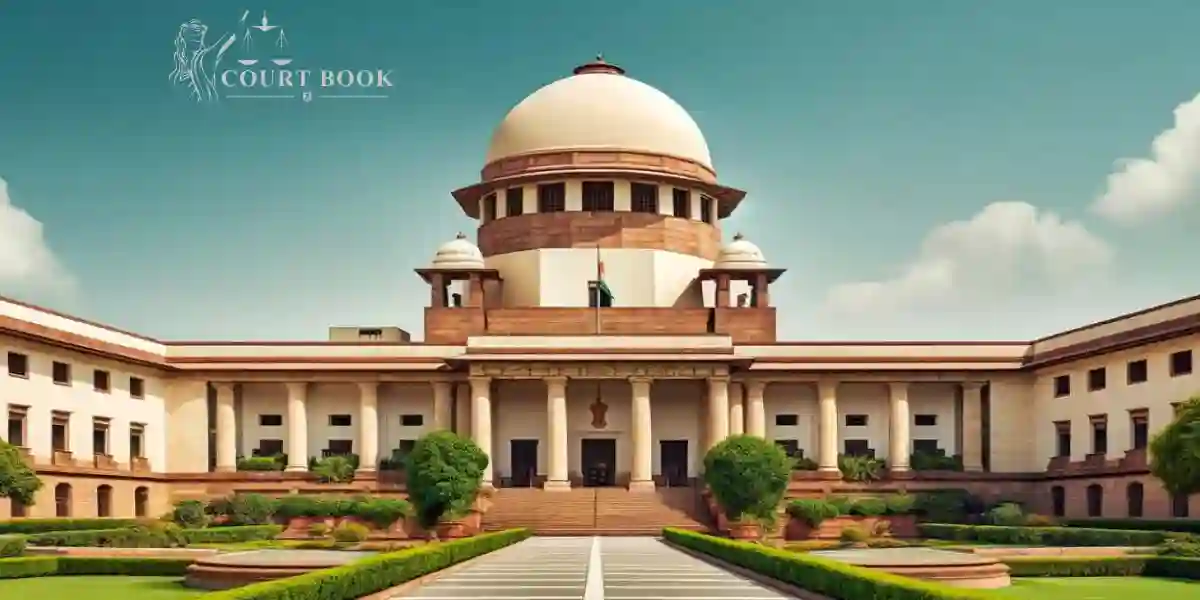
The Supreme Court of India has set aside a decision of the Madras High Court, restoring a government order that granted promotion benefits to a municipal engineer in Tamil Nadu. The dispute, which spanned over two decades, revolved around seniority, rule relaxation, and inter-departmental merger policies.
Background of the Case
The case arose from competing claims between R. Sasipriya and T. Gnanavel, both employees of the Coimbatore City Municipal Corporation. Gnanavel, initially appointed as a fitter in 1988, was later promoted to Overseer and eventually to Assistant Engineer after acquiring a degree in civil engineering.
In 2005, the Tamil Nadu government issued a key order granting Gnanavel notional promotion as Assistant Engineer from 1997, along with monetary benefits from 1998. This order also placed him above certain Town Planning Inspectors, including Sasipriya, in the seniority list.
Read also:- Karnataka HC Dismisses KKRTC Appeal in Fatal Bus Case, Slams ‘Contradictory Stand’, Imposes Costs
Sasipriya challenged this move, arguing that the promotion violated service rules and affected her chances of advancement.
A Single Judge of the High Court initially dismissed Sasipriya’s petition in 2012. However, a Division Bench later reversed that decision in 2024, quashing the government order and directing authorities to re-examine promotions and service benefits across the corporation.
The High Court also dismissed a review plea filed by Gnanavel, prompting appeals before the Supreme Court by both the State and the employee.
The Supreme Court closely examined the service rules and the government’s policy decisions, particularly those relating to the merger of engineering and town planning departments in 1996.
The bench noted that the merger policy clearly placed employees from the Town Planning Department below those from the Engineering Department in seniority. Since Gnanavel belonged to the engineering side, his placement above Sasipriya was consistent with the rules.
“The Government Order was based on a policy decision which was never challenged,” the Court observed,
emphasizing that such decisions apply uniformly unless proven arbitrary.
The Court also took note of a committee report, constituted earlier under court directions, which found no irregularity, favoritism, or illegality in granting promotions to Gnanavel.
Importantly, the bench pointed out that both parties had already been promoted to higher posts over time, and Sasipriya had retired in 2023, reducing the practical impact of the dispute.
Read also:- Supreme Court Says No to Late Degrees: RPSC Candidates Must Have Law Qualification by Application Deadline
The Court rejected claims made by other applicants who sought to intervene at a late stage. It described one such applicant as a “fence-sitter,” noting that courts do not entertain stale claims, especially in service matters where promotions affect multiple employees.
“A court exercising public law jurisdiction does not encourage the agitation of stale claims,” the bench stated, stressing the importance of timely challenges.
Allowing the appeals, the Supreme Court set aside the Madras High Court’s 2024 judgment and restored the 2005 government order granting promotion to Gnanavel.
The Court upheld all subsequent promotions granted to him, including those to Assistant Executive Engineer and Executive Engineer, and held that he would remain entitled to further promotions as per eligibility.
Case Details:
Case Title: The State of Tamil Nadu & Anr. vs R. Sasipriya & Anr.
Case Number: Civil Appeal Nos. 6883–6886 of 2026
Judge: Justice R. Mahadevan and Justice Ahsanuddin Amanullah
Decision Date: May 4, 2026
Download Judgment

