

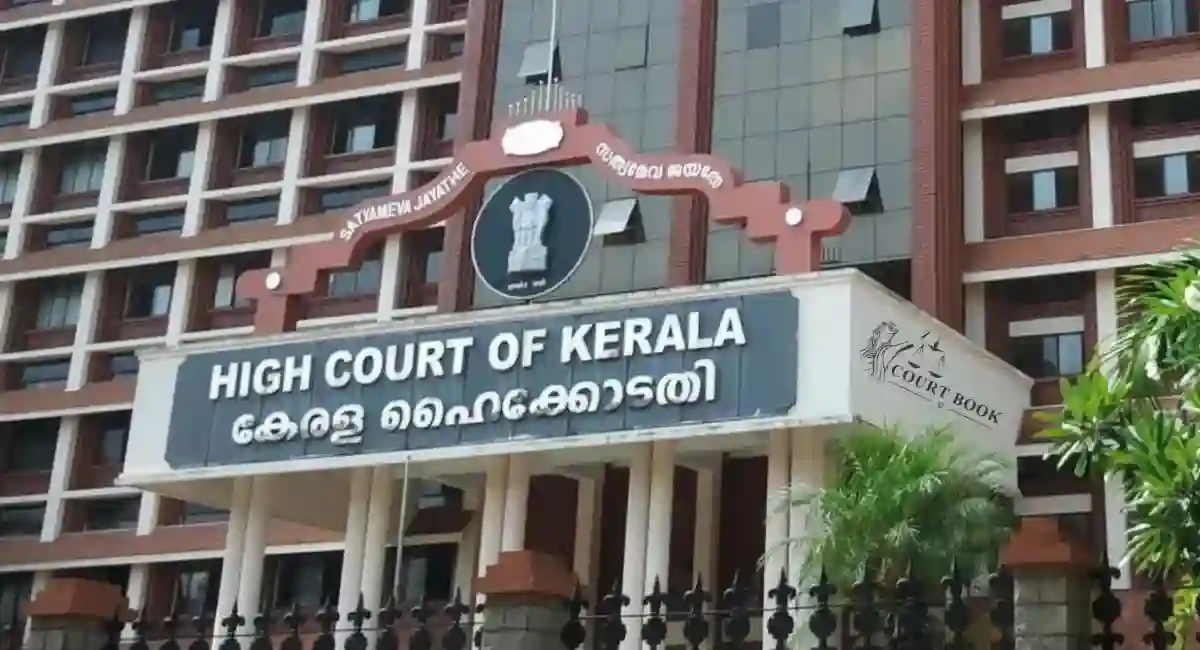
The Kerala High Court on Tuesday reopened the Scheduled Castes and Scheduled Tribes (Prevention of Atrocities) Act angle in a criminal case linked to an alleged forged promissory note, holding that investigators may have acted too quickly in dropping key charges.
Justice A. Badharudeen passed the order while partly allowing an appeal filed by a 68-year-old complainant from Thrissur, who accused a kuri (chit fund) company of dragging him into a false civil suit using fabricated documents.
Read also:-Bombay HC Disposes Unmarried Woman’s Abortion Plea, Cites Supreme Court Ruling on MTP Rights
Background of the Case
The dispute traces back to a civil suit filed in 2023 by a kuri company before the Irinjalakuda Munsiff Court. The company relied on a promissory note, claiming it had been executed by the complainant and his father.
However, when the defendants denied the signatures and alleged forgery in their written statement, the suit was quietly withdrawn. This led to the registration of a criminal case in 2024 for offences including forgery under the Indian Penal Code and offences under Sections 3(1)(p) and 3(1)(q) of the SC/ST (Prevention of Atrocities) Act.
During investigation, the police filed a report seeking deletion of the SC/ST Act charges, arguing that the company had no knowledge of the complainant’s caste identity while filing the suit.
Read also:-Calcutta High Court Refuses to Quash Forgery Case Linked to 1963 Land Deed, Orders Police Prob
What the Special Court Held
The Special Court under the SC/ST Act accepted the police view in substance. It observed that there was no material to show the suit was filed maliciously against the complainant as a member of a Scheduled Caste.
“The transaction would indicate that the accused had no criminal intention,” the Special Judge noted, adding that there was no prima facie case of misuse of legal process on caste grounds. The court also declined the complainant’s request to monitor the investigation.
High Court’s Observations
Hearing the appeal, the High Court took a closer look at the law and the facts. Justice Badharudeen noted that the SC/ST Act creates a statutory presumption regarding caste knowledge in certain situations.
Referring to Section 8(c) of the Act, the court observed that if the accused had personal dealings with the victim or his family, the law presumes awareness of caste identity unless proven otherwise.
Read also:-Bombay High Court Flags Flawed Tree-Felling Notices, Closes Pune Coconut Trees Case
“When a kuri company engages with subscribers over time and later institutes suits based on such transactions, it cannot simply claim ignorance of caste identity,” the bench observed.
The court also disagreed with the police conclusion that offences under the SC/ST Act were not attracted at all. It clarified that while Section 3(1)(q) (false information to a public servant) may not apply, Section 3(1)(p) - filing a false, malicious or vexatious suit against a Scheduled Caste member - required deeper investigation.
A key concern flagged by the High Court was the failure to seize and scientifically examine the disputed promissory note.
The bench noted that without comparing the signatures through forensic analysis, investigators could not have reached a final conclusion on whether the document was forged. “Such an investigation is absolutely necessary to accomplish a successful prosecution,” the court said.
Read also:-PILs Against Assam CM Himanta Biswa Sarma Over Alleged Hate Speech Reach SC, CJI Seeks Calm
Final Decision
Allowing the appeal in part, the High Court set aside the Special Court’s acceptance of the police report that deleted the SC/ST Act offence.
The court directed the investigating officer to obtain the promissory note from court custody, secure expert opinion from a forensic science laboratory, and complete investigation into the offence under Section 3(1)(p) of the SC/ST Act before filing a final report.
However, it upheld the Special Court’s view that judicial monitoring of the investigation was not required.
Case Title: Velayudhan v. State of Kerala & Another
Case No.: Criminal Appeal No. 2214 of 2025
Decision Date: 3 February 2026
Download Judgment

