

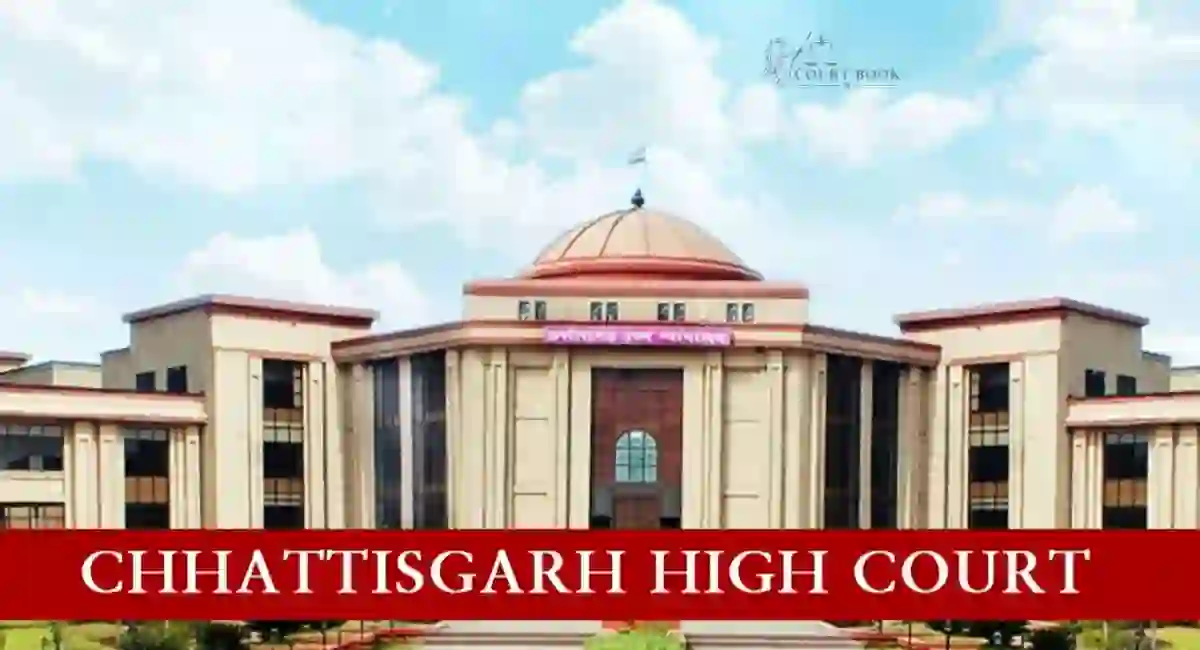
The Chhattisgarh High Court has refused to grant compassionate appointment to a young man who approached the authorities nearly 14 years after his father’s death in government service. The court ruled that such appointments are meant to provide immediate relief and cannot be claimed as a matter of right after long delays.
The decision was delivered by Justice Amitendra Kishore Prasad while dismissing a writ petition filed by Nijesh Chauhan, a resident of Raigarh district.
Read Also:-Kerala High Court Quashes Suicide Abetment Case, Says Angry Words Alone Don’t Prove Criminal
Background of the Case
The petitioner’s father was working as a Circle Coordinator under the Tribal and Scheduled Caste Development Department in Chhattisgarh. He died in harness on 19 February 2005, leaving behind two wives and children from both marriages.
At the time of death, the petitioner was a minor. His mother informed the authorities and sought compassionate appointment for her son. However, due to a dispute between the two wives over legal status, the matter remained unresolved. Eventually, a civil suit was filed, which ended in a compromise in February 2019.
After attaining majority, the petitioner submitted a formal application for compassionate appointment in June 2019. The request was rejected by the authorities citing inordinate delay. A fresh direction by the High Court in 2022 to reconsider the matter also resulted in rejection in January 2023.
Read Also:-Delhi High Court Rejects Sameer Wankhede’s Defamation Suit Against Netflix Show ‘Ba*ds
Petitioner’s Arguments
The petitioner argued that:
• He was a minor when his father died and could not apply earlier.
• His mother had informed the department soon after the death.
• Delay occurred due to the legal dispute between the two wives.
• The family continued to face financial hardship with no alternate income source.
His counsel contended that the authorities failed to guide the family properly and wrongly rejected the application on technical grounds.
State’s Stand
The State opposed the petition, stating that:
• Compassionate appointment is not a vested right.
• The application was made almost 14 years after the employee’s death, far beyond the permissible limit.
• Government policy allows such appointment only within a limited time, usually up to five years in exceptional cases.
• The purpose of compassionate appointment is to meet immediate financial crisis, not to provide delayed employment.
The State relied on several Supreme Court judgments holding that stale claims cannot be entertained.
Read Also:-UGC's 2026 Anti-Discrimination Rules Face Protest by Lawyers Near Allahabad High Court
Court’s Observations
After examining the records, the High Court agreed with the State’s position. The bench observed:
“Compassionate appointment is not a mode of inheritance. It is meant to provide immediate relief to a family in distress and cannot be claimed after the crisis has passed.”
The court noted that:
• The petitioner applied nearly 14 years after the death.
• No documentary proof was produced to justify such prolonged delay.
• Even after attaining majority, the petitioner waited several years before applying.
• The dispute between the two wives could not extend the limitation period indefinitely.
Referring to recent Supreme Court rulings, the court reiterated that equity cannot be used to override clear policy limits.
Final Decision
Dismissing the petition, the High Court held that:
• The rejection order dated 16 January 2023 was legal and justified.
• The compassionate appointment policy had been correctly applied.
• No arbitrariness or illegality was found in the decision-making process.
Read Also:-Supreme Court Sets Aside Odisha Land Dispute Orders, Says Section 47 CPC Misused After Decree
The court concluded:
“The object of compassionate appointment would be defeated if claims are entertained decades after the death of the employee.”
Accordingly, the writ petition was dismissed, with no order as to costs.
Case Title: Nijesh Chauhan v. State of Chhattisgarh
Case No.: WPS No. 2604 of 2023
Decision Date: 22 January 2026


