

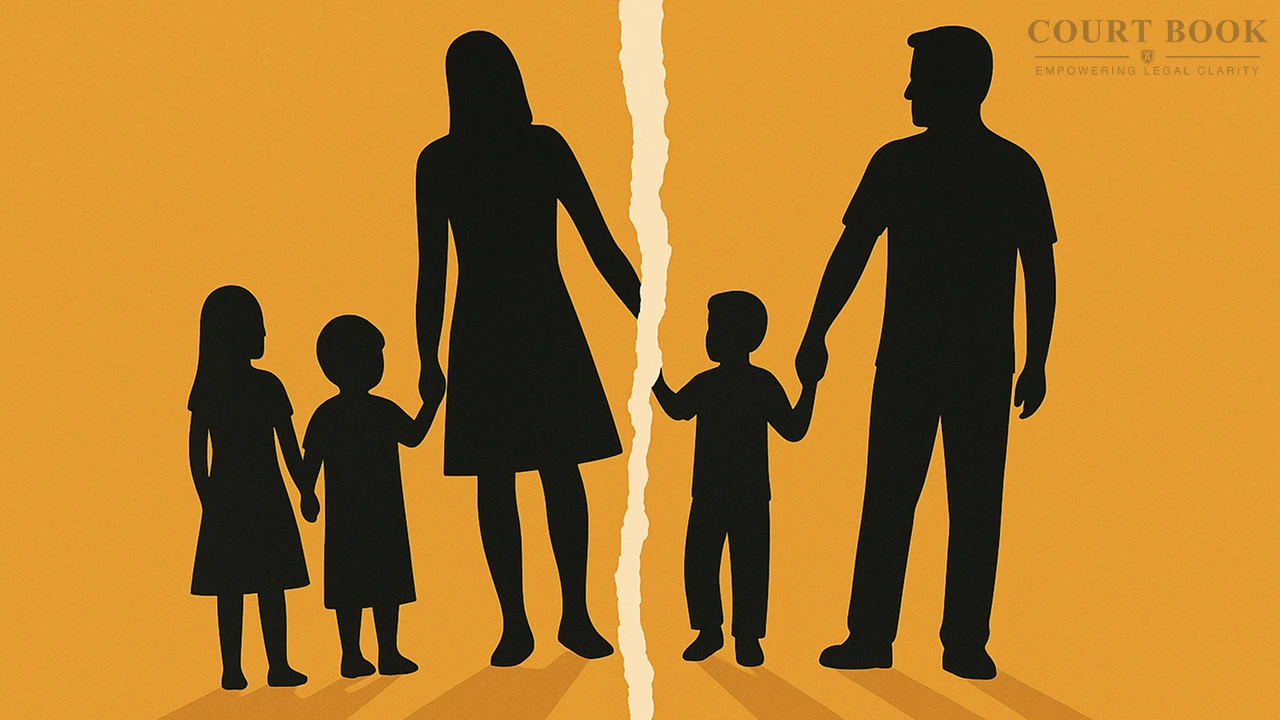
In a detailed ruling that ran through years of marital conflict and cross-litigation, the Delhi High Court on Friday upheld a Family Court order granting custody of two minor children to their father. The court firmly rejected the mother’s appeal and dismissed allegations of cruelty and abuse, holding that the welfare of the children must prevail over parental claims.
The judgment was delivered by a division bench of Justice Anil Kshetarpal and Justice Harish Vaidyanathan Shankar, who also disposed of a connected contempt petition filed by the father.
Background of the Case
The dispute traces back to a marriage solemnised in 2011. The couple has two children - a son, now about 12 years old, and a daughter, aged around six. After separating in 2018, the parties launched multiple proceedings across states, including criminal cases, domestic violence complaints, and guardianship petitions.
Read also:- Supreme Court Restores Rail Project Land Compensation, Sets Aside High Court’s Blanket Cancellation
The father approached the Family Court in Delhi seeking custody under the Guardians and Wards Act. In July 2024, the Family Court handed over custody of both children to him, citing concerns of parental alienation and instability caused by repeated relocation of the children.
Aggrieved, the mother challenged that order before the High Court, arguing that she had been the primary caregiver and that the children preferred staying with her.
Court’s Observations
After hearing both sides at length and interacting with the children in chambers, the bench made it clear that custody cases cannot be decided on stereotypes.
“The tender years doctrine is founded on outdated assumptions about parental roles,” the court observed, adding that modern custody decisions must be anchored in the best interests of the child.
The bench noted that while the mother projected herself as the sole caregiver, the record revealed a pattern of deliberate exclusion of the father from the children’s lives for several years.
“One parent cannot keep the children away from the other and then claim custody as a fait accompli,” the court said.
On the child’s expressed reluctance to meet the father, the judges sounded a note of caution.
Read also:- Customary Law Can’t Bar Widow’s Property Rights, Says Punjab & Haryana High Court
“The wish of a child is distinct from what is in the child’s best interest,” the bench remarked, pointing out that prolonged alienation can shape a child’s responses.
On Allegations and Conduct
The court took a stern view of serious allegations raised by the mother, including claims of sexual misconduct, noting that they surfaced late in the proceedings and were unsupported by pleadings or evidence.
“These accusations do not inspire confidence,” the bench observed, adding that such allegations appeared to be raised as a counterblast to custody proceedings.
The judges also recorded that several criminal cases filed against the father had ended in acquittal or were quashed, reinforcing the finding of abuse of legal process.
Read also:- Supreme Court Refuses to Halt Labour Case, Clears Conciliation Without Demand Notice
Decision of the Court
Dismissing the appeal, the High Court upheld the Family Court’s conclusion that the children’s welfare lay in being raised together in a stable environment under the father’s custody.
“The best interests of the children demand continuity, emotional security, and freedom from further parental conflict,” the bench held.
At the same time, the court emphasised that the mother’s role does not end with the loss of custody. It underlined her responsibility to contribute meaningfully to the children’s education, healthcare, and overall development.
With these observations, the court dismissed both the custody appeal and the connected contempt petition, bringing an end to a long-running and emotionally charged legal battle.
Case Title: Wife (Mother) vs Husband (Father)
Download Judgment

