

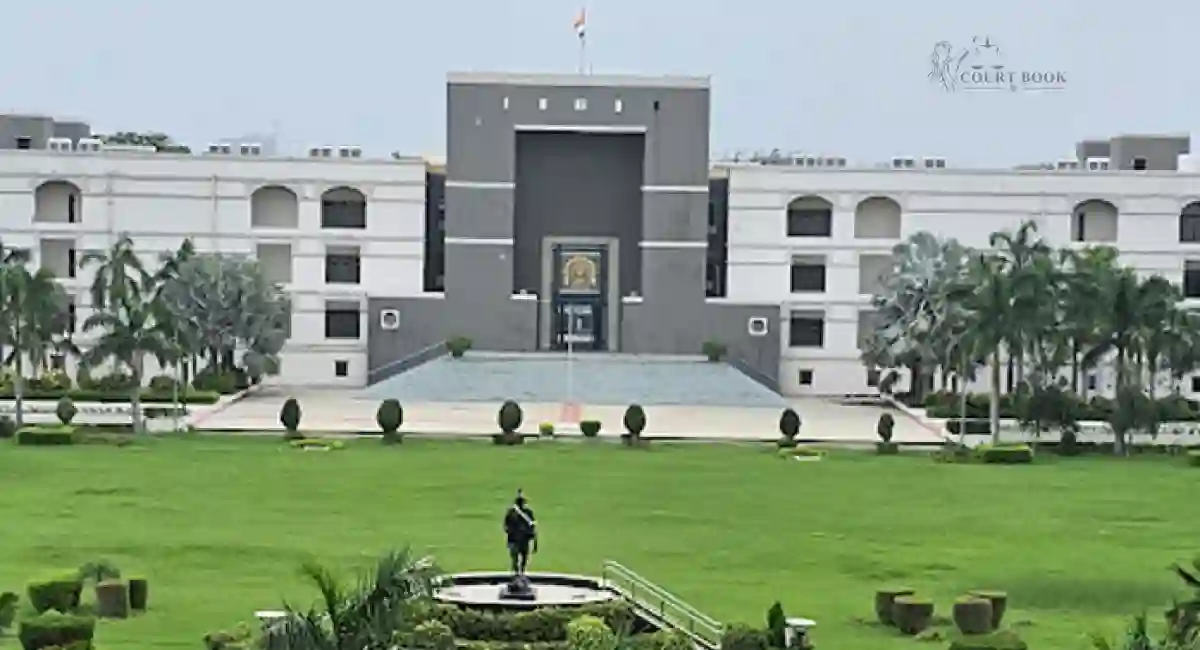
The Gujarat High Court has dismissed a second appeal filed by the heirs of Pirzada Saiyed Bahauddin B. Kadri, who had challenged a government restriction on burial and religious activities near the historic Bada Hajira tomb in Vadodara.
The court held that the monument is a protected heritage site and the plaintiff failed to establish any customary or legal right to bury family members in the surrounding area. The bench also ruled that the appellate court had not committed any legal error in relying on documents placed on record during the trial.
Justice J. C. Doshi delivered the judgment on 11 February 2026, dismissing the appeal for lack of any substantial question of law.
Background of the Case
The dispute arose after the Collector of Vadodara issued a notice in February 1986 restraining the plaintiff from conducting burial or other activities within the premises of Bada Hajira, located on land bearing Survey Nos. 322/1 and 322/2 at Danteshwar, Pratapnagar.
Pirzada Saiyed Bahauddin B. Kadri claimed to be the religious head (Dharma Guru) associated with the shrine of Qutbuddin Muhammad Khan. According to him, his family had historically managed the tomb and had a customary right to conduct religious observances and bury family members in the surrounding area.
The conflict intensified after he buried his daughter near the tomb without obtaining permission from the authorities. This prompted the Collector to intervene, citing protection laws applicable to the monument.
In response, Kadri filed a civil suit seeking:
• A declaration that the Collector’s notice was illegal
• A permanent injunction allowing him to continue religious and burial activities at the site
The trial court initially ruled in favour of the plaintiff. However, the first appellate court later overturned that decision and dismissed the suit, leading the plaintiff to approach the High Court in a second appeal.
Arguments Before the High Court
Counsel for the appellant argued that the appellate court had committed a serious error by relying on documents that had not been formally exhibited during the trial.
The lawyer contended that such reliance violated procedural rules under the Code of Civil Procedure. It was also argued that the site had long been used for religious purposes and that the family had customary rights to perform burial rituals near the tomb.
The State government opposed the appeal, stating that the documents relied upon by the appellate court were public records, including revenue entries and official notifications.
Government counsel further argued that these documents were originally placed on record by the plaintiff himself and therefore could not be challenged later.
Court’s Observations
Justice Doshi noted that the documents referred to by the appellate court were not new documents, but those already submitted by the plaintiff during the trial.
“The plaintiff cannot turn blind from those documents, regardless they are exhibited or not,” the court observed.
The court further pointed out that the documents were public records such as revenue entries and government notifications, which carry inherent evidentiary value.
Significantly, historical records showed that Bada Hajira had been declared a protected monument as early as 1938 by the Gaikwad of Baroda State, and this status continued after independence under heritage protection laws.
The bench also found that the plaintiff failed to prove several crucial claims.
“The plaint lacks the necessary averments showing how the plaintiff became the Dharma Guru or how such a customary right existed,” the court noted.
The judge also highlighted that the plaintiff had not produced evidence establishing lineage from the person whose tomb lies at the site or proof of any established burial custom.
Protected Monument Status and Legal Restrictions
The High Court emphasised that the monument falls under the Ancient Monuments and Archaeological Sites and Remains Act, 1958.
Under Section 19 of the Act, digging or altering soil within a protected monument area is strictly regulated. The court observed that burial activities would require digging deeper than the permitted limit, making them legally impermissible.
The bench also noted that the Archaeological Survey of India was a necessary party in the dispute since the monument falls under its protection, but the plaintiff had not impleaded it in the suit.
Final Decision
After examining the record and arguments from both sides, the High Court concluded that the appeal did not involve any substantial question of law, which is a requirement for a second appeal under Section 100 of the Code of Civil Procedure.
“The second appeal is sans merit and it is accordingly dismissed,” the court held.
With this ruling, the High Court upheld the decision of the first appellate court that had dismissed the original suit.
Case Title: Pirzada Saiyed Bahauddin B. Kadri (Through Heirs) vs State of Gujarat
Case No.: R/Second Appeal No. 27 of 2006
Decision Date: 11 February 2026


