

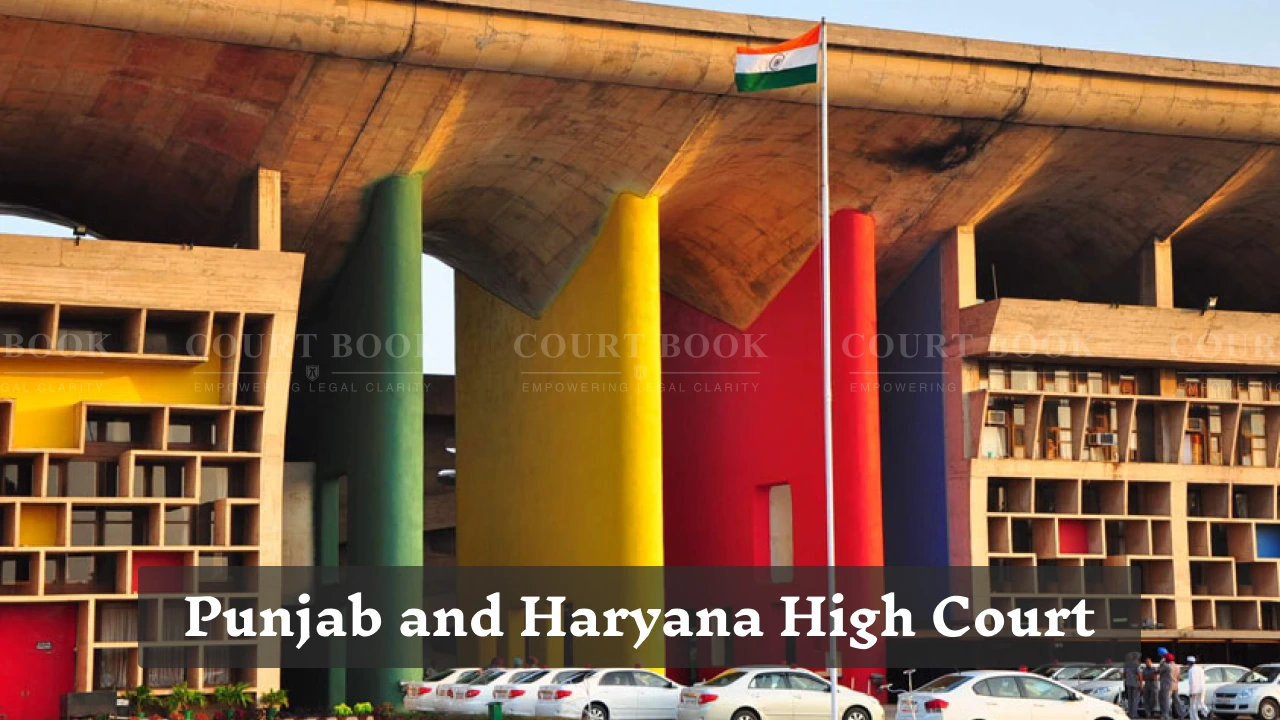
Ending a dispute that began more than four decades ago, the Punjab and Haryana High Court has ruled that a widow has the legal right to sell non-ancestral property inherited from her husband without seeking consent from his collateral relatives. The court overturned earlier judgments that had invalidated a 1982 sale deed, calling those findings legally unsustainable.
Justice Virinder Aggarwal delivered the verdict while allowing a Regular Second Appeal filed by the purchasers of the land.
Background of the Case
The case revolved around 42 kanals and 19 marlas of agricultural land originally owned by a man named Akkal from the Meo community of the erstwhile Gurgaon district. After Akkal died without children, his widow Smt. Rehmani inherited the land.
Read also:- Supreme Court Refuses to Halt Labour Case, Clears Conciliation Without Demand Notice
In 1982, Rehmani sold the property through a registered sale deed for ₹28,000. Years later, a collateral relative filed a suit claiming that under customary law, a Meo widow had only a life interest in the property and could not sell it without the consent of male collaterals. Both the trial court and the first appellate court accepted this argument and declared the sale void.
The purchasers then approached the High Court.
What the Appellants Argued
The appellants contended that the land had already been declared non-ancestral in earlier litigation between the same parties. They argued that customary restrictions recorded in documents like Wajib-ul-Arz applied only to ancestral property, not to property personally inherited by a widow.
They also submitted that imposing such restrictions on a woman’s right to deal with her property was inconsistent with constitutional guarantees of equality.
Read also:- Madras High Court Restores ‘SAKTHI’ Trademark, Calls Registrar’s Cancellation Illegal and Arbitrary
Court’s Observations
After examining decades of litigation and earlier precedents, the High Court found serious flaws in the reasoning of the lower courts.
“The suit property stood conclusively determined as non-ancestral,” the bench observed, noting that once this fact was settled, customary limits on alienation could not be mechanically applied.
The court relied heavily on Supreme Court rulings to hold that entries in Riwaj-i-Am generally relate to ancestral land unless there is a clear indication otherwise. It also stressed that customs restricting women’s property rights must be tested against constitutional principles.
Justice Aggarwal noted that, “Any restriction on a woman’s right to alienate non-ancestral property inherited by her, founded solely on gender, cannot withstand Article 14 of the Constitution.”
Read also:- Remarried Childless Widow Can Continue Family Pension, Parents Have No Right: Delhi High Court
The High Court also disagreed with the finding that the sale lacked legal necessity. While the plaintiff claimed the sale was sham, evidence showed the money was used for family needs, including marriage expenses within Rehmani’s household.
The court clarified that once a widow is the full owner of non-ancestral property, the sale cannot be struck down merely because collaterals were not consulted.
Final Decision
Allowing the appeal, the High Court set aside both earlier judgments and dismissed the original suit challenging the sale deed.
“The conclusion that the sale was void for want of collateral consent is legally untenable,” the court held, restoring the validity of the 1982 transaction.
With this ruling, the long-pending dispute came to an end, and all connected applications were also disposed of.
Case Title: Mohd. Ashraf & Another v. Sadiq (Since Deceased) through LRs & Others
Case Number: RSA-1499-1996 (O&M)
Pronounced on: 22 January 2026
Advocates
• For Appellants: Mr. Ashish Aggarwal, Senior Advocate Mr. Vishan Pundir, Advocate
• For Respondents: Mr. M.L. Sarin, Senior Advocate Ms. Heman Sarin, Advocate


