

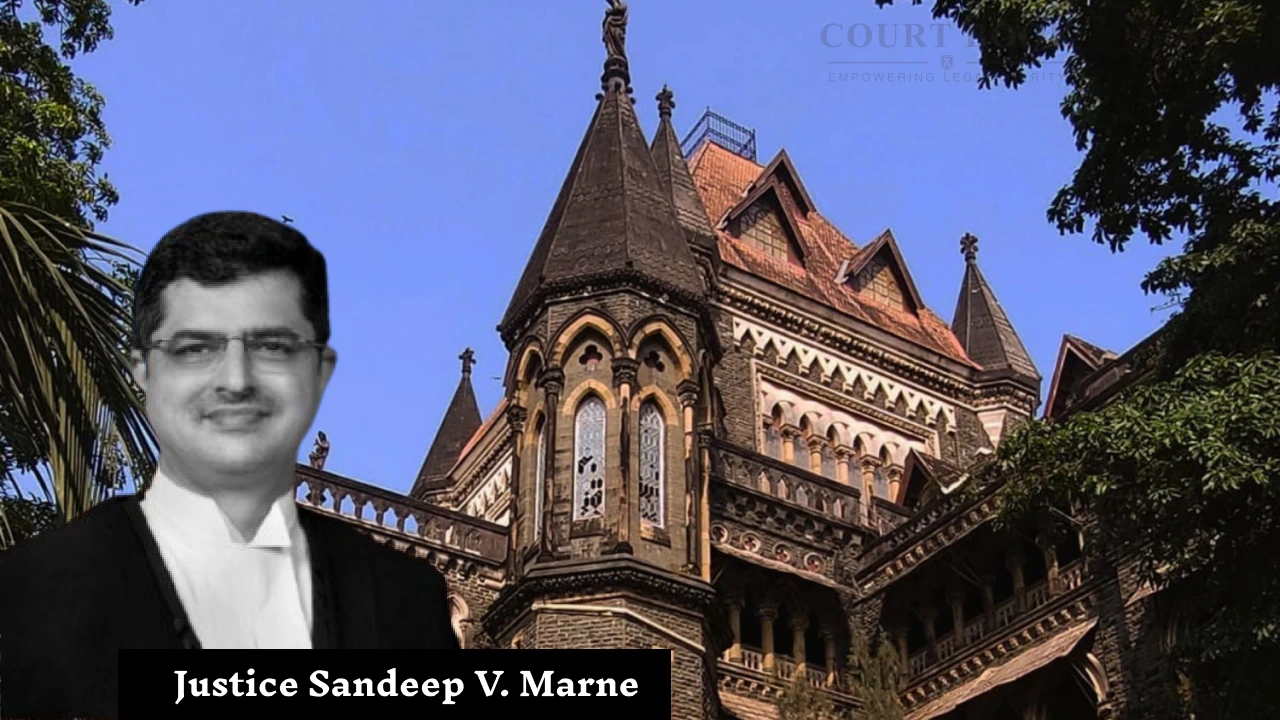
In a significant order dealing with trademark litigation and disclosure obligations, the Bombay High Court has vacated an ex-parte interim injunction granted earlier in a commercial intellectual property suit involving the mark “ELDER.”
Justice Sandeep V. Marne held that the plaintiff had failed to approach the court with “clean hands” and suppressed crucial information while seeking urgent interim relief without notice to the defendant.
The court emphasized that when a party seeks discretionary relief like an injunction especially ex-parte it must disclose all relevant facts that could influence the court’s decision.
Background of the Case
The dispute arose in a commercial IP suit filed by Elder Projects Limited against Elder Neutraceuticals Private Limited alleging trademark infringement and passing off.
Read also:- Madhya Pradesh High Court Upholds Mother’s Custody of Two Minor Daughters, Dismisses Father’s Appeal
The plaintiff claimed that:
• It had been using a device trademark containing the word “ELDER” since 1992-93.
• The mark was used for pharmaceutical products including medicines, ointments and eye drops.
• The mark was registered under the Trade Marks Act, 1999 in June 2024.
• The defendant was using a deceptively similar mark for identical products.
Based on these allegations, the court had earlier granted an ex-parte ad-interim injunction on 26 September 2025, restraining the defendant from using the impugned mark and appointing a court receiver to seize goods bearing the mark.
The defendant subsequently approached the court seeking vacation of the injunction.
The defendant argued that the injunction had been obtained by suppressing critical facts, including:
1. The fact that Elder Pharmaceuticals Ltd. (EPL) had been the original adopter and registered proprietor of the mark “ELDER” since 1983.
2. The relationship between directors of both companies, who are siblings and previously associated with EPL.
3. Multiple adverse orders passed by the Delhi High Court involving disputes over the same trademark.
4. Proceedings initiated by the Official Liquidator of EPL.
The defendant also highlighted that the plaintiff had earlier admitted before the Delhi High Court that it was merely a contract manufacturer for EPL and did not own the “ELDER” trademark.
The plaintiff contended that:
• Its suit was based on a registered device mark, not the word mark “ELDER” alone.
• The defendant had copied the stylized font and visual presentation of its registered mark.
• Registration of the mark in 2024 created a presumption of validity.
The plaintiff further argued that earlier Delhi High Court cases concerned different trademarks and factual contexts.
Read also:- MP High Court Quashes Rape FIR After 13-Year Relationship, Says Consensual Affair Cannot Be Criminalised
Justice Sandeep V. Marne found that the plaintiff had failed to disclose several material facts, which were directly relevant to deciding whether an injunction should have been granted.
The court noted that the plaintiff claimed to have “coined” the mark and used it since 1992, while records showed that Elder Pharmaceuticals Ltd. had registered and used the mark since 1983.
This information, the court held, was crucial and should have been disclosed.
The court also observed that the directors of the plaintiff and defendant companies are siblings, and their father had served as managing director of EPL.
The plaintiff had not revealed this connection when seeking urgent relief.
The court found it particularly serious that the plaintiff did not disclose multiple decisions of the Delhi High Court where:
• Claims over the “ELDER” mark were rejected.
• Courts observed that EPL was the rightful proprietor.
• The plaintiff was found to be only a permitted user or contract manufacturer.
These decisions were directly relevant to the current dispute, the court said.
The judgment reiterates a fundamental legal principle:
When seeking ex-parte injunctions, parties must disclose all material facts, even those unfavorable to their case.
Failure to do so can justify vacating the injunction.
After examining the record, the Bombay High Court held that the plaintiff had suppressed material particulars while seeking interim relief.
The court therefore:
• Vacated the ex-parte ad-interim injunction granted on 26 September 2025
• Allowed the defendant’s application seeking recall of the order
• Observed that the suppression had misled the court at the stage of granting urgent relief
The case will continue on merits in the commercial IP suit.
Case Details
Case Title: Elder Projects Limited v. Elder Neutraceuticals Private Limited
Case Number: Interim Application (L) No. 35091 of 2025 in Commercial IP Suit (L) No. 27106 of 2025
Decision Date: 9 March 2026


