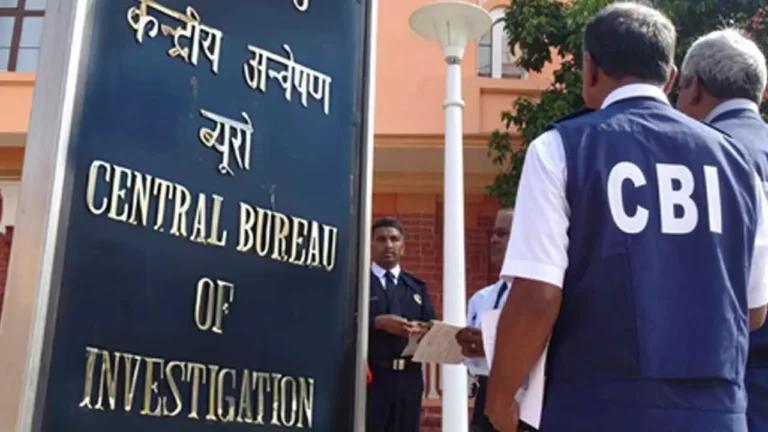
The Delhi High Court on March 12 granted anticipatory bail to Ravjeet Singh in a corruption case investigated by the Central Bureau of Investigation (CBI). The court observed that merely giving “smart responses” during questioning cannot be treated as non-cooperation with investigators.
Justice Girish Kathpalia passed the order while hearing a plea seeking protection from arrest in a case linked to alleged bribery and conspiracy involving defence-related approvals.
Read also:- Allahabad High Court Slams UP Officials Over Namaz Restriction in Sambhal During Ramzan
Background of the Case
The case arises from an FIR registered by the CBI on December 19, 2025. The investigation alleges offences under several provisions of the Prevention of Corruption Act and Section 61(2) of the Bharatiya Nyaya Sanhita (BNS).
According to the prosecution, the main accused, Lt. Col. Deepak Sharma, allegedly entered into a conspiracy with representatives of private companies engaged in defence manufacturing, logistics, and export activities. The allegation is that the accused sought undue favours from government departments and ministries.
Ravjeet Singh was described by investigators as the person managing the India operations of a Dubai-based company, M/s D. P. World. The CBI claimed he remained in contact with Lt. Col. Sharma and allegedly sought assistance for securing approvals from the Ministry of External Affairs.
Investigators further alleged that an amount of ₹3 lakh was received by Lt. Col. Sharma as illegal gratification. The money was reportedly recovered during a raid conducted by the CBI.
During the hearing, it was noted that the evidence collected by the agency primarily consisted of WhatsApp conversations. However, the material produced before the court was in the form of chat screenshots rather than the original chat records.
The court recorded that the prosecution opposed the bail application mainly on the ground that the accused had not cooperated with the investigation.
Justice Kathpalia questioned the CBI on why the applicant had not been arrested earlier if his custodial interrogation was necessary.
The prosecution responded that the accused had failed to join the investigation despite receiving three notices and later obtained interim protection from the court, which prevented his arrest.
The court, however, found the objection raised by the agency insufficient.
“The ground on which the anticipatory bail is opposed that the accused would not cooperate in the interrogation is, to say the least, a vague and unacceptable ground,” the bench observed.
The judge further clarified that an accused cannot be expected to make the investigator’s task easier.
Read also:- Himachal Pradesh High Court Upholds Appointment of School Worker, Says RTE Act Doesn’t Bar Class
“Merely because an accused is smart in responding to the questions of the interrogator, it cannot be said that he is not cooperating in the interrogation. Nobody is under a duty not to be smart,” the court remarked.
The court also noted that the principal accused, Lt. Col. Deepak Sharma, had already been granted bail, which weighed in favour of granting similar relief to the applicant.
During the hearing, counsel for the applicant informed the court that the main chargesheet had already been filed on February 16, 2026.
The CBI submitted that further investigation was ongoing and that a supplementary chargesheet may be filed. The agency requested that the accused be directed to cooperate with the investigation so that the process could be completed within time.
Considering the overall circumstances, the Delhi High Court allowed the anticipatory bail application.
The court directed that in the event of his arrest, Ravjeet Singh shall be released on bail upon furnishing a personal bond of ₹50,000 along with one surety of the same amount to the satisfaction of the investigating officer.
The court also directed the applicant to join the investigation whenever required in writing by the investigating officer and not to tamper with evidence.
With these directions, the anticipatory bail application and accompanying applications were disposed of.
Case Title: Ravjeet Singh v. Central Bureau of Investigation
Case No.: Bail Appln. 328/2026
Decision Date: 12 March 2026