

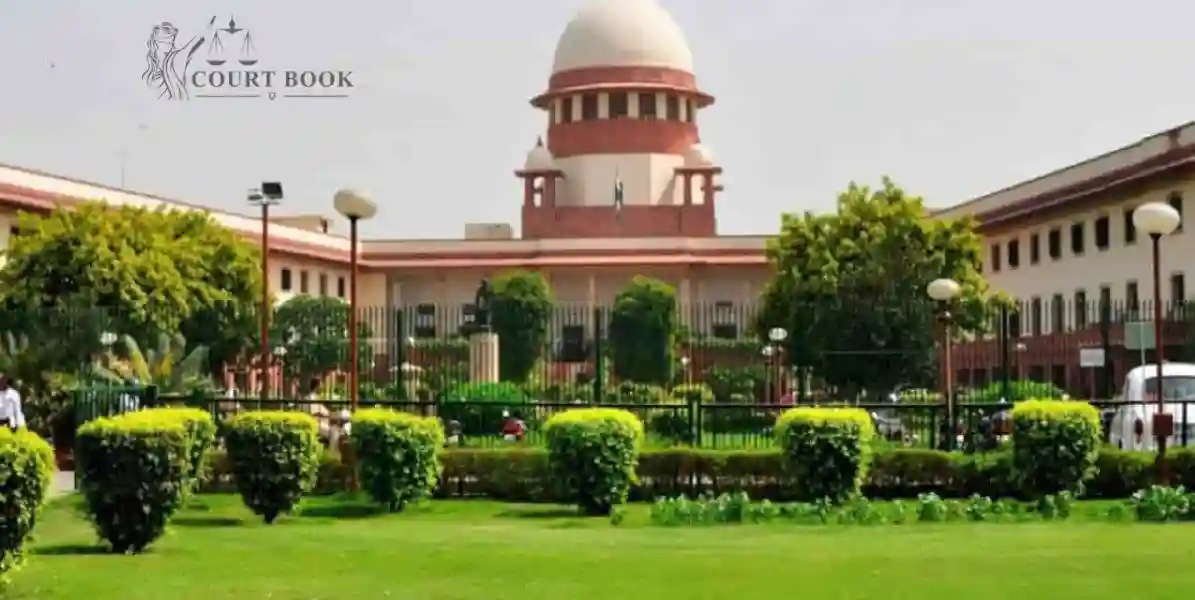
The Supreme Court of India has dismissed a long-pending petition filed by the Mizo Chief Council, which sought compensation for lands allegedly taken over by the government in present-day Mizoram.
In a detailed judgment delivered on March 13, 2026, a bench of Justices J.B. Pardiwala and R. Mahadevan held that the petitioners failed to prove that the traditional Mizo chiefs had ownership rights over the lands claimed. As a result, the court concluded that no violation of fundamental rights was established.
Background of the Case
The petition was filed by the Mizo Chief Council Mizoram, representing tribal chieftains of the former Lushai Hills district, now the state of Mizoram.
Historically, Mizo society revolved around the institution of chiefs who governed villages and collected customary tributes from agricultural produce. The petitioners argued that these chiefs were the absolute owners of the land within their territories, known as “Ram”.
After India’s independence, the Assam Lushai Hills District (Acquisition of Chief’s Rights) Act, 1954 abolished the traditional chieftainship system. Under the law, the state acquired the chiefs’ administrative rights and provided compensation.
However, the petitioners claimed that the compensation paid covered only certain customary privileges like the “Fathang” (paddy tax) and did not account for the value of the land itself, which they said belonged to the chiefs.
According to them, the government had effectively taken over vast tracts of land without lawful authority or adequate compensation, thereby violating their fundamental right to property, which existed under the Constitution at the time.
Petitioners’ Stand
The Mizo Chief Council argued that:
• The chiefs historically exercised complete ownership and authority over the lands within their domains.
• The 1954 law only removed administrative privileges but did not legally acquire the land itself.
• Even if the law did amount to acquisition, the compensation provided was illusory and inadequate.
• The state’s actions violated Articles 14, 19(1)(f), and 31 of the Constitution as they stood at the relevant time.
They also argued that Mizo chiefs were historically comparable to rulers of princely states, who had received privy purses and compensation arrangements during integration with India.
Government’s Response
The Union of India and the State of Mizoram contested the claims, arguing that:
• The petition was filed decades after the events, making it a stale claim.
• The chiefs were never the absolute owners of the land, but merely exercised administrative control under colonial arrangements.
• Compensation paid under the 1954 Act was intended only for the loss of administrative privileges, not for land ownership.
Read also:-Calcutta High Court Enhances Compensation for Parents Who Lost Two Sons in 2015 Road Accident
The Supreme Court examined historical records, colonial administrative arrangements, and the legal framework governing the Lushai Hills.
The bench observed that the petitioners had not produced sufficient evidence to prove ownership of the land by the chiefs. The documents relied upon, including historical writings and accounts, were considered insufficient to establish legal title.
“The petitioners have woefully failed to discharge their burden of proving title over the subject lands,” the Court noted.
The judges also pointed out that boundary documents issued during the British era did not indicate that chiefs possessed absolute ownership rights over the territories they administered.
On the claim of discrimination with princely rulers, the Court clarified that privy purses were the result of specific political agreements, and not a constitutional right available to all traditional authorities.
After examining the material on record, the Supreme Court concluded that the petitioners had failed to demonstrate any violation of fundamental rights arising from the abolition of the chieftainship system or the land arrangements under the 1954 law.
“Having considered the matter from all vantage points, the inescapable conclusion is that the petitioner has not been able to establish any violation of the fundamental rights of the Mizo Chiefs,” the bench stated.
Accordingly, the Court dismissed the writ petition and all pending applications.
Case Title: Mizo Chief Council Mizoram v. Union of India & Others
Case No.: Writ Petition (Civil) No. 22 of 2014
Decision Date: 13 March 2026
Download Judgment

