

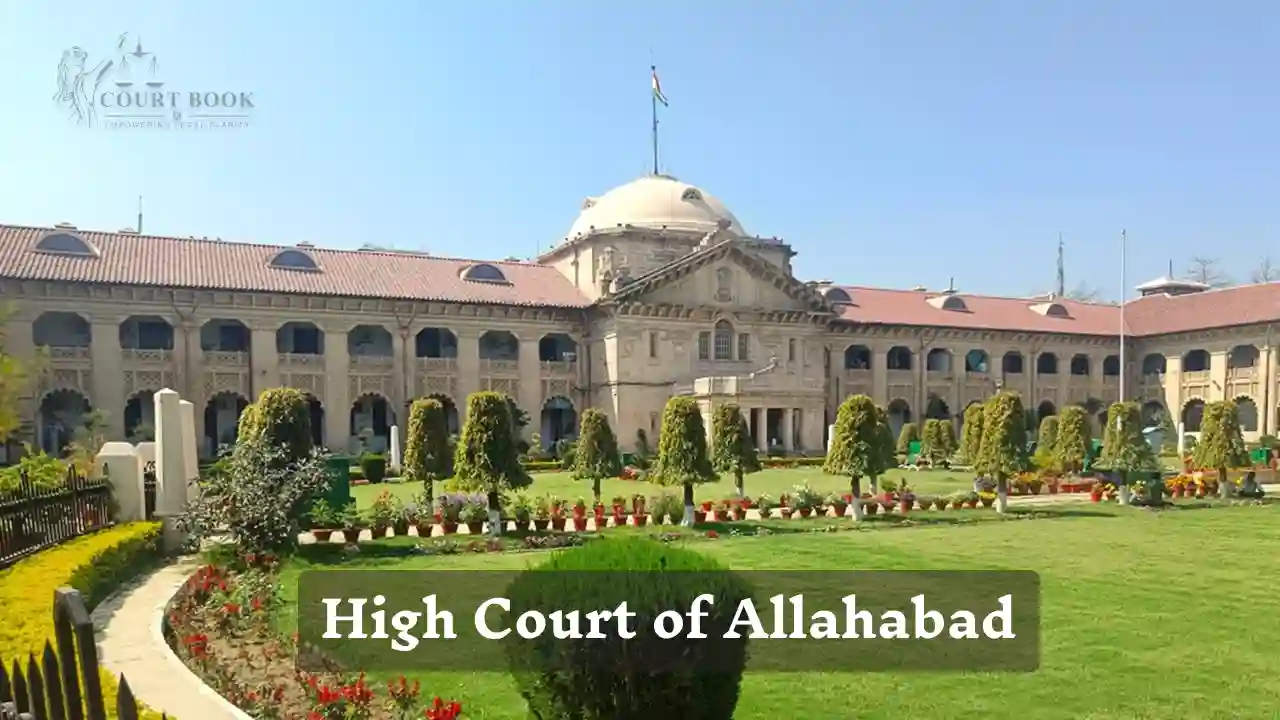
In a significant order, the Allahabad High Court has allowed a plaintiff to amend the plaint in a long-pending civil suit filed in 1997, holding that mere delay cannot be the sole ground to reject an amendment application.
Justice Manish Kumar Nigam set aside the orders of the trial court and the revisional court which had earlier refused the amendment request, observing that the proposed change did not alter the fundamental nature of the dispute.
Background of the Case
The matter arose from a civil dispute between Dayanand and two others (petitioners) and Mohan alias Ghure (respondent). The petitioners had filed a suit in 1997 concerning possession and construction on a disputed property.
Initially, the plaintiffs sought a mandatory injunction, asking the court to direct the defendants to remove their constructions and hand over possession of the property.
Later, the plaintiffs moved an application seeking amendment in the plaint. Through the amendment, they intended to modify the relief clause and instead seek possession of the disputed property along with minor corrections in the pleadings.
However, the trial court rejected the amendment application on 16 November 2022, primarily citing the long delay in filing it. The revisional court also upheld that decision in April 2023.
Aggrieved by these orders, the petitioners approached the High Court under Article 227 of the Constitution of India.
Arguments Before the High Court
Counsel for the petitioners argued that the amendment only altered the form of relief and made minor corrections in the plaint. It did not introduce any new claim or change the underlying dispute.
They contended that rejecting the application merely because it was filed after many years was legally incorrect.
On the other hand, the respondent’s counsel opposed the plea, submitting that the amendment would change the nature of the suit and therefore should not be allowed, especially in view of the proviso to Order VI Rule 17 of the Code of Civil Procedure (CPC).
Court’s Observations
After examining the pleadings and the proposed amendment, the High Court held that the essence of the suit remained unchanged.
The court noted that the amendment essentially sought possession of the same property that was already the subject matter of the original suit.
“The relief in substance is the same,” the bench observed, indicating that the amendment did not alter the fundamental character of the case.
Justice Nigam further explained that the proviso to Order VI Rule 17 CPC, which restricts amendments after the commencement of trial unless due diligence is shown, would not apply to this case. The reason was that the suit had been filed in 1997, before the CPC amendment introducing the proviso came into effect.
Referring to the Supreme Court ruling in State Bank of Hyderabad v. Town Municipal Council (2007), the court reiterated that the amended proviso does not apply to pleadings filed before the amendment came into force.
The High Court also cited the Supreme Court judgment in Sampath Kumar v. Ayyakannu (2002), which clarified that delay alone cannot be a ground to reject an amendment application if it helps resolve the real dispute between the parties.
High Court’s Decision
Finding the reasoning of the lower courts unsustainable, the High Court set aside both orders that had rejected the amendment request.
Exercising its supervisory powers under Article 227 of the Constitution, the court directly allowed the amendment application filed by the plaintiffs.
The petitioners were directed to carry out the necessary amendment in the plaint within three weeks from the date of the order.
Considering that the suit has been pending since 1997, the High Court also directed the trial court in Gorakhpur to proceed with the case expeditiously and preferably decide it within six months, after giving both parties full opportunity to present their evidence.
With these directions, the High Court allowed the petition.
Case Title: Dayanand and 2 Others vs Mohan @ Ghure
Case No.: Matters Under Article 227 No. 5796 of 2023
Decision Date: 25 February 2026


