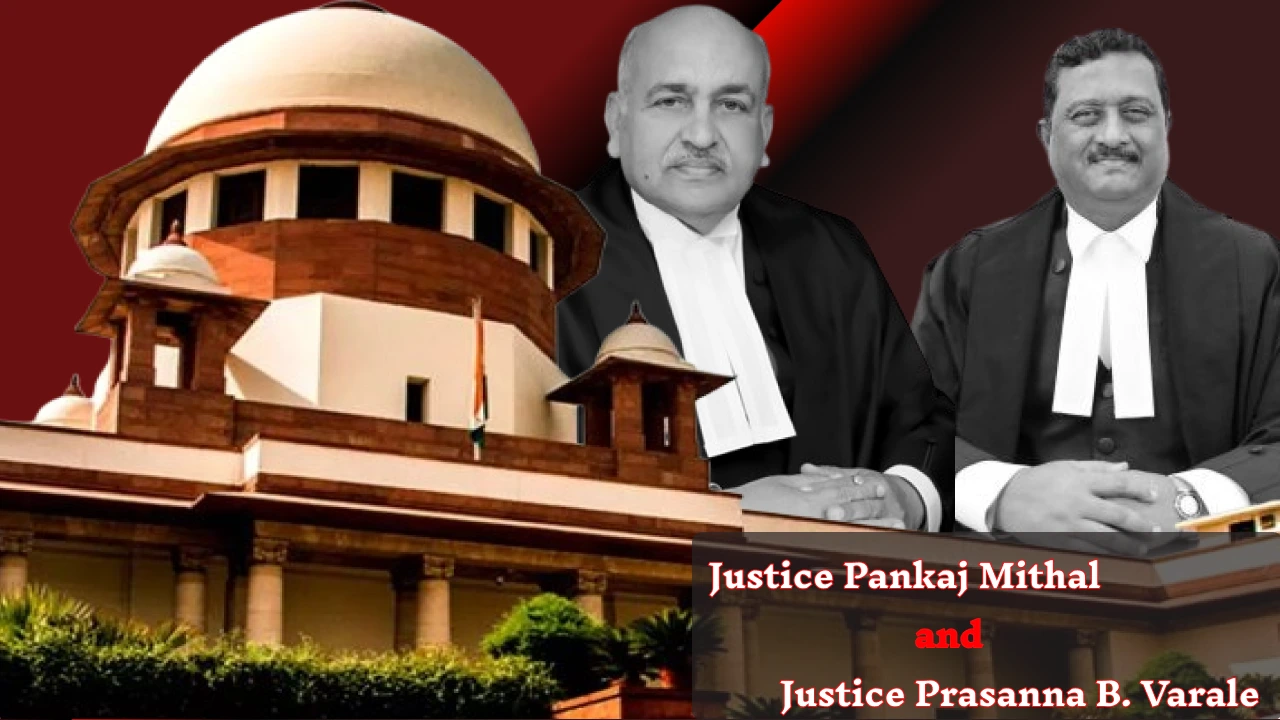
In a significant ruling on the limits of execution proceedings, the Supreme Court has held that an executing court cannot modify the terms of a decree while enforcing it. The Court set aside multiple orders that had altered a compromise decree involving a land dispute in Maharashtra.
Background of the Case
The dispute arose from a land transaction between Maurice W. Innis (appellant) and Lily Kazrooni @ Lily Arif Shaikh (respondent). The matter relates to a 51R portion of non-agricultural land in Panchgani.
Read also:- Supreme Court Upholds 1988 Land Deal, Rejects Appeal in Long-Running Specific Performance Case
Initially, the appellant had sold part of the land to the respondent. Later, an agreement dated April 17, 2009, was executed for the sale of the remaining 51R. When the agreement was not fulfilled, the appellant filed a suit seeking specific performance.
In 2017, both parties entered into a compromise. As per the settlement:
• 10R land was to remain common for access
• The remaining 41R was to be equally divided (20.5R each)
• Specific portions were clearly identified in the decree
A final decree was passed on July 14, 2017, incorporating these terms.
The conflict arose during execution of the decree. The respondent initiated execution proceedings, and the executing court passed orders in July and August 2021.
These orders effectively changed the portions of land allotted to each party, citing practical difficulties such as:
• Unauthorized constructions
• Prior sale of part of the land
• Possible inconvenience to the respondent
The High Court upheld these modifications, prompting the appellant to approach the Supreme Court.
Read also:- J&K High Court Grants Bail in NIA Case, Cites Weak Evidence and Prolonged Custody
The Bench of Justice Pankaj Mithal and Justice Prasanna B. Varale examined the scope of powers under Section 47 of the Code of Civil Procedure.
“The executing court is empowered to decide questions relating to execution… but has no jurisdiction to go beyond the decree,” the bench observed.
The Court reiterated settled law that an executing court must enforce the decree “as it stands” and cannot alter its terms. It referred to earlier judgments to emphasize that even if a decree appears incorrect, it remains binding unless set aside through proper legal proceedings.
Addressing the respondent’s argument, the Court clarified:
“The executing court cannot assume the role of a trial court… and substitute its own view in place of that expressed under the decree.”
The Bench also noted that there was no ambiguity in the identification of the land portions in the decree. Hence, there was no justification for modifying it.
The Supreme Court held that the executing court had exceeded its jurisdiction by altering the terms of the compromise decree.
Read also:- Supreme Court Explains ‘Same Line of Business’ Rule in IBC Case, Allows Appeal Withdrawal
Accordingly, the Court:
• Set aside the orders dated July 19, 2021, and August 26, 2021
• Also quashed the consequential order directing delivery of possession
• Directed the executing court to enforce the decree strictly in its original terms
“The executing court has to execute the decree in its terms and tenor,” the bench concluded.
Case Details
Case Title: Maurice W. Innis vs Lily Kazrooni @ Lily Arif Shaikh
Case Number: Civil Appeal arising out of SLP (C) No. 8166 of 2022
Judges: Justice Pankaj Mithal and Justice Prasanna B. Varale
Decision Date: April 9, 2026
Download Judgment