

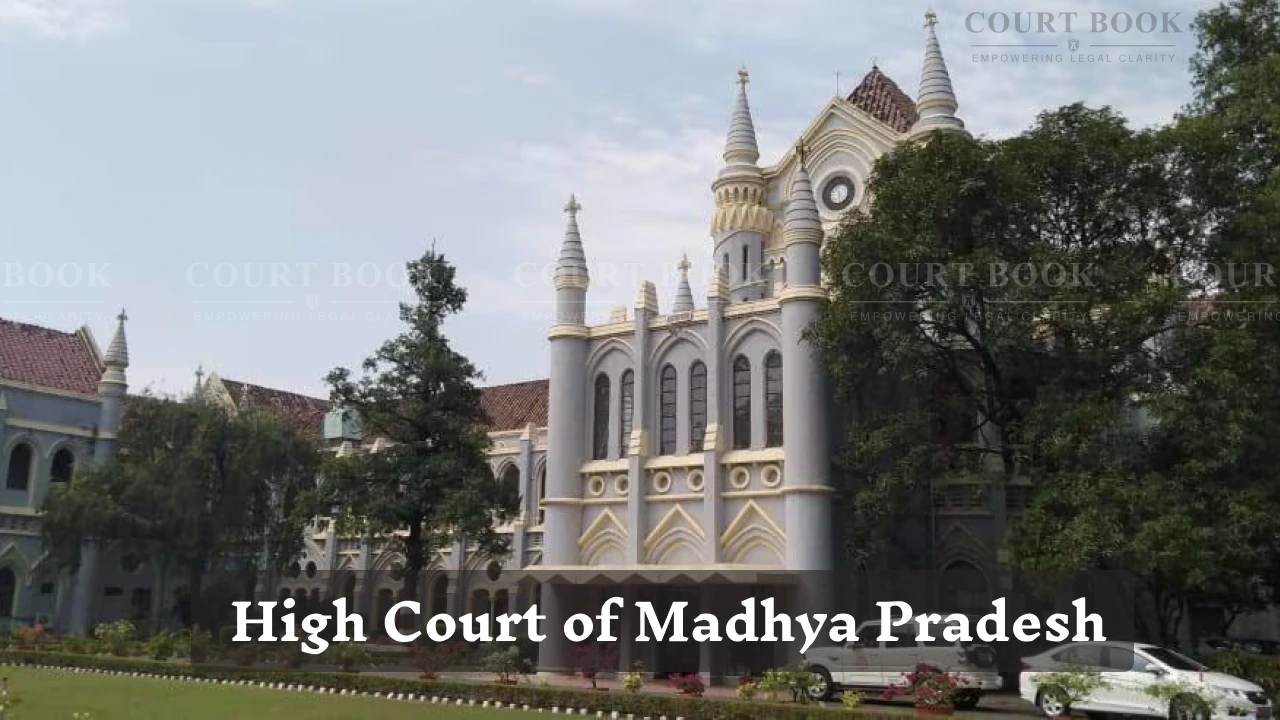
The High Court of Madhya Pradesh has dismissed an appeal filed by Central Madhya Pradesh Gramin Bank and upheld an earlier order directing the bank to release gratuity to the widow of a dismissed officer. The Division Bench Justice Vivek Rusia and Justice Pradeep Mittal ruled that gratuity cannot be denied unless the strict conditions under the Payment of Gratuity Act, 1972 are satisfied.
The case arose after the death of Rajesh Mor, a bank officer who had faced departmental proceedings over allegations relating to branch operations and alleged defalcation of ₹1 lakh. Following the inquiry, he was dismissed from service in April 2017. He later died in November that year.
His widow, Babita Mor, sought release of gratuity payable to him. However, the bank rejected the request, arguing that gratuity stood forfeited under its Service Regulations because the officer had been dismissed for misconduct.
A Single Judge of the High Court later allowed her petition and directed payment of gratuity, after which the bank filed the present writ appeal.
The Division Bench examined whether the bank’s internal service regulations could override the Payment of Gratuity Act, 1972. The Court noted that the Act is a welfare legislation with overriding effect under Section 14.
The Court observed that gratuity can be forfeited only in circumstances specifically mentioned under Section 4(6) of the Act.
The Court further recorded that the alleged defalcated amount had already been deposited and no financial loss remained caused to the bank. Therefore, forfeiture under Section 4(6)(a), which allows deduction only to the extent of actual loss, was not attracted.
On the issue of moral turpitude, the Bench pointed out that no criminal prosecution or conviction had been recorded against the deceased officer. “Mere dismissal from service pursuant to a departmental enquiry cannot, by itself, result in automatic forfeiture of gratuity,” the Court said.
The judges also rejected the bank’s reliance on Supreme Court rulings cited during arguments, holding that those decisions were distinguishable on facts and statutory context.
Finding no error in the earlier judgment, the Division Bench affirmed the Single Judge’s order directing payment of gratuity to the widow. The Court held that the bank failed to establish conditions necessary for forfeiture under the Payment of Gratuity Act.
The writ appeal was dismissed without costs.


