

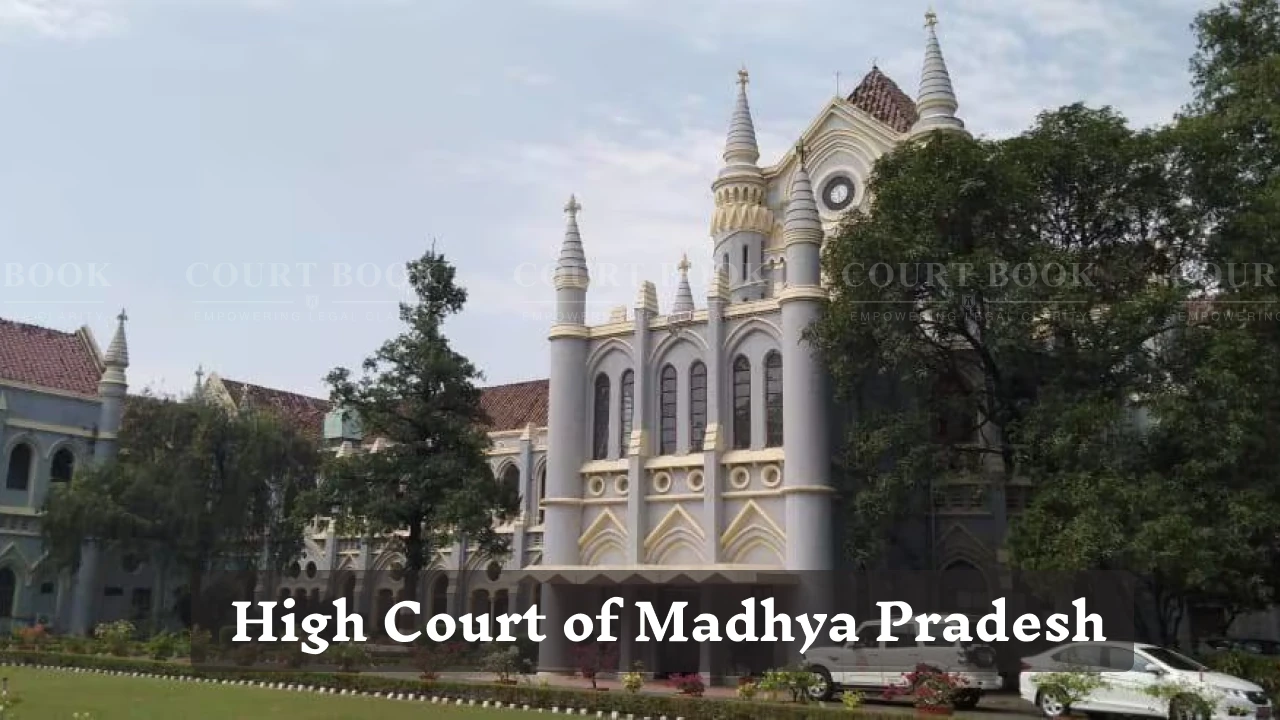
The Madhya Pradesh High Court has dismissed a criminal revision petition filed by Jagram and two others, refusing to interfere with a trial court order that framed charges under the Madhya Pradesh Freedom of Religion Act, 2021. The Court held that the materials collected during investigation disclosed a prima facie case and reiterated that courts should not conduct a "mini trial" while deciding whether charges should be framed.
Background of the Case
The case arose from a complaint lodged on June 20, 2025, by a resident of Village Chaubara Jageer in Dewas district. According to the complaint, a meeting was held in the village where several persons allegedly encouraged villagers to adopt Christianity. It was alleged that participants were promised free medical treatment, quality education for their children, and ₹50,000 if they converted their religion.
Based on the complaint, Police Station Sonkatch registered Crime No. 409/2025. During the investigation, police recorded witness statements, prepared a spot map, and seized materials allegedly used during the meeting, including publicity material, a loudspeaker, and a motorcycle. After completing the investigation, a charge sheet was filed against the accused under Sections 3 and 5 of the Madhya Pradesh Freedom of Religion Act, 2021.
Petitioners' Arguments
The petitioners challenged the trial court's order framing charges, arguing that the prosecution had not complied with Section 4 of the 2021 Act regarding the filing of the complaint. They also contended that the mandatory requirements under Section 10 of the Act had not been followed.
It was further argued that the allegations of "allurement" were vague and did not satisfy the statutory definition under Section 2(a) of the Act. The petitioners relied on Supreme Court decisions, including Toofan Singh v. State of Tamil Nadu and A.R. Antulay v. R.S. Nayak, to support their challenge.
Court's Observations
Justice Gajendra Singh first referred to settled Supreme Court principles governing the framing of charges. The Court observed that at this preliminary stage, a judge is required only to determine whether sufficient material exists to proceed with the trial and not to evaluate whether the evidence would ultimately lead to conviction.
Referring to earlier Supreme Court judgments, the bench noted,
"At the stage of framing of the charge... the mini trial is not permissible."
Examining the complaint, the High Court found that the complainant himself claimed to have attended the meeting where the alleged inducements were made. Therefore, the Court rejected the argument that Section 4 of the Act had not been complied with.
The Court also held that Section 10 of the Act concerns declarations to be made by a person intending to convert religion and that non-compliance with that provision is punishable separately under Section 10(4). Since no charge had been framed under Section 10(4), the Court held that the petitioners' objection on this ground was unsustainable.
The bench further observed,
"The averments contained in the complaint... if taken at its face value, prima facie fall within the ambit of 'allurement' as defined under Section 2(a) of the Act."
It added that the investigation also prima facie indicated the involvement of the petitioners, including allegations that equipment used for promoting the alleged inducement had been provided by them.
Court's Decision
Holding that sufficient material existed to proceed with the prosecution, the High Court concluded that no interference with the trial court's order was warranted. The Court also held that the Supreme Court judgments cited by the petitioners did not assist their case.
Accordingly, the criminal revision petition was dismissed, allowing the prosecution to continue before the trial court.
Case Details:
Case Title: Jagram and Others v. State of Madhya Pradesh
Case Number: Criminal Revision No. 555 of 2026
Judge: Justice Gajendra Singh
Decision Date: 29 June 2026


