

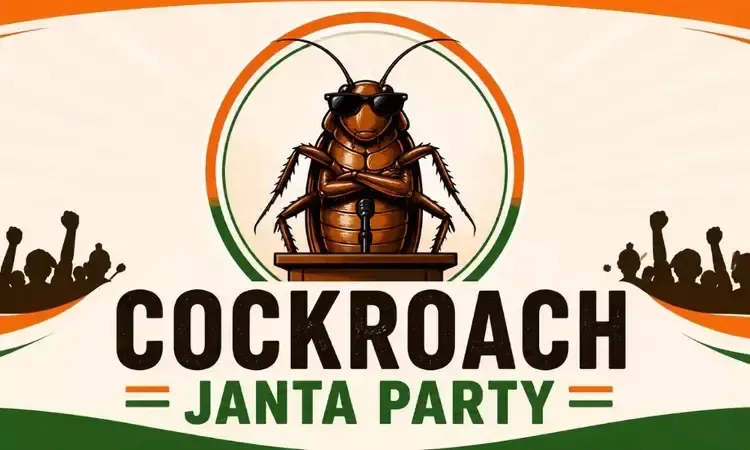
The Supreme Court on Monday (25 May) declined to grant an urgent hearing to a Public Interest Litigation seeking a Central Bureau of Investigation (CBI) probe into persons allegedly linked with the online movement known as the “Cockroach Janta Party,” a satirical campaign that emerged after recent courtroom remarks made by Chief Justice of India (CJI) Surya Kant.
The matter was mentioned before a Bench comprising Justice Surya Kant, Justice Joymalya Bagchi and Justice Vipul M Pancholi.
When concerns were raised that the campaign was harming the image of the judiciary, the Bench responded briefly, asking the petitioners not to take the issue “so sentimentally.”
Background Of The Case
The plea was filed by Advocate Raja Choudhary against the Union of India and others. It sought an independent investigation, preferably by the CBI, into allegations relating to fake advocates, fraudulent law degrees and alleged misuse of courtroom exchanges for commercial and online circulation purposes.
According to the petition, oral observations made during Supreme Court proceedings on May 15 were selectively clipped and circulated on social media platforms without context. The plea alleged that these exchanges were converted into memes, monetised content and political symbolism through online campaigns associated with the so-called “Cockroach Janta Party.”
The controversy traces back to a hearing in Sanjay Dubey vs Registrar General, High Court of Delhi & Anr., where the Bench led by CJI Surya Kant commented on declining professional standards and the presence of individuals allegedly entering the legal profession through forged qualifications.
During that hearing, the CJI had remarked,
“There are youngsters like cockroaches who are not getting employment in the profession. Some are on social media, some become RTI activists.”
The remarks later triggered criticism online and eventually led to the rise of the satirical digital movement.
Appearing before the Court, Advocate NK Goswami argued that the online campaign was tarnishing the dignity of the judiciary. Another lawyer submitted that the plea also focused on alleged fake lawyer degrees and misuse of courtroom exchanges for commercial purposes.
The petition maintained that it was not directed against free speech, criticism of the judiciary or satire protected under Article 19(1)(a) of the Constitution.
Instead, it claimed that courtroom observations were being transformed into “digitally marketable content” through meme pages, branding exercises, monetised circulation and algorithm-driven amplification on social media platforms.
The plea further referred to broader concerns regarding “organised commercial appropriation” of judicial proceedings and argued that constitutional courts should not become subjects of viral entertainment culture detached from legal context.
During the brief exchange, the Bench appeared unconvinced about the urgency of the matter.
When the petitioner’s side insisted that the judiciary’s image was being affected, the Bench observed, “Don’t take it so sentimentally.”
On the request for urgent listing, the CJI said,
“There is no such grave urgency. We will see.”
The Court did not pass any substantive order on the merits of the allegations during the mentioning.
The Supreme Court refused to grant an urgent hearing on the plea seeking a CBI investigation into persons allegedly associated with the “Cockroach Janta Party” movement and related allegations concerning fake law degrees and online circulation of courtroom remarks.
The matter has not yet been formally taken up for detailed hearing.


