

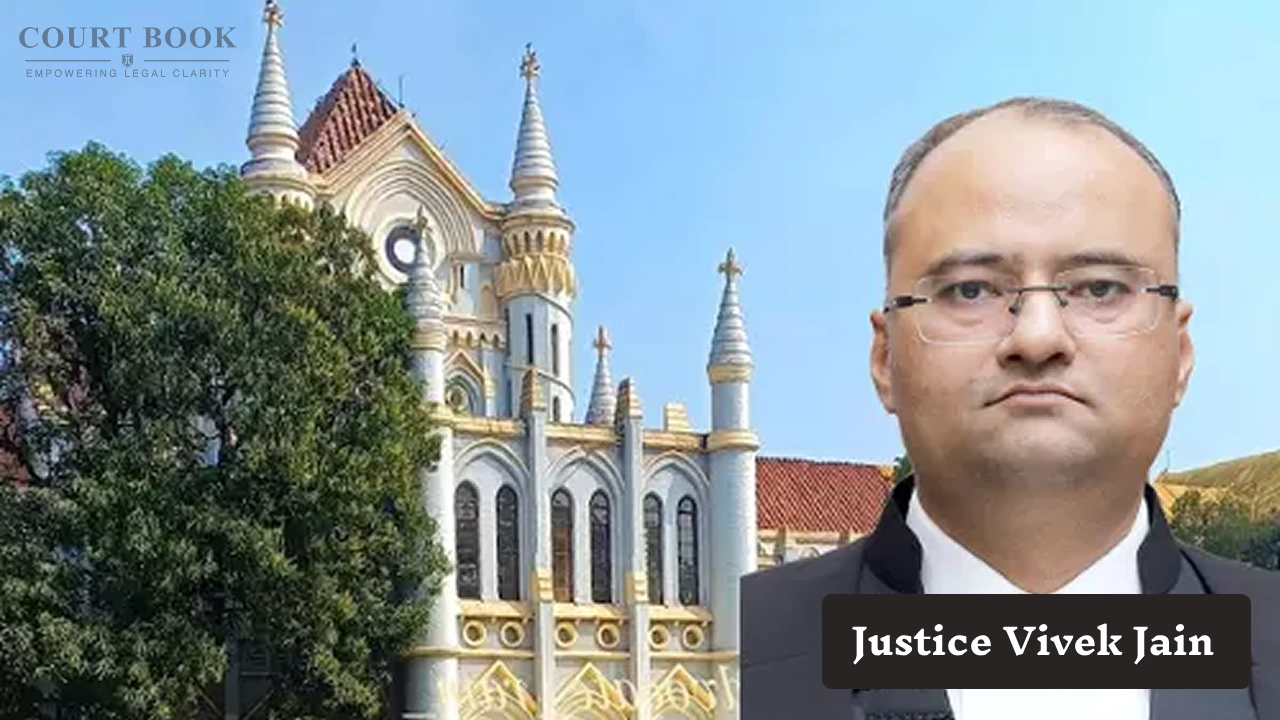
The Madhya Pradesh High Court at Jabalpur has clarified an important principle regarding documentary evidence under the Bhartiya Sakshya Adhiniyam, 2023. The Court held that secondary evidence cannot be relied upon when the original document is available and can be produced through due process.
Delivering the order, Justice Vivek Jain set aside a trial court order that had permitted the plaintiff to rely on a certified copy of a document as secondary evidence.
The Court observed that the law allows secondary evidence only in exceptional situations, such as when the original document is lost, destroyed, or otherwise unavailable.
Background of the Case
The dispute arose from a civil suit between Smt. Munendra Kumar Samaiya and others and Smt. Varsha Samaiya and others.
Read also:- Section 319 CrPC: Supreme Court Says Minor Contradictions Can't Block Summoning of Additional Accused
The plaintiff sought to rely on a document written on a ₹100 stamp paper that allegedly recorded acknowledgment of certain monetary transactions between the parties.
This document had earlier been filed in a criminal proceeding under Section 138 of the Negotiable Instruments Act. After the criminal trial concluded, the matter moved to a criminal appeal pending before the High Court.
During the civil proceedings, the plaintiff attempted several times to place this document on record. Applications were filed to summon the original document and also under Order VII Rule 14 of the Code of Civil Procedure, but those attempts were unsuccessful.
Eventually, the plaintiff applied under Section 60 of BSA seeking permission to rely on a certified copy of the document as secondary evidence. The trial court allowed the application, prompting the defendants to challenge the order before the High Court.
Read also:- Supreme Court: Employer Group Insurance Amount Cannot Be Deducted from Motor Accident Compensation
Before the High Court, the petitioners argued that the trial court had committed an error by allowing secondary evidence even though the original document still existed.
They pointed out that the original document was part of the record of a criminal case and could be obtained through proper legal procedure.
The petitioners also contended that earlier applications filed by the plaintiff to bring the document on record had already been rejected.
The High Court clarified that the earlier trial court order rejecting the request to summon the record did not conclusively declare the document irrelevant.
Read also:- Maternity Leave for Adoptive Mothers: Supreme Court Questions 3-Month Child Age Restriction
Instead, the trial court had simply declined to call for the record from the High Court and had left it open for the plaintiff to obtain the original document independently.
Justice Vivek Jain noted that questions regarding the relevance and evidentiary value of the document could only be determined after evidence is recorded during trial.
However, the Court emphasized that where the original document is available, the party must first attempt to produce it rather than rely on secondary evidence.
The High Court held that since the original document was still available in court records, the trial court should not have allowed the plaintiff to lead secondary evidence through a certified copy.
Read also:- J&K High Court Upholds Eviction Appeal Rule, Says ‘Symbolic Possession’ Enough to File Appeal
Accordingly, the Court set aside the trial court’s order permitting secondary evidence.
However, liberty was granted to the plaintiff to apply before the High Court in the pending criminal appeal to retrieve the original document and produce it before the trial court.
The petition was disposed of with these observations.
Case Title: Smt Munendra Kumar Samaiya & Ors v. Smt Varsha Samaiya & Ors
Case Number: Misc. Petition No. 1514 of 2026
Decision Date: 13 March 2026
Download Order

