

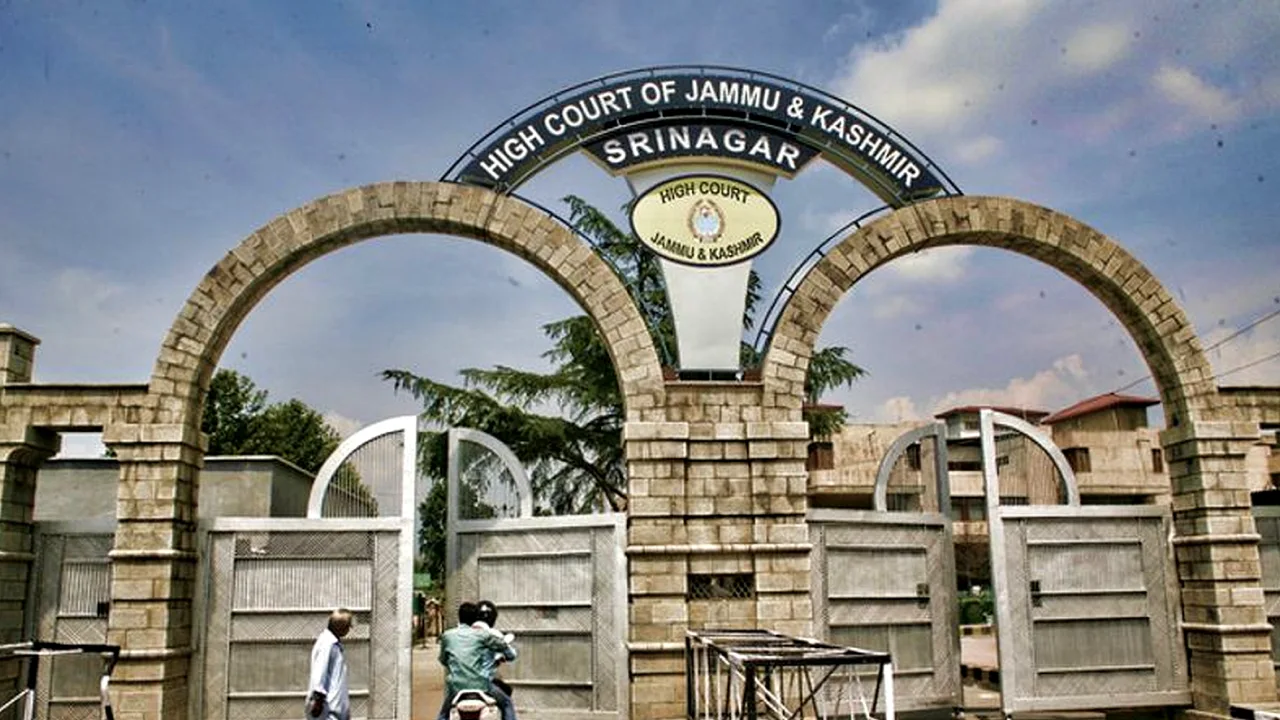
The High Court of Jammu & Kashmir and Ladakh has clarified that surrendering symbolic possession of property is sufficient to maintain an appeal against eviction under the 1997 migrant property law, while upholding the constitutional validity of the provision.
A Division Bench of Justice Sanjeev Kumar and Justice Sanjay Parihar delivered the ruling while dismissing a writ petition filed by Rehmatullah Naik.
The Court held that the condition requiring surrender of possession before filing an appeal is valid, but must be interpreted reasonably to avoid making the remedy ineffective.
The petitioner challenged the constitutional validity of Section 7(b) of the Jammu and Kashmir Migrant Immovable Property (Preservation, Protection and Restraint on Distress Sales) Act, 1997.
He also sought to quash an eviction-related order passed by the District Magistrate, Ramban in August 2022.
The core argument was that forcing a person to surrender possession before filing an appeal makes the remedy burdensome and violates Articles 14, 19, and 21 of the Constitution.
During the proceedings, the respondents raised a preliminary objection, arguing that the writ petition was not maintainable since an alternative statutory remedy of appeal was available under the Act.
Read Also:- J&K High Court Quashes Drug Case Against Pharma MD After Delay Denied Right to Retest Sample Before Expiry
The petitioner, however, contended that the appeal mechanism itself was flawed due to the mandatory requirement of surrendering possession, making it impractical and unjust.
The Court examined the legislative intent behind the 1997 Act, particularly its objective to protect migrant properties left behind during the 1989 exodus.
The Bench observed that the right to appeal is not a fundamental right, but a statutory one, and the legislature is competent to impose conditions on it.
However, the Court cautioned that such conditions must not be arbitrary or render the remedy meaningless.
Importantly, the Court noted:
• Requiring physical surrender of possession in all cases could make the appeal illusory
• This would be especially harsh where individuals are residing in the property
• It could effectively deprive them of shelter before their appeal is even heard
To address this, the Court applied the doctrine of “reading down”.
It held that:
“Surrender of possession” must include constructive or symbolic possession, not just physical possession.
The High Court upheld the validity of Section 7(b), but interpreted it to mean that:
• Symbolic possession is sufficient for filing an appeal
• The property will be deemed to be in the custody of the competent authority
• The occupant may continue in physical possession until the appeal is decided
The Court ultimately dismissed the writ petition on the ground of availability of an alternative remedy.
Case Title: Rehmatullah Naik v. UT of J&K & Ors.
Case Number: WP(C) No. 1794/2022
Court: High Court of Jammu & Kashmir and Ladakh at Jammu
Judge: Justice Sanjeev Kumar, Justice Sanjay Parihar
Date: 11 March 2026


