

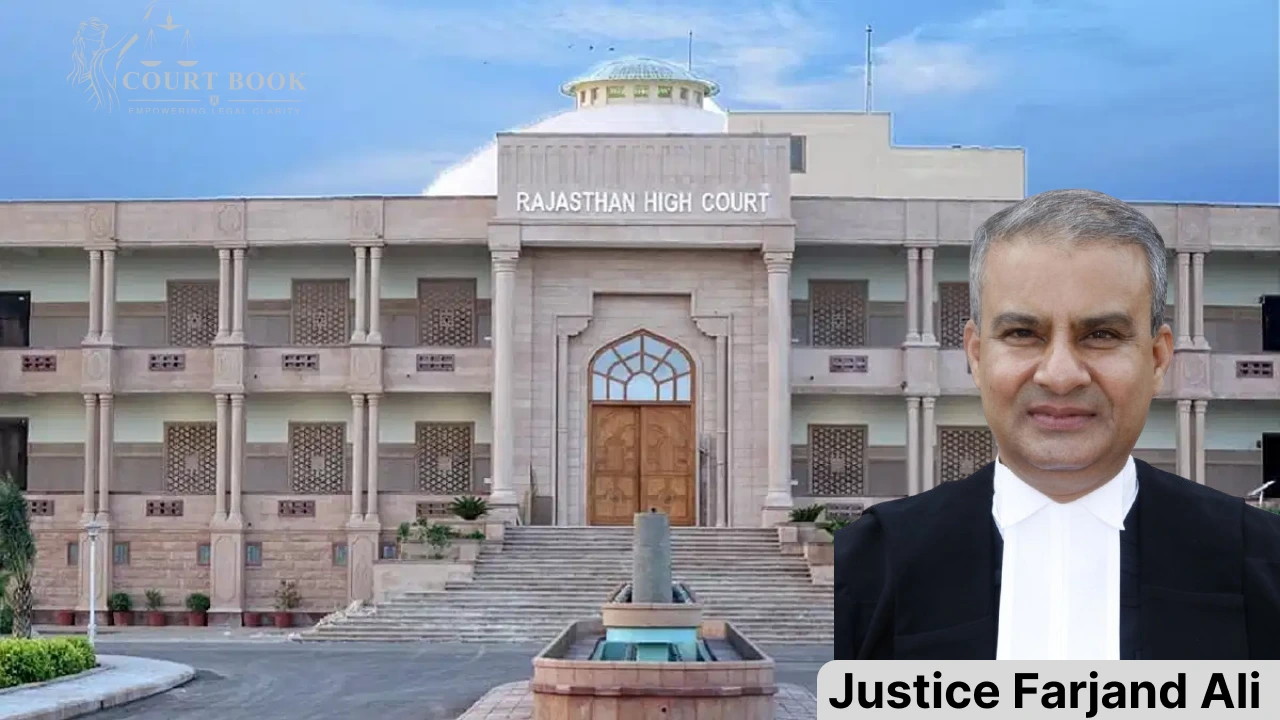
The High Court of Judicature for Rajasthan has declined to increase the monthly maintenance awarded to a woman under Section 125 of the Criminal Procedure Code, holding that the Family Court’s decision was balanced and legally sound. The court ruled that the existing amount of ₹8,000 per month was neither arbitrary nor unjust in the facts of the case.
Background of the Case
The dispute arose from a marriage solemnised in October 2019 between Ritu Khatri and Dr. Navneet Khanna. The relationship broke down within weeks. The wife later approached the Family Court in Sri Ganganagar seeking maintenance, alleging dowry harassment, physical and mental cruelty, and desertion.
Read also:- Supreme Court Rejects Arbitration Where Partnership Deed Is Alleged Forged, Sets Aside High Court Order
In July 2024, the Family Court partly allowed her plea and granted ₹8,000 per month as maintenance from the date of application. Dissatisfied with what she described as a “meagre” amount, the wife moved the High Court seeking enhancement, arguing that her husband was a well-paid government academic earning over ₹1.5 lakh per month.
The husband opposed the plea, stating that the marriage lasted barely 57 days, that the wife was highly educated and capable of earning, and that the allegations of cruelty were unsubstantiated.
Justice Farjand Ali noted that the High Court’s role in a revision petition is limited. It cannot re-evaluate evidence like an appellate court unless there is clear illegality or perversity.
At the heart of the case was the question of whether the Family Court had wrongly exercised its discretion while fixing the maintenance amount.
The court underlined that maintenance under Section 125 CrPC is meant to prevent destitution, not to punish the husband or provide a share in his income.
“Maintenance is a social justice measure,” the bench observed, “intended to ensure reasonable support, not unjust enrichment.”
Read also:- Punjab & Haryana High Court Denies Bail to Advocate Accused of Seeking ₹30 Lakh to Influence Divorce Case
The court highlighted several factors that justified the Family Court’s decision:
• Extremely short marriage: The marital relationship lasted about 57 days. While not decisive on its own, the court said this was relevant in assessing dependency and lifestyle sharing.
• Educational qualifications of the wife: The petitioner held multiple degrees and had worked in reputed institutions earlier. The bench clarified that “mere capacity to earn does not bar maintenance,” but earning potential can be considered while fixing the amount.
• Conduct of the husband: The court noted that the husband had regularly paid maintenance as directed, reflecting respect for the judicial process.
• Lack of proof of cruelty: Allegations of dowry harassment and assault were not supported by medical or independent evidence. The court stressed that pending criminal cases cannot automatically lead to a presumption of cruelty.
Read also:- Calcutta High Court Quashes Dowry Harassment Case, Cites Duplicate FIRs and Lack of Evidence
On the argument that a higher salary must mean higher maintenance, the bench was clear: “The law does not envisage a fixed proportion of the husband’s income being awarded as maintenance.”
Final Decision
After reviewing the record, the High Court found no error in the Family Court’s reasoning. It held that the ₹8,000 monthly maintenance struck a fair balance between the wife’s needs and the husband’s responsibilities, including his role as a single parent to a minor child.
“The impugned order reflects a reasoned exercise of judicial discretion,” the court concluded, dismissing the revision petition and refusing to enhance the maintenance amount.
Case Title: Ritu Khatri v. Navneet Khanna
Case Number: S.B. Criminal Revision Petition No. 1083/2024
Download Order

