

The Supreme Court has delivered an important ruling on how courts should deal with complaints against public servants under the newly enacted Bharatiya Nagarik Suraksha Sanhita (BNSS), 2023. The judgment came while hearing an appeal arising from a sensitive case involving allegations of sexual assault against senior police officers in Kerala.
At the heart of the case was a legal question that many trial courts are already grappling with: how Section 175 of the BNSS should be applied when a complainant seeks registration of an FIR against a public servant.
Background of the Case
The appellant alleged that she was sexually assaulted on three separate occasions by police officers while pursuing a property-related complaint. According to her, the incidents occurred in 2022, but her complaints did not lead to the registration of an FIR.
Read also:- Rajasthan HC Orders Immediate Release of NDPS Convict, Says Poverty Can’t Block Liberty Under Article 21
After a change in police leadership in 2024, she again approached the police and later moved the Judicial Magistrate First Class (JMFC), seeking directions for FIR registration under the BNSS. The Magistrate, citing Section 175(4) of the BNSS, called for a report from a senior police officer instead of ordering immediate registration of an FIR.
Before the Magistrate could decide the matter, the appellant approached the Kerala High Court through a writ petition.
High Court Orders and Reversal
A Single Judge of the Kerala High Court ruled in favour of the appellant. The court held that alleged acts of rape could never be considered as part of “official duty” and therefore the protection under Section 175(4) of the BNSS did not apply. The Magistrate was directed to order FIR registration, which was done soon after.
Read also:- Marriage Registration Alone Can’t Show Marital Harmony, Not a Ground to Block Early Mutual Divorce: Delhi HC
However, this order was challenged by one of the accused officers. A Division Bench of the High Court set aside both the Single Judge’s ruling and the Magistrate’s direction. The Bench held that the High Court should not have intervened when the Magistrate was already seized of the complaint under the BNSS procedure.
Issues Before the Supreme Court
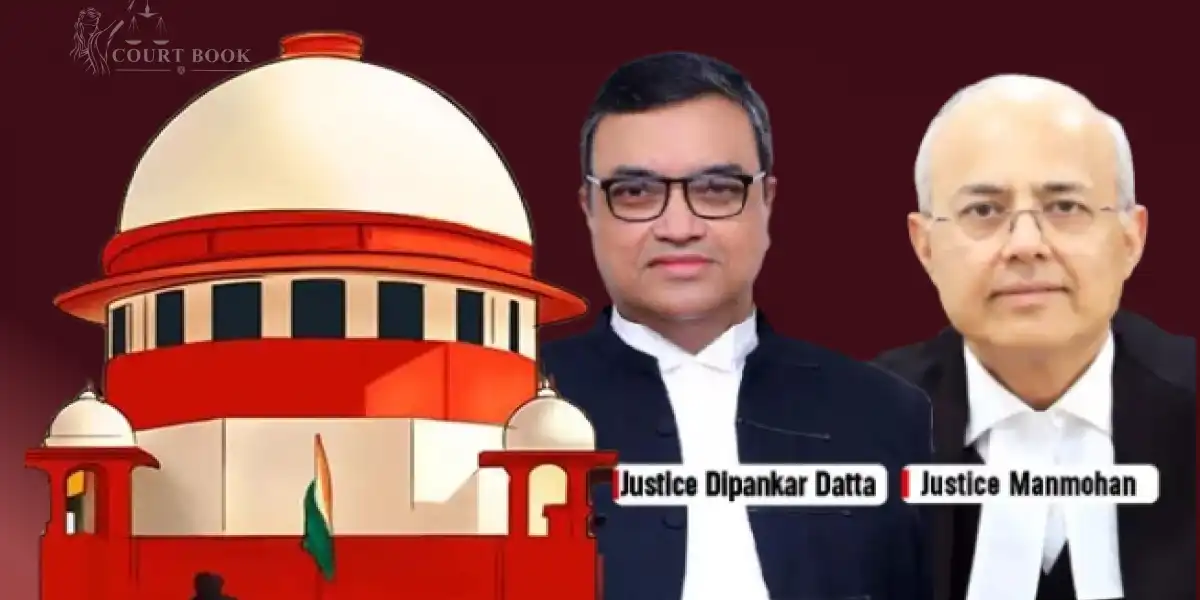
When the matter reached the Supreme Court, the Bench led by Justice Dipankar Datta and Justice Manmohan examined two key questions:
• Whether Section 175(4) of the BNSS is a standalone provision or must be read together with Section 175(3)
• Whether the High Court was justified in issuing directions when the Magistrate’s proceedings were still pending
The Court also examined whether the alleged acts, at this stage, could be said to arise “in the course of discharge of official duties”.
Read also:- Acid Attack Cases Need Stronger Laws, Says Supreme Court; Questions Asset Seizure of Convicts
Court’s Observations
The Supreme Court noted that Section 175 of the BNSS is a new and significant departure from the old Criminal Procedure Code. It observed that Parliament deliberately introduced additional safeguards for public servants to prevent misuse of criminal law at the investigation stage.
Rejecting the argument that Section 175(4) operates independently, the Court held that it cannot be read in isolation. “Sub-sections (3) and (4) of Section 175 are not isolated silos but must be read harmoniously,” the Bench observed.
The Court explained that while a Magistrate has the power to order investigation, extra caution is mandated when allegations are made against public servants for acts connected with official duties. This includes calling for a report from a superior officer and considering the public servant’s version before directing an investigation.
Importantly, the Bench clarified that complaints under Section 175(4) must also be supported by an affidavit, even though the provision itself uses the word “complaint”. Allowing oral or unsupported allegations, the Court warned, could lead to serious abuse of process.
On High Court’s Intervention
The Supreme Court took a critical view of the Single Judge’s approach. It held that the High Court exceeded its jurisdiction by interpreting Section 175(4) and directing FIR registration when the Magistrate had not yet passed a final order.
“The writ court should not have short-circuited the statutory process under the BNSS,” the Bench noted, stressing that remedies under criminal procedure must ordinarily be exhausted before invoking constitutional jurisdiction.
Read also:- Supreme Court Orders Bank to Accept Revised OTS in Widow’s Loan Case
Decision
In conclusion, the Supreme Court upheld the Division Bench judgment of the Kerala High Court. The order of the Single Judge and the subsequent direction for FIR registration were set aside.
The Court restored the statutory process under the BNSS, holding that Magistrates must follow the safeguards laid down in Section 175(3) and 175(4) together before directing investigation against a public servant.
Case Title: XXX v. State of Kerala & Ors.
Case Number: Criminal Appeal No. 4629 of 2025
Download Judgment

