

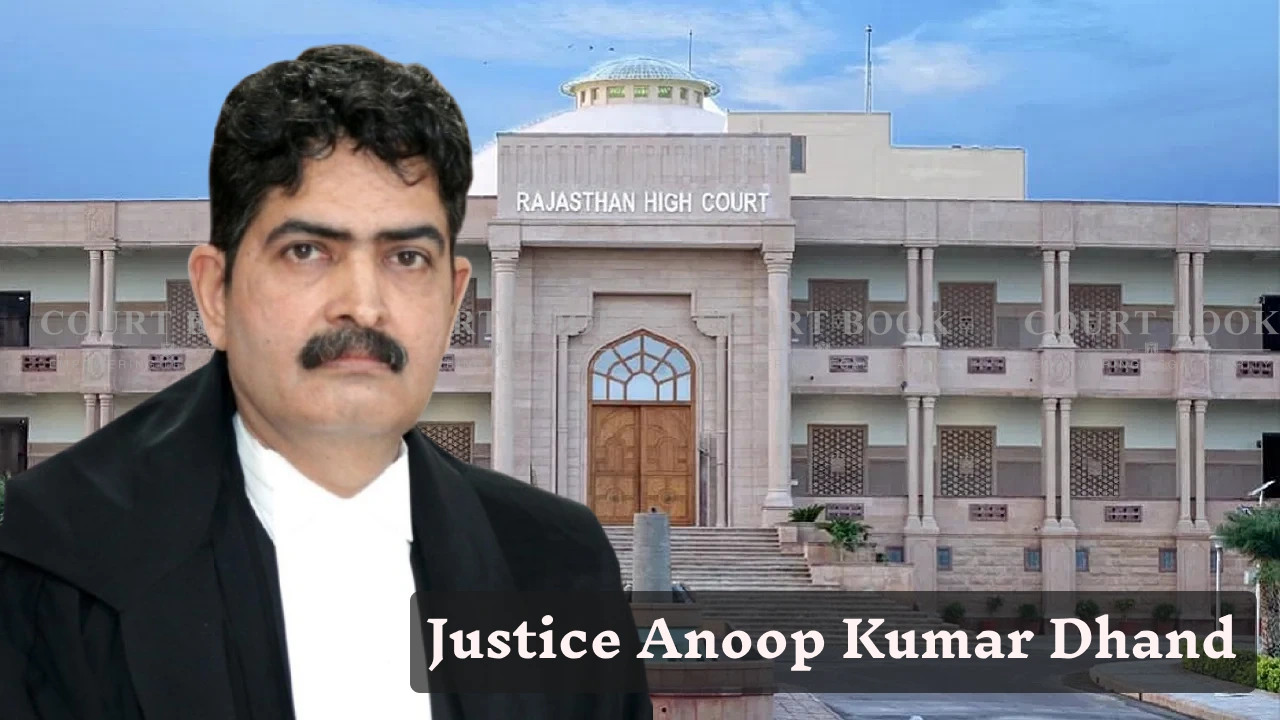
The Rajasthan High Court has stepped in to protect personal liberty after finding that a man remained in jail despite a valid release order, only because he could not afford to pay a fine. In a strongly worded decision, the court recalled the condition requiring deposit of ₹1 lakh and ordered his immediate release, stressing that poverty cannot defeat constitutional rights.
The order was passed by Justice Anoop Kumar Dhand while hearing a suspension of sentence application filed by Rajesh Kushwah, who is serving time in an NDPS case.
Background of the Case
Rajesh Kushwah was convicted under Section 8/15 of the Narcotic Drugs and Psychotropic Substances (NDPS) Act and sentenced to 10 years in prison. By the time his appeal came up, he had already served nearly eight years of the sentence.
On October 7, 2025, the High Court had suspended his sentence pending appeal and granted him bail. However, the release was made conditional on depositing a fine of ₹1 lakh and furnishing sureties. According to the application placed before the court, Kushwah could not comply with the fine condition due to extreme financial hardship and continued to remain in Central Jail, Ajmer, despite the suspension order.
Court Observations
Justice Dhand expressed concern that the applicant’s liberty was being curtailed even after the court had ordered his release. The judge observed that imposing conditions which an accused is incapable of fulfilling can effectively nullify the right to appeal.
Referring to Supreme Court precedent, the bench noted that while appellate courts can impose conditions while suspending a sentence, those conditions must not be impossible to meet.
Read also:- Acid Attack Cases Need Stronger Laws, Says Supreme Court; Questions Asset Seizure of Convicts
“The court must keep in mind that if a condition of deposit is imposed and the accused is unable to comply, it may defeat his right of appeal and violate Article 21,” the judge observed, echoing the Supreme Court’s reasoning in CBI vs Ashok Sirpal .
The court further held that keeping a person behind bars solely due to poverty amounts to a direct violation of the right to life and personal liberty guaranteed by the Constitution.
Lawyers’ Strike and Personal Liberty
The order was passed on a day when lawyers across Rajasthan were abstaining from work to protest the decision to declare two working Saturdays each month. Despite the absence of counsel, the court proceeded with the matter, citing the Supreme Court’s clear position that strikes cannot obstruct justice, especially in cases involving personal liberty.
“The functioning of courts cannot be allowed to stop, particularly when the liberty of a person is at stake,” the bench remarked.
Final Decision
Taking note of the applicant’s poverty and prolonged incarceration despite a valid suspension order, the High Court recalled the condition requiring deposit of the ₹1 lakh fine. The trial court was directed to release Rajesh Kushwah immediately, subject to the remaining bail conditions.
The interim application was allowed, with the court clarifying that the order should not be treated as a precedent and was passed considering the peculiar facts of the case. A copy of the order was also directed to be sent to the Bar Council of India and the Bar Council of Rajasthan.
Case Title: Rajesh Kushwah v. State of Rajasthan
Download Order

