

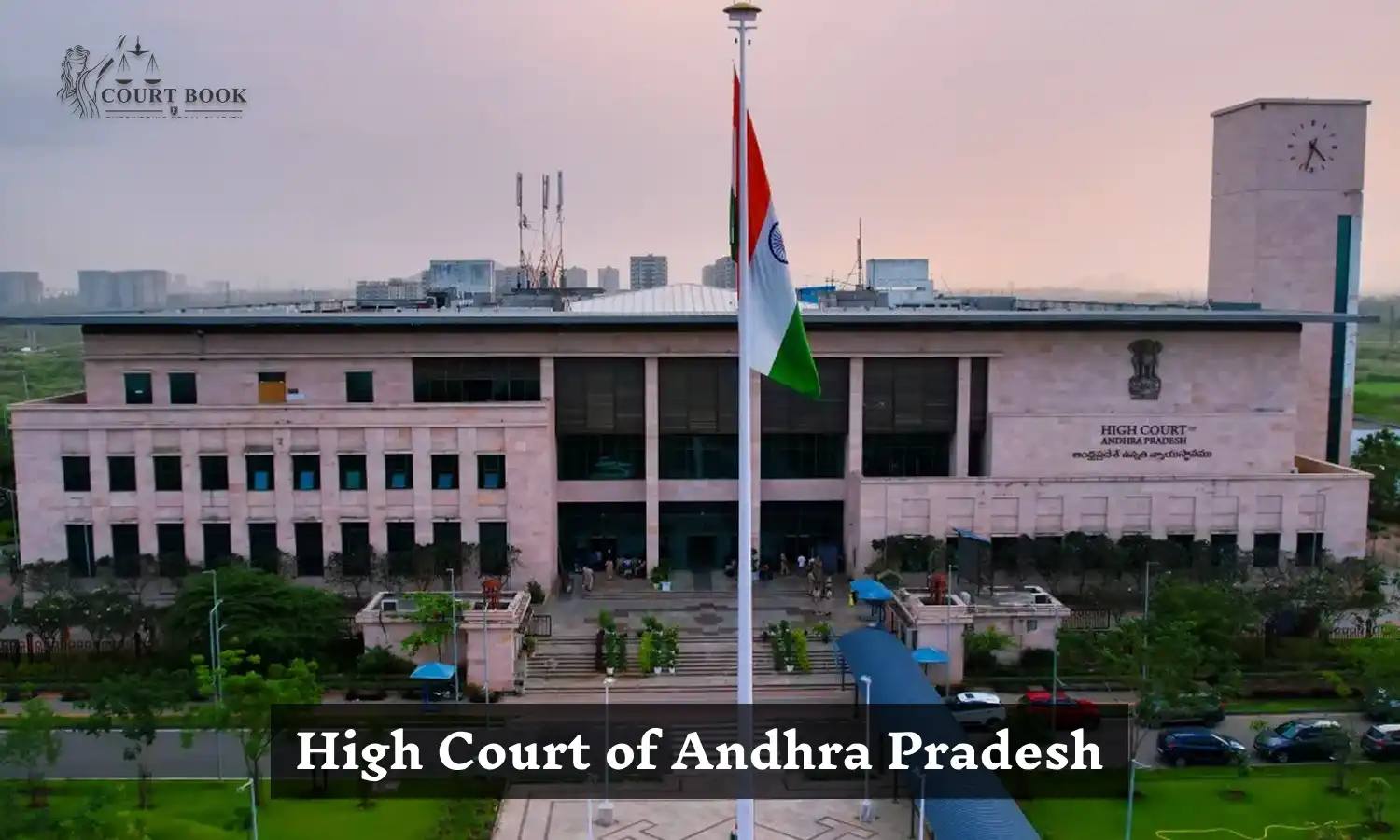
In a significant ruling on contractual appointments in universities, the High Court of Andhra Pradesh has held that a contractual Assistant Professor cannot be replaced by another contractual appointee unless a regularly selected candidate is appointed through a proper recruitment process.
Justice Maheswara Rao Kuncheam delivered the judgment while allowing a writ petition filed by Dr. P. Nagaraju, who had challenged a 2017 circular issued by Rayalaseema University.
Read also:-Sikkim High Court Closes NHM Transfer Dispute After Amicable Settlement Between Employee
Background of the Case
Dr. P. Nagaraju had been working as an Assistant Professor on a contract basis since 2006. Initially appointed as a Teaching Assistant, he continued in service even after the establishment of Rayalaseema University in 2008. Over the years, his contractual term was extended repeatedly.
In 2017, the University issued a circular proposing fresh contractual appointments to the post of Assistant Professor/Teaching Assistant. Dr. Nagaraju approached the High Court, arguing that the University could not replace him with another contractual employee without filling the post through regular selection.
He also sought protection from being removed and requested continuation in service until regular appointments were made.
According to the University, his engagement was purely temporary and contractual, without undergoing the regular selection procedure prescribed under UGC norms. The institution argued that contractual appointments were made to meet immediate academic needs and that there was no vested right to regularization.
Read also:-Patna High Court Dismisses Plea for Compensation Over Alleged Illegal Detention, Flags Lapses
Court’s Key Observation
The Court framed a central question: can a contractual employee be replaced by another contractual employee when no regular recruitment has been conducted?
After examining Supreme Court precedents, the Bench observed that while contractual employees do not automatically gain a right to regularization, they cannot be arbitrarily replaced by another set of temporary employees.
Referring to earlier judgments, the Court noted that the Supreme Court has consistently held that “an ad hoc or temporary employee should not be replaced by another ad hoc or temporary employee; he must be replaced only by a regularly selected employee.”
The judge pointed out that the 2017 circular was not meant to fill permanent posts but to bring in another batch of contractual teachers. “The practice of replacing one ad-hoc or contractual employee with another amounts to an abuse of the contractual system,” the Court observed.
The Bench also highlighted that the University itself had earlier issued notifications to fill regular teaching posts, though they did not materialize. This, the Court said, contradicted the claim that there was no workload.
Read also:-Madras High Court Rules Grandparents Not ‘Family’ for Stamp Duty Concession in Settlement Deeds
Education and Constitutional Responsibility
In a strong remark, the Court underlined that universities carry a constitutional responsibility to ensure continuity and stability in education.
“Education is not a mere administrative function of the State, but a constitutional obligation intimately connected with the future of the nation,” the Bench said, referring to the Right to Education under Article 21-A.
The Court emphasized that frequent hiring and firing of contractual teachers disrupts academic planning and affects students, who are the ultimate stakeholders.
Read also:-Gujarat HC Sends 17-Year-Old Girl to Mehsana Children Home After She Refuses to Return to
The Decision
Allowing the writ petition, the High Court directed that Dr. Nagaraju shall be allowed to continue in his post until a regular candidate is appointed through due process of law, subject to the availability of sufficient students for the course.
The University was granted liberty to issue a fresh notification to fill the post on a regular and permanent basis in accordance with law.
However, the Court clarified that the order would not prevent the University from initiating disciplinary proceedings, if required, in accordance with law.
There was no order as to costs, and all pending applications were closed.
Case Title: Dr. P. Nagaraju v. Rayalaseema University & Ors.
Case No.: W.P. No. 21904 of 2017
Decision Date: 31 January 2026


