

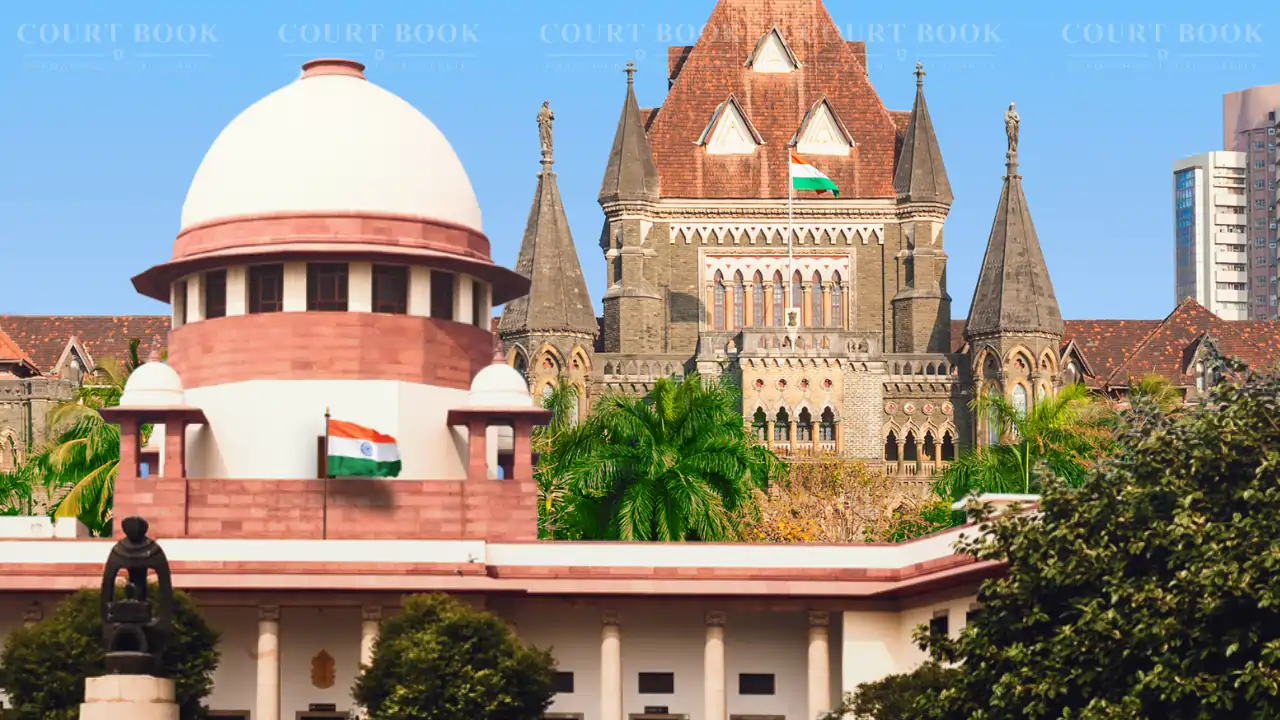
In a significant ruling on cooperative bank recoveries, the Supreme Court has restored the auction sale of a Chembur property that had been cancelled by the Bombay High Court. The Court examined whether delay in payment of the balance auction amount would automatically invalidate the sale, and whether such a defect could be overlooked if the bank accepted the money.
The judgment came in a batch of civil appeals led by M/s. Adishakti Developers v. State of Maharashtra & Ors., reported as 2026 INSC 197.
Read also:-Calcutta High Court Enhances Accident Compensation to ₹6 Lakh for Court Employee
Background of the Case
The dispute arose from the auction of a plot in Chembur, Mumbai, to recover dues of over ₹24 lakh awarded in favour of Mahanagar Co-operative Bank against a partnership firm, M/s. Borse Brothers.
After the firm defaulted on a ₹10 lakh cash credit facility, the Co-operative Court passed an ex parte award in 1994. A recovery certificate followed. Years later, in January 2005, the Special Recovery and Sale Officer auctioned the property.
M/s. Adishakti Developers emerged as the highest bidder at ₹1.51 crore. While 15% of the amount was paid on the date of auction, the balance was paid in instalments, the last payment being made beyond the 15-day period prescribed under Rule 107(11)(h) of the Maharashtra Co-operative Societies Rules, 1961.
The heirs of one of the partners, Panditrao Borse, challenged the sale. The Divisional Joint Registrar set aside the auction, holding that the entire balance had not been deposited within 15 days, which he treated as a mandatory requirement. The Bombay High Court upheld this decision.
The matter then reached the Supreme Court.
Read also:-Karnataka High Court Reinstates KSRTC Guard, Says No Termination Without Proper Inquiry and Fair
Key Issues Before the Supreme Court
The Court framed several legal questions, including:
• Whether the revision filed by the legal heirs under Section 154 of the Maharashtra Co-operative Societies Act was maintainable.
• Whether failure to deposit the entire purchase price within 15 days made the sale void.
• Whether the requirement of timely payment could be waived by the creditor bank.
• Whether conditions attached to the original government allotment affected the validity of the auction.
Court’s Observations on Maintainability
The bench observed that Section 154 confers wide revisional powers on the State Government or Registrar to examine the legality and propriety of proceedings where no appeal lies.
Read also:-Calcutta High Court Orders Cancellation of OBC Certificate of Gram Panchayat Pradhan
“The revisional power conferred by Section 154 is extremely wide,” the Court noted, adding that it is not curtailed merely because a party did not take recourse to remedies under Rule 107.
The Court therefore held that the revision before the Joint Registrar was maintainable.
On Delay in Payment: Mandatory or Directory?
The core issue was whether Rule 107(11)(h), which requires the balance purchase money to be paid within 15 days from the date of sale, is mandatory.
The Court examined the scheme of Rule 107 in detail. It noted that:
• 15% of the bid amount must be deposited at the time of sale.
• The remainder must be paid within 15 days.
• There is no discretion given to the Recovery Officer to extend the time for payment of the balance amount.
• If payment is not made within time, the Rules provide for forfeiture and resale.
The bench observed that the structure of the rule shows a clear legislative intent. “There is no discretion vested in the Recovery Officer to extend the period for deposit of the remainder of the purchase money,” the Court said.
However, the Court also examined whether the requirement exists for the benefit of the creditor bank and, if so, whether it can be waived.
Read also:-Calcutta High Court Partly Allows Discharge Plea in 498A Case, Drops Attempt to Homicide Charge
Waiver by the Bank
The auction purchaser argued that since the bank accepted the delayed payments without protest, the defect stood waived.
The Court analysed earlier precedents and the language of the Rules. It held that although the rule is mandatory in form, it is meant to safeguard the interest of the creditor and ensure certainty in auction sales.
In the present case, the bank had accepted the entire amount and confirmed the sale. The Recovery Officer thereafter issued the sale certificate and handed over possession.
The Court found that once the bank had accepted the money and the sale was confirmed, the heirs could not later seek to nullify the auction solely on the ground of delayed payment, particularly when no application under Rule 107(13) or 107(14) had been filed within the prescribed time.
Government Allotment Condition
The heirs also argued that the land had originally been allotted by the government with a condition prohibiting mortgage without prior permission.
The Supreme Court rejected this contention. It held that once a decree had been passed and the recovery certificate issued, the property of the judgment debtor was liable to be attached and sold for realization of the decretal amount.
“The award passed by the Co-operative Court operated as a money decree,” the bench observed, making the property amenable to auction for recovery.
Read also:-Rajasthan High Court Orders Statewide Audit of 31 Old Age Homes, Seeks Report on Facilities by Feb 15
Final Decision
After analysing the statutory scheme and the facts, the Supreme Court set aside the Bombay High Court’s judgment as well as the order of the Joint Registrar cancelling the auction sale.
The Court restored the auction in favour of M/s. Adishakti Developers and upheld the validity of the sale confirmation and conveyance.
The civil appeals were accordingly allowed.
Case Title: M/s. Adishakti Developers v. State of Maharashtra & Ors.
Case No.: Civil Appeal Nos. 2545–2550 of 2026
Decision Date: February 26, 2026
Download Judgment

