

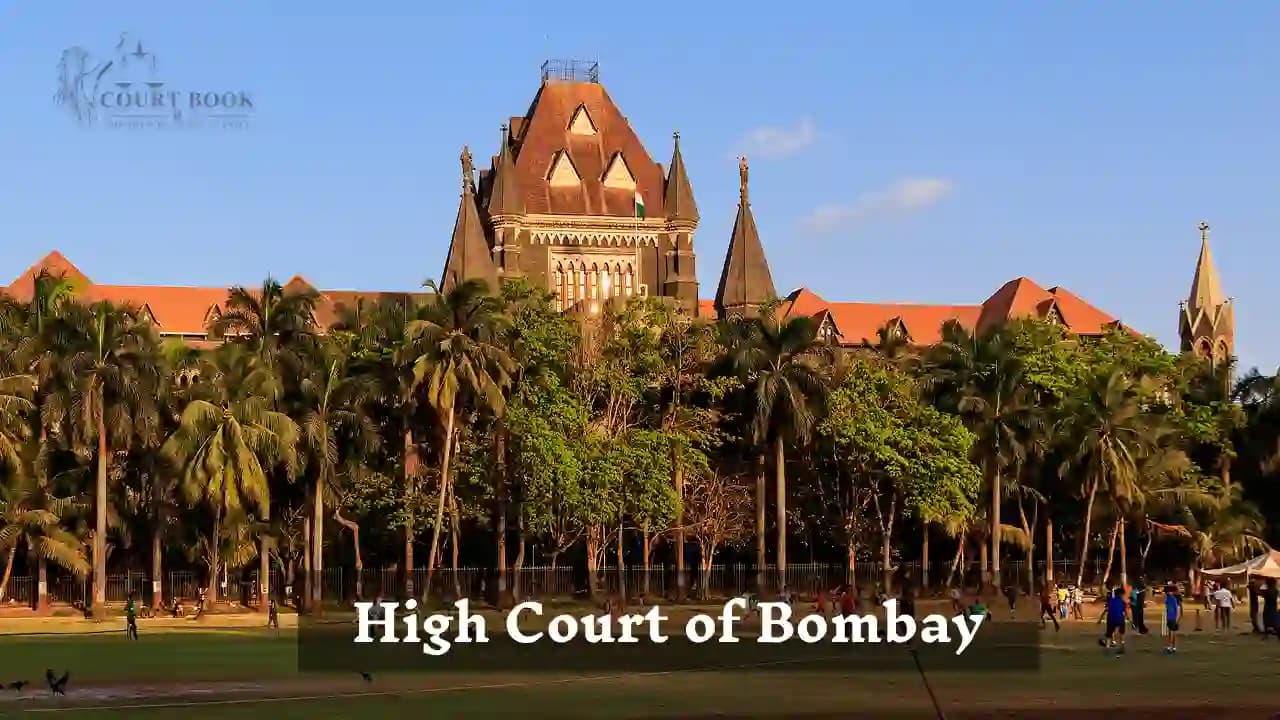
In a significant ruling on identity and dignity, the Bombay High Court has allowed a 12-year-old girl to adopt her mother’s name and caste in school records, setting aside a refusal by education authorities in Beed.
The division bench of Justice Vibha Kankanwadi and Justice Hiten S. Venegavkar said that school records cannot become “instruments of compulsory and stigmatic attachment” when a child is raised solely by her mother.
The judgment was delivered on February 2, 2026, in a writ petition filed by the minor girl through her mother.
Read also:- Gujarat HC Clears Way for Police Recruit, Says Minor, Quashed FIR Can’t Block Appointment


Background of the Case
The minor petitioner, studying in Class 6 at a Beed school, was born following a sexual assault case in which her biological father was the accused. A DNA report had confirmed paternity, and his name was entered in the birth certificate and later in school records.
In 2022, a settlement was reached between the mother and the accused father. The father declared he would have no role in the child’s life. Permanent custody remained with the mother.
Later, the mother issued a Gazette notification to change her daughter’s name and applied to the school authorities to correct both the name and caste entry - from “Maratha” (father’s caste) to “Scheduled Caste - Mahar” (mother’s caste).
However, the Education Officer rejected the request in June 2025, stating that the Secondary School Code did not permit such corrections.
What the Court Examined
The bench framed three key questions:
1. Can the child’s name be corrected in school records?
2. Can the caste entry be altered from the father’s caste to the mother’s?
3. How should authorities balance welfare with safeguards against misuse?
The court said the issue was not merely clerical.
“This is not a matter of preference,” the bench observed, “but of ensuring that official records do not become instruments of stigma.”
Read also:-Supreme Court Clears Siddhartha Reddy in Actress Pratyusha Death Case, Says No Proof of Abetment
Court on Name Correction
Referring to a Full Bench ruling in Janabai d/o Himmatrao Thakur v. State of Maharashtra, the judges noted that corrections in name, surname, or caste can fall within the category of “obvious mistakes” under the School Code.
The bench rejected the authorities’ blanket stand that no changes were permissible.
“When the State itself recognises the mother’s name as central to identity documentation,” the court said, “it is difficult to comprehend how a subordinate authority may take refuge in a sweeping ‘no power’ position.”
The court emphasized that Article 21 of the Constitution protects dignity, which includes the right to identity. A child raised exclusively by her mother cannot be compelled to carry the father’s name when he has severed all ties.
Read also:-Supreme Court Clears Siddhartha Reddy in Actress Pratyusha Death Case, Says No Proof of Abetment
Court on Caste Entry
The caste correction raised a more complex question. The State argued that caste ordinarily follows the father and that the child must first obtain a caste certificate.
The court disagreed with this rigid view.
Citing the Supreme Court’s decision in Rameshbhai Dabhai Naika v. State of Gujarat, the bench said caste in inter-caste situations is not a mechanical matter of biology. Upbringing and social environment must be considered.
The judges also relied on earlier Bombay High Court rulings such as Ku. Noopur d/o Prashant Ambre v. Scheduled Tribe Caste Certificate Scrutiny Committee and Sonal Pratapsingh Vahanwala v. Deputy District Collector, which recognised that in distressed families led by single mothers, authorities must adopt a fact-sensitive approach.
The bench noted that the minor has grown up entirely in her mother’s Mahar community and has no social or legal connection with the father.
“To compel the minor to carry, in her educational records, the caste identity of a person who has completely disconnected himself from her would be contrary to social reality and fairness,” the court said.
Constitutional Principles Highlighted
The court stressed that equality under Article 14 does not permit practices that appear neutral but operate unfairly. Treating paternal identity as mandatory, it said, reflects outdated assumptions.
“Recognition of a single mother as a complete parent for purposes of civic identity is not an act of charity; it is constitutional fidelity,” the bench observed.
The judges underlined that children cannot be made to bear the consequences of adult conduct.
Read also:-Telangana HC Quashes FIR Against Abundance Café Hookah Lounge, Says Police Cannot Act Without
The Decision
Allowing the writ petition, the court:
• Quashed the June 2, 2025 rejection order.
• Directed the Headmaster to process correction of the girl’s name by substituting the mother’s name and surname.
• Ordered that the mother’s caste - “Scheduled Caste - Mahar” - be entered in school records in place of the father’s caste.
• Permitted the mother to apply for a caste certificate for the child based on her own caste.
• Directed authorities to process the caste claim expeditiously and avoid subjecting the child to stigma or harassment.
• Ordered issuance of corrected documents once the caste certificate is produced.
“State formats must not become moral judgments; they must become accurate instruments of welfare,” the bench concluded.
The Rule was made absolute with no order as to costs.
Case Title: X.Y.Z. & Anr. v. State of Maharashtra & Ors.
Case No.: Writ Petition No. 15528 of 2025
Decision Date: 02 February 2026



