

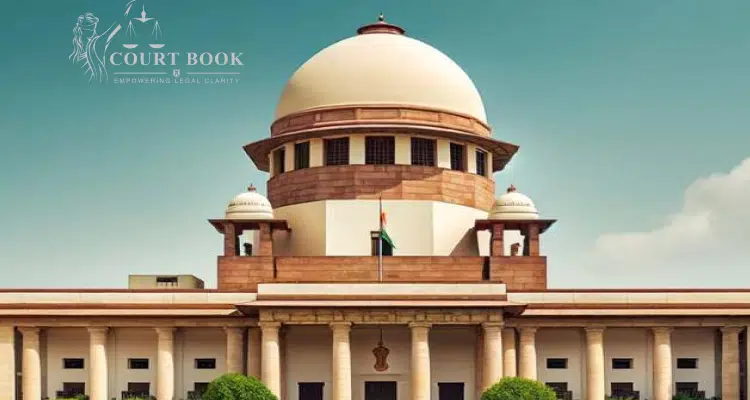
Sitting in New Delhi, the Supreme Court on Thursday closed a long-running family property dispute from Kerala, holding that sale deeds executed on the strength of an unproven power of attorney could not stand in law. The Court dismissed the civil appeal filed by two defendants, restoring the trial court’s decree that had declared the disputed sales void.
The case turned on a narrow but critical issue: whether a notarised photocopy of a power of attorney, without proper proof, could authorise the sale of immovable property.
Read also:-Humiliation Is Not Justice: Allahabad High Court Strikes Down Placard Punishment for Student
Background of the Case
The dispute arose within a family. The original owner of the property, a woman residing in Mumbai, had granted a power of attorney in 1998 in favour of her brother, who lived in Kozhikode. According to her, the authority was limited - meant only for management, not for selling the property.
In 2007, the brother executed two registered sale deeds in favour of close relatives, claiming he had full authority to sell. When the sister learnt of the transactions, she cancelled the power of attorney and approached the civil court, seeking a declaration that the sale deeds were invalid, along with possession and injunction.
The trial court examined the power of attorney relied upon by the brother and found serious inconsistencies. It noted visible insertions of words relating to “sale”, different spacing in the text, and the absence of the original document. On this basis, the trial court declared the sale deeds void and ordered the brother to vacate the house.
The first appellate court, however, reversed this finding. It accepted the notarised photocopy of the power of attorney and also relied on two receipts allegedly showing that the sister had received ₹11 lakh as sale consideration.
The High Court, in second appeal, restored the trial court’s decree, holding that the appellate court had relied on inadmissible evidence. This led to the present appeal before the Supreme Court.
Key Issue Before the Court
At the heart of the appeal was a legal question with practical consequences: can a party rely on a photocopy of a power of attorney, without following the procedure for secondary evidence, to justify the sale of immovable property?
The appellants argued that the High Court had exceeded its limited powers under Section 100 of the Code of Civil Procedure by re-examining evidence. The respondent countered that the High Court had merely corrected a grave legal error - reliance on a document that was no evidence in the eye of law.
Court’s Observations
The Bench carefully walked through the rules governing documentary evidence. It noted that under the Evidence Act, primary evidence - the original document - is the rule, and secondary evidence is only an exception.
“The power of attorney produced by the first defendant is only a notarised photocopy,” the Bench observed. It stressed that before such a document can even be looked at, the party relying on it must first explain why the original cannot be produced and satisfy the strict conditions laid down in law.
The Court was blunt in its conclusion. “A photocopy of a document is no evidence unless it is proved by following the procedure set out under the Evidence Act,” the judges said.
The Bench also disapproved of the appellate court’s approach in comparing disputed signatures on its own. It reiterated that courts should not undertake such comparisons without proper expert assistance, especially when the foundational document itself is not legally proved.
On the scope of the High Court’s powers, the Supreme Court found no overreach. It held that correcting reliance on inadmissible evidence does not amount to reappreciation of facts. “The incorrect reliance on no evidence has been rightly corrected by the High Court,” the judgment noted.
Final Decision
Concluding that the defendants had failed to prove any valid authority to sell the property, the Supreme Court dismissed the civil appeal. The High Court’s judgment restoring the trial court decree was upheld, and the sale deeds executed in 2007 remained void.
“No order as to costs,” the Court said, bringing the litigation to an end.
Case Title: Tharammel Peethambaran & Anr. vs T. Ushakrishnan & Anr.
Case No.: Civil Appeal arising out of SLP (C) No. 11868 of 2024
Decision Date: 6 February 2026
Download Judgment

