

In a significant ruling on arbitration and infrastructure contracts, the Supreme Court of India has set aside a Delhi High Court decision that reduced damages payable for delay in a solar power project. The Court restored the earlier order granting ₹27.06 crore as compensation to NTPC Vidyut Vyapar Nigam Ltd. (NVVNL), holding that appellate courts cannot re-calculate damages once a valid finding exists under arbitration law.
The verdict clarifies how far courts can go while interfering with arbitral awards, especially in public utility projects linked to national missions.
Read Also:-Kerala High Court Quashes Suicide Abetment Case, Says Angry Words Alone Don’t Prove Criminal
Background of the Case
The dispute arose from a 2012 Power Purchase Agreement (PPA) signed under the Jawaharlal Nehru National Solar Mission (JNNSM).
• NVVNL, a government-owned power trader, appointed Saisudhir Energy Ltd. (SEL) to set up a 20 MW solar power plant.
• The project was to be commissioned by 26 February 2013.
• SEL failed to meet the deadline.
• Power supply began in phases - two months late for the first half and nearly five months late for the rest.
Under Clause 4.6 of the agreement, delay attracted liquidated damages.
What the Arbitration Tribunal Held
A three-member arbitral tribunal examined the dispute:
• The majority awarded only ₹1.2 crore as damages.
• A minority view held that NVVNL was entitled to full liquidated damages as per the contract.
Both sides challenged the award.
Read Also:-Delhi High Court Rejects Sameer Wankhede’s Defamation Suit Against Netflix Show ‘Ba*ds
Delhi High Court’s Intervention
A Single Judge of the Delhi High Court ruled that:
• Delay was clearly established.
• NVVNL need not prove actual financial loss.
• Since the project served a public purpose, damages were justified.
The court fixed damages at ₹27.06 crore, calculated as 50% of the contractual amount.
However, a Division Bench later reduced this figure to ₹20.70 crore, prompting both parties to approach the Supreme Court.
Supreme Court’s Observations
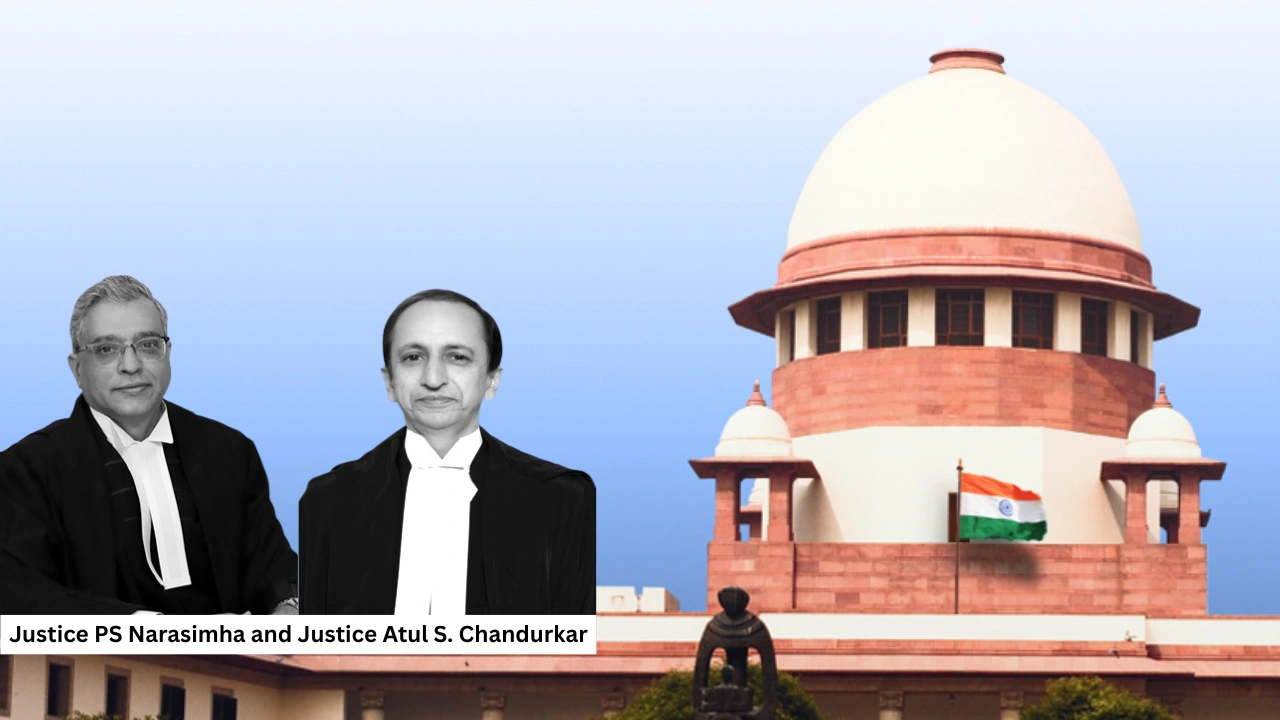
A bench of Justice Pamidighantam Sri Narasimha and Justice Atul S. Chandurkar examined the issue in detail.
The Court noted:
“The delay in commissioning a public utility project itself results in loss. In such cases, exact proof of damage is not required.”
The judges stressed that the solar project was not a private commercial deal but part of a national renewable energy mission, affecting public interest.
They also relied on earlier rulings which allow reasonable compensation even without strict proof of loss when a contract clearly provides for it.
Read Also:-UGC's 2026 Anti-Discrimination Rules Face Protest by Lawyers Near Allahabad High Court
On Limits of Court Interference
The Supreme Court strongly criticised the High Court’s decision to recalculate damages under Section 37 of the Arbitration Act.
The bench observed:
“Once the Section 34 court has exercised discretion reasonably, the appellate court cannot substitute its own calculation.”
It clarified that appellate courts can correct jurisdictional errors-but cannot rewrite awards or reassess compensation figures unless they are perverse or illegal.
Final Decision
The Supreme Court ruled that:
• The Delhi High Court exceeded its powers by reducing the compensation.
• The Single Judge’s order granting ₹27.06 crore was legally sound.
• The Division Bench’s judgment was set aside.
• NVVNL’s appeal was allowed.
• Saisudhir Energy’s appeal was dismissed.
The Court also directed that both parties bear their own costs.
Read Also:-Supreme Court Sets Aside Odisha Land Dispute Orders, Says Section 47 CPC Misused After Decree
Why This Judgment Matters
• Reinforces the finality of arbitral awards
• Limits excessive judicial interference
• Strengthens enforcement of contracts in infrastructure projects
• Supports timely execution of renewable energy projects
The ruling sends a clear signal: delays in public utility projects carry real financial consequences, and courts will respect contractual risk allocations.
Case Title: M/s Saisudhir Energy Ltd. vs NTPC Vidyut Vyapar Nigam Ltd.
Case No.: Civil Appeal Nos. 12892–12895 of 2024
Decision Date: 30 January 2026
Download Judgment

