

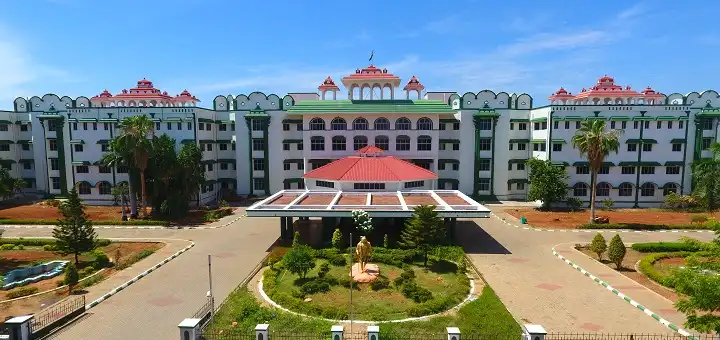
The Madurai Bench of the Madras High Court on Tuesday stepped in to defuse rising tensions over the conduct of a village temple festival, ruling that no individual or community can claim exclusive rights over the upcoming Kumbabishekam in Madurai district.
Hearing a writ petition filed just days before the scheduled ceremony, the court laid down clear directions to ensure the festival is conducted peacefully, inclusively, and without any claim of social hierarchy.
Read also:-Rajasthan HC Overturns CRPF Dismissal, Says Short Absence Can’t Be Called Desertion
Background of the Case
The case arose from Melapanankadi village in Madurai North Taluk, where four temples - Arulmighu Ayyanar, Muniyandi Swamy, Karupasamy, and Muthumariamman - are set to undergo Kumbabishekam on February 8, 2026.
Rathinam, the petitioner, approached the court alleging that disputes had surfaced among villagers belonging to different communities over who should organise and lead the festival. He sought a direction to local authorities to form a committee with representatives from the Mutharayar, Maravar, and Adhi Dravidar communities to oversee the celebrations.
The fifth respondent, another villager, claimed a right to conduct the ceremony, triggering concerns of exclusion and possible unrest.
What the Court Considered
During the hearing, Justice S. Srimathy noted that Melapanankadi is home to at least five communities and that temple festivals cannot be reduced to individual control.
The court also took note of an earlier order passed in a connected matter, where the Hindu Religious and Charitable Endowments (HR&CE) Department had already appointed a “Fit Person” to administer the temple affairs.
“The Kumbabishekam cannot be conducted by an individual, especially when there are multiple communities in the village,” the bench observed, making it clear that personal claims have no place in public religious functions.
Court’s Observations
Justice Srimathy underlined that temple festivals must remain collective events, reflecting social harmony rather than dominance.
The bench was firm in stating that there shall be no ‘First Honour’ to any individual or community - a practice often associated with social ranking during temple events.
“There shall not be any discrimination,” the court said, stressing that all communities must be treated equally in the conduct of the ceremony.
The judge further directed that transparency and cooperation were essential, particularly given the proximity of the festival date.
Read also:-Supreme Court Restores Membership Rights in Mumbai Housing Society Dispute Over Peddar Road Flat
The Decision
Disposing of the writ petition, the court issued the following directions:
• The Fit Person appointed by the HR&CE Department shall form a committee.
• The committee must include one representative from each community in the village.
• The Fit Person and the committee will jointly conduct the Kumbabishekam.
• No individual or community shall be given any special or first honour.
• The fifth respondent must hand over all relevant temple records to the committee and the Fit Person.
With these directions, the court closed the matter, recording no order as to costs.
The ruling effectively places the responsibility of the festival in collective hands, aiming to ensure peace and equality during one of the village’s most significant religious events.
Case Title: Rathinam v. The Superintendent of Police & Others
Case No.: W.P.(Crl)(MD) No. 500 of 2026
Decision Date: 28 January 2026


