

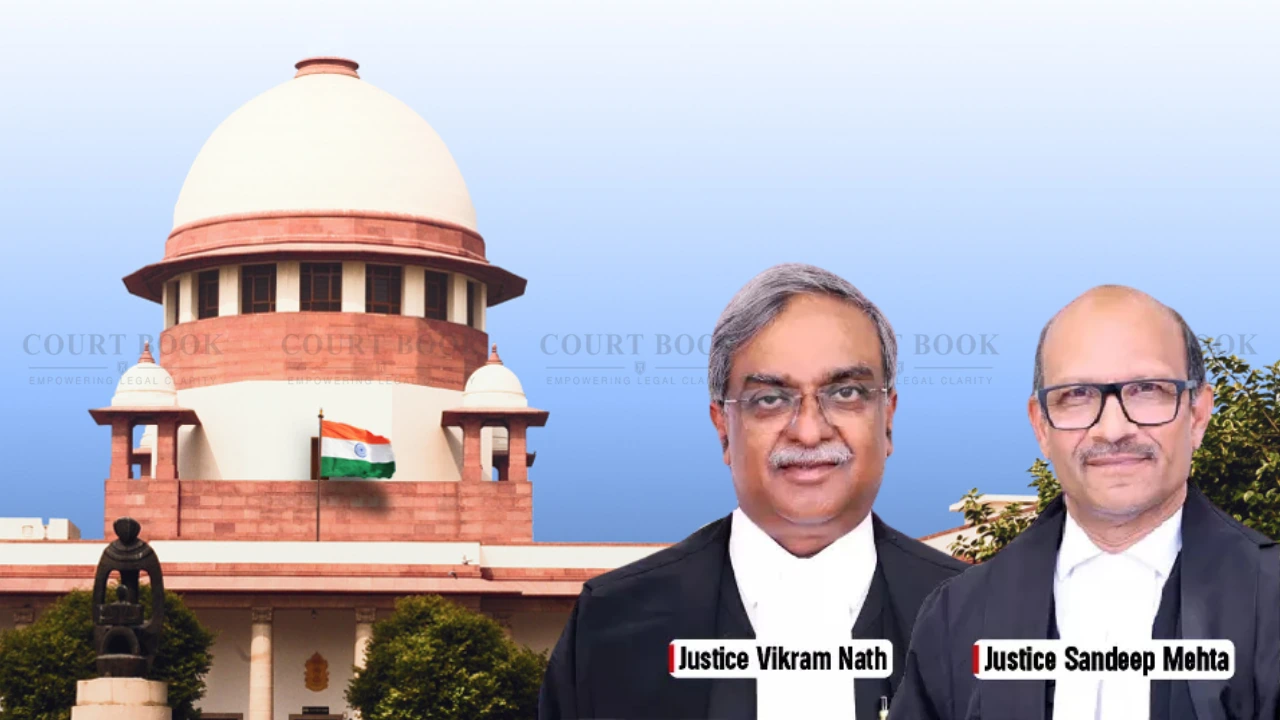
In a significant ruling reaffirming the State’s duty as a model employer, the Supreme Court of India on Thursday directed the State of Jharkhand to regularise the services of contractual Junior Engineers who had been working for more than a decade without job security.
The verdict brings relief to three engineers - including Bhola Nath - whose long legal battle against contractual uncertainty finally ended in their favour.
Read Also:-Kerala High Court Quashes Suicide Abetment Case, Says Angry Words Alone Don’t Prove Criminal
Background of the Case
The case arose from appointments made in 2012 by the Jharkhand government for 22 posts of Junior Engineer (Agriculture) under the Soil Conservation Department.
Although the posts were sanctioned and permanent in nature, appointments were made on a contractual basis, initially for one year, with periodic extensions.
Over the years, the engineers continued to work without interruption. Their services were repeatedly extended, and they were transferred and treated like regular employees. However, in 2023, the State declined to grant further extensions and refused to regularise their services.
Aggrieved, the engineers approached the Jharkhand High Court, which dismissed their petitions. The High Court held that contractual employees had no right to seek regularisation.
This led to appeals before the Supreme Court.
Read Also:-Delhi High Court Rejects Sameer Wankhede’s Defamation Suit Against Netflix Show ‘Ba*ds
What the Petitioners Argued
Appearing for the engineers, senior counsel argued that:
• The appointments were made against sanctioned posts after a proper selection process.
• The engineers had served continuously for over 10 years with satisfactory performance.
• Denial of regularisation after such long service was arbitrary and violated Article 14 of the Constitution.
• The State had exploited their unequal bargaining power by keeping them on rolling contracts.
• Contractual clauses denying regularisation could not override constitutional rights.
“The State cannot treat its employees as disposable resources after extracting years of service,” the petitioners argued.
State’s Stand
The Jharkhand government defended its decision, saying:
• Appointments were purely contractual with clear terms.
• No promise of regularisation was ever made.
• Courts cannot rewrite contracts or impose regularisation.
• The engineers had accepted the conditions knowingly.
Read Also:-UGC's 2026 Anti-Discrimination Rules Face Protest by Lawyers Near Allahabad High Court
Court’s Observations
The Bench of Justice Vikram Nath and Justice Sandeep Mehta strongly disagreed with the State’s stand.
The Court observed:
“The State cannot hide behind contractual labels after taking work for over a decade. Such conduct is arbitrary and violates the equality clause under Article 14.”
The judges noted that the government had:
• Engaged the engineers on sanctioned posts
• Continued them for more than ten years
• Benefited from their experience and services
• Yet denied them job security without valid reasons
Calling the State a “model employer”, the Court said it must act fairly and not exploit employees through endless contractual arrangements.
On Contractual Clauses and Fundamental Rights
Rejecting the argument that contractual terms barred regularisation, the Court held:
“Acceptance of a contractual condition does not amount to waiver of fundamental rights.”
The Bench referred to earlier rulings, stating that:
• Unequal bargaining power makes such contracts unfair
• Employees cannot be forced to choose between livelihood and constitutional rights
• Long-term contractual employment defeats the spirit of public service rules
Read Also:-Supreme Court Sets Aside Odisha Land Dispute Orders, Says Section 47 CPC Misused After Decree
Court’s Final Decision
Allowing the appeals, the Supreme Court held:
• The State acted arbitrarily in denying regularisation
• Long service on sanctioned posts creates legitimate expectation
• Contractual labels cannot override constitutional protection
Direction of the Court:
“The State of Jharkhand is directed to forthwith regularise the services of all appellants against the sanctioned posts. They shall be entitled to all consequential service benefits.”
The Court also set aside the judgments of the Jharkhand High Court and allowed all pending petitions.
Case Title: Bhola Nath & Ors. v. State of Jharkhand
Case No.: Civil Appeal arising out of SLP (C) No. 30762 of 2024
Decision Date: 30 January 2026
Download Judgment

