

The Supreme Court on March 17, 2026, upheld the conviction of a man accused of setting his wife on fire, ruling that the victim’s dying declaration and the testimony of their daughter provided clear and reliable evidence of the crime. The Court dismissed the appeal filed by the husband, confirming the life imprisonment awarded for murder and cruelty.
Background of the Case
The case arose from a tragic incident in July 2000 involving Subramani and his wife Chennamma, who had been married for about 17 years and had four children. Initially, their marriage was stable, but over time disputes reportedly developed over financial demands.
According to the prosecution, Subramani frequently demanded money from his wife’s family and treated her with cruelty. On the night of July 20, 2000, another quarrel broke out between the couple. During the altercation, the husband allegedly poured kerosene on his wife and set her on fire.
Read also:- Mutual Divorce Under Muslim Law Valid Even Without Court Process: Gujarat HC Declares Marriage Dissolved
Neighbours rushed in after hearing her cries and extinguished the flames before she was taken to Victoria Hospital in Bengaluru. She suffered severe burn injuries and died three days later on July 24, 2000.
Following her death, the victim’s father filed a complaint, leading to the registration of a criminal case under Sections 302 (murder) and 498A (cruelty by husband) of the Indian Penal Code.
During the trial, the Sessions Court acquitted Subramani. The court cited inconsistencies in witness statements and expressed doubts about whether the alleged dying declaration could be relied upon, especially considering the victim had suffered extensive burns.
However, the State challenged the acquittal before the High Court. The High Court reversed the trial court’s decision and convicted the accused for both murder and cruelty. It sentenced him to life imprisonment for murder along with additional punishment for cruelty.
Subramani then approached the Supreme Court, arguing that the High Court had wrongly overturned the acquittal and that the evidence against him was unreliable.
Read also:- Delhi HC Grants Relief To Rajpal Yadav In Cheque Bounce Case, Says “Not Sending Him To Jail For Now”
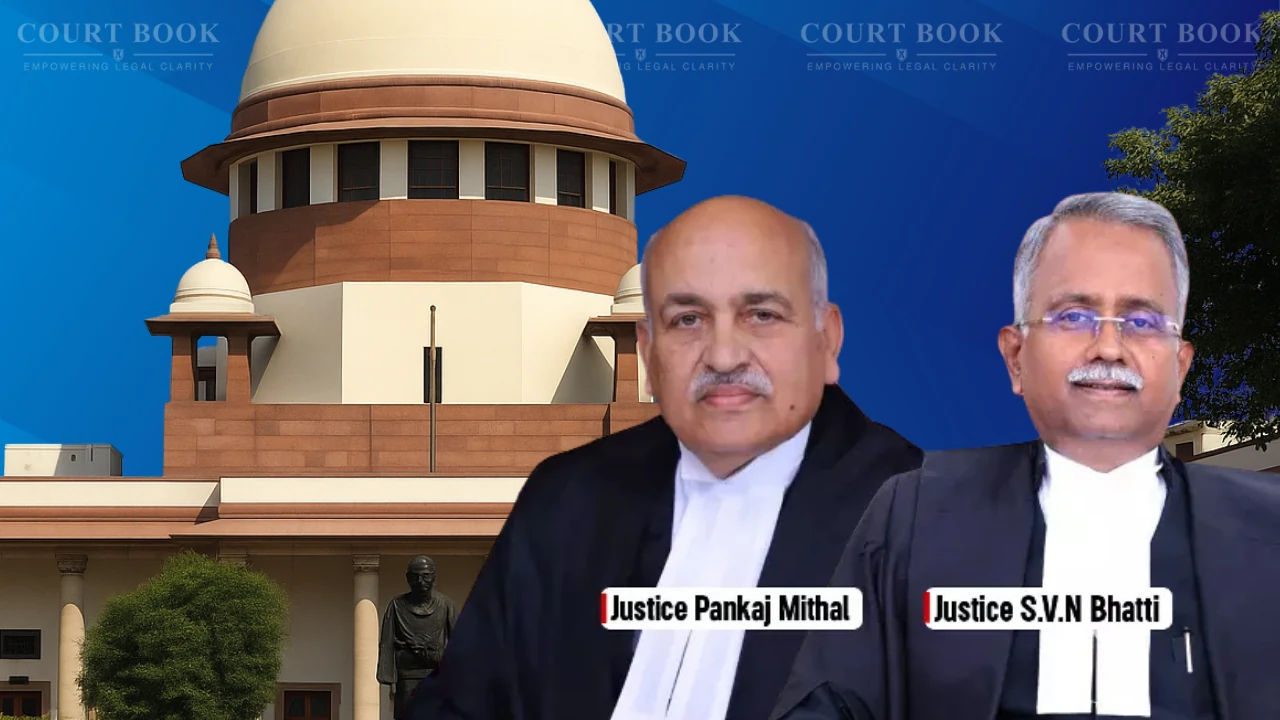
A bench of Justice Pankaj Mithal and Justice S.V.N. Bhatti examined the evidence in detail and found that the prosecution had established the accused’s guilt through several consistent pieces of evidence.
The Court placed significant reliance on the testimony of the couple’s eldest daughter, who was about 16 years old at the time of the incident. She testified that her father poured kerosene on her mother and set her on fire after a quarrel over money.
“The witness clearly narrated the incident and there is no reason to disbelieve her testimony,” the Court observed.
The bench also examined medical evidence and the victim’s dying declaration recorded in the hospital. Doctors confirmed that although she had suffered extensive burns, she was conscious and capable of giving a statement when her declaration was recorded.
The Court noted that the dying declaration directly blamed the husband for pouring kerosene and setting her ablaze.
Read also:- Supreme Court Sets Strict Rules for Case Adjournments; Limits Repeated Requests
“We see no reason to disbelieve the dying declaration,” the bench said while discussing the medical and police evidence.
Further supporting the prosecution case, investigators recovered a kerosene tin, matchbox, and burnt clothes from the scene of the incident.
After examining the evidence, the Supreme Court concluded that the High Court had correctly reversed the trial court’s acquittal.
The bench held that the testimony of the daughter, the medical evidence, the dying declaration, and the recovery of materials from the scene collectively proved the husband’s guilt.
“In view of the evidence on record, there is hardly any scope for acquittal,” the Court observed while upholding the conviction.
Accordingly, the Supreme Court dismissed the appeal and directed the appellant, who was on bail, to surrender immediately and undergo the remaining part of his sentence.
Case Title: Subramani vs State of Karnataka
Case Number: Criminal Appeal No. 2432 of 2010
Judges: Justice Pankaj Mithal and Justice S.V.N. Bhatti
Decision Date: 17 March 2026
Counsels:
• For the Appellant: Shri Shekhar G. Devasa, Senior Advocate
• For the Respondent (State of Karnataka): Shri Sanchit Garga, Advocate-on-Record
DownloadJudgment

