

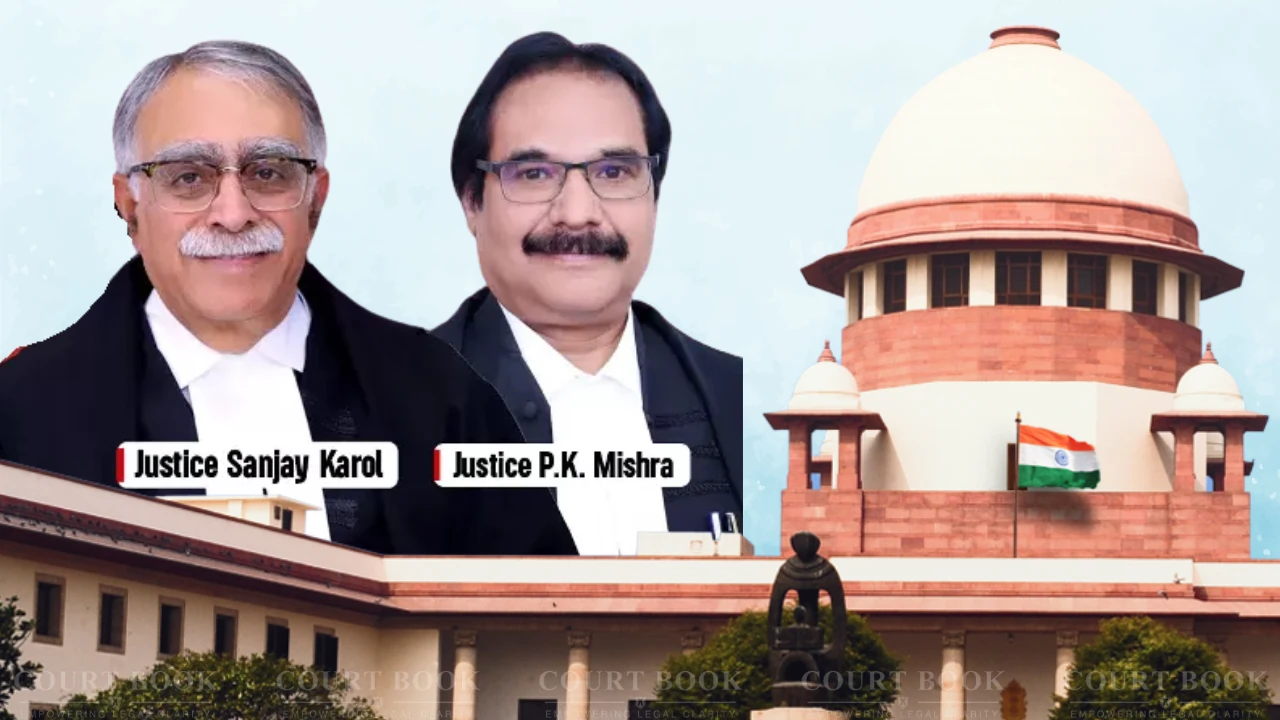
The Supreme Court on Thursday (January 29, 2026) refused to interfere with the bail granted to an accused in a high-profile 2018 murder case from Uttar Pradesh, holding that no exceptional grounds were made out for cancellation of bail. The bench observed that long incarceration and lack of misuse of liberty weighed heavily in favour of the accused.
The appeal was filed by the complainant challenging the Allahabad High Court’s order that had granted bail to the accused in January 2025.
Read Also:-Kerala High Court Quashes Suicide Abetment Case, Says Angry Words Alone Don’t Prove Criminal
Background of the Case
The case relates to the brutal murder of a panchayat chairman in Sonbhadra district on October 25, 2018. The victim was shot dead early in the morning while out for a walk.
An FIR was registered under serious charges including murder, criminal conspiracy, and rioting. The prosecution alleged that the killing was carried out using automatic weapons and that the attack was part of a planned conspiracy.
Although the accused was not named in the initial FIR, his name later surfaced during investigation based on the alleged oral dying declaration of the deceased and statements of co-accused persons. He was arrested in December 2018 and remained in jail for over six years.
Read Also:-Delhi High Court Rejects Sameer Wankhede’s Defamation Suit Against Netflix Show ‘Ba*ds
Why the Bail Was Challenged
The complainant approached the Supreme Court challenging the Allahabad High Court’s order granting bail, arguing that:
• The accused had a serious criminal background
• He exercised local influence
• The murder was a planned daylight execution
• His release posed a threat to witnesses
• The High Court ignored key facts while granting bail
It was also argued that the accused had allegedly hired the shooter and had absconded for a long period before arrest.
Court’s Observations
The bench of Justice Sanjay Karol and Justice Prashant Kumar Mishra carefully examined whether the case met the legal threshold for cancellation of bail.
The Court underlined that cancellation of bail is not the same as refusal of bail.
“The Court is required to find very strong and exceptional circumstances to cancel a bail already granted,” the bench observed.
Referring to earlier judgments, the Court noted that bail can be cancelled only when:
• The accused misuses liberty
• Attempts to influence witnesses
• Tries to evade justice
• Or when the bail order is patently illegal
Read Also:-UGC's 2026 Anti-Discrimination Rules Face Protest by Lawyers Near Allahabad High Court
Key Factors Considered by the Court
The Supreme Court highlighted several crucial aspects:
• The accused was not named in the FIR
• His implication was based on oral dying declaration and disclosure statement
• He had already spent over six and a half years in jail
• No misuse of liberty was reported after bail
• Co-accused in the same case had already been granted bail
• Trial progress was slow, with only 13 of 55 witnesses examined
“The accused has already undergone long pre-trial incarceration, and there is no allegation of misuse of liberty after release,” the bench noted.
Read Also:-Supreme Court Sets Aside Odisha Land Dispute Orders, Says Section 47 CPC Misused After Decree
Final Decision
After considering all aspects, the Supreme Court refused to interfere with the High Court’s order.
“The present case does not warrant cancellation of bail,” the Court held while dismissing the appeal.
With this, the bail granted to the accused continues to remain in force.
Case Title: Usman Ali vs State of Uttar Pradesh & Another
Case No.: Criminal Appeal No. 541 of 2026
Decision Date: January 30, 2026
Download Judgment

