

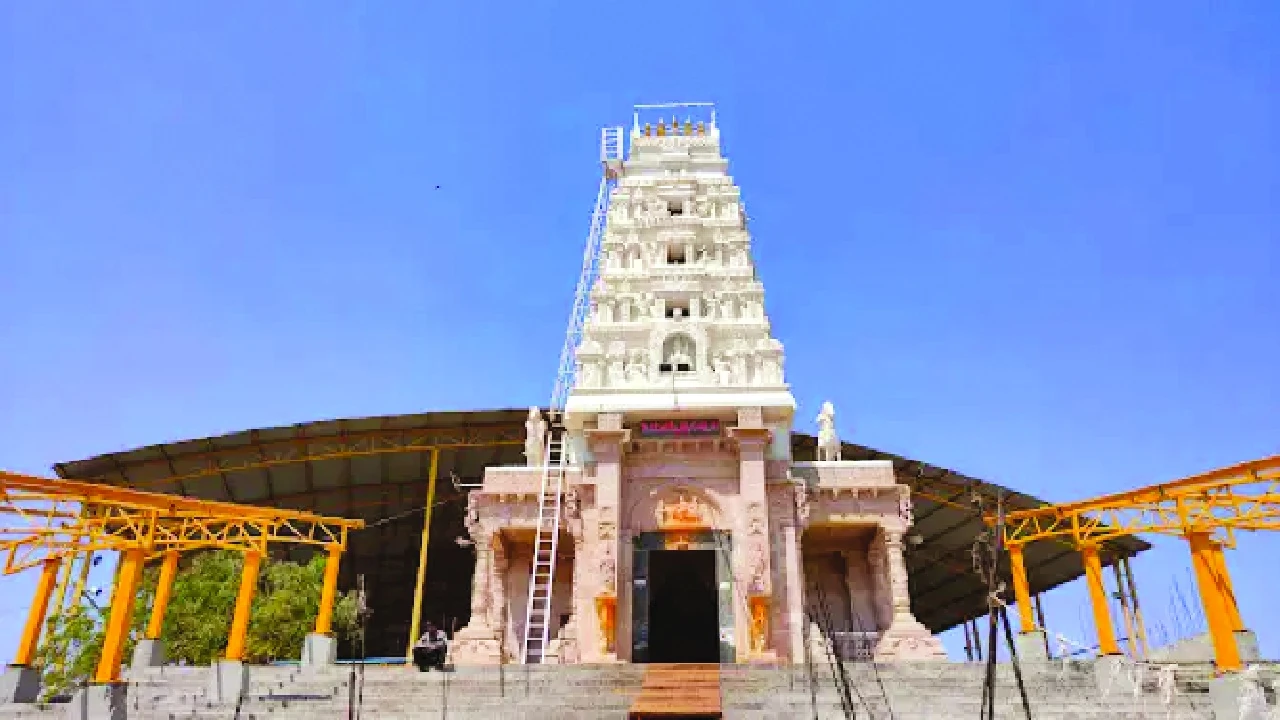
In a judgment that brings closure to a temple dispute stretching back over a century, the Supreme Court of India has upheld the hereditary pujari rights of one family at the historic Amogasidda temple in Karnataka.
The bench of Justice Prashant Kumar Mishra and Justice K. Vinod Chandran dismissed civil appeals filed by the rival claimants, affirming the High Court’s decision in favour of the plaintiffs.
Read also:-Sikkim High Court Closes NHM Transfer Dispute After Amicable Settlement Between Employee
The case revolved around who holds the ancestral right to perform puja (worship rituals), receive offerings from devotees, and conduct the annual jatra at the temple built over the Samadhi of Saint Amogasidda.
Background of the Case
The dispute traces its roots to the early 1900s. The appellants relied heavily on a decree passed in 1901, claiming that their predecessor had been granted pujari rights.
However, matters became complicated in 1944 when their predecessor filed a fresh suit seeking possession of the temple and puja rights. That suit was dismissed in 1945. Though an appeal was filed, it was later withdrawn with liberty to file a fresh suit. No such fresh suit was filed for the next 36 years.
Read also:-Patna High Court Dismisses Plea for Compensation Over Alleged Illegal Detention, Flags Lapses
In 1982, the present respondents approached the trial court seeking a declaration that they were the hereditary wahiwatdar pujaris - meaning traditional managers and priests - entitled to perform rituals at the temple and conduct the annual fair.
The trial court partly allowed the suit. The first appellate court later ruled entirely in favour of the plaintiffs. The High Court initially set aside that ruling on technical grounds, but the Supreme Court remanded the matter for fresh consideration. Eventually, the High Court restored the decree in favour of the plaintiffs in 2012.
The matter once again reached the Supreme Court.
Court’s Observations
The bench made it clear at the outset that it would not lightly interfere with concurrent findings of fact by lower courts.
“The jurisdiction under Article 136 of the Constitution should be used sparingly, particularly when dealing with concurrent findings,” the Court observed.
A crucial question troubled the bench: if the appellants truly had possession and recognised rights under the 1901 decree, why did their predecessor file a suit for possession in 1944?
The Court noted that a party in settled possession does not sue for possession. The very act of filing the 1944 suit suggested that possession was not with them at that time.
Read also:-Madras High Court Rules Grandparents Not ‘Family’ for Stamp Duty Concession in Settlement Deeds
Further, although liberty was granted in 1946 to file a fresh suit, no such action was taken for over three decades. The Court described this long silence as significant.
“When a party obtains liberty to file a fresh suit and consciously refrains from doing so for thirty-six years, the inevitable inference is that the party had reconciled itself to the factual reality,” the bench remarked.
Importance of Revenue Records and Admissions
The High Court had relied heavily on revenue records showing the names of the plaintiffs’ ancestors in connection with lands granted for service to the temple. These entries, the Supreme Court noted, carried evidentiary value.
Significantly, during cross-examination, one of the defendants admitted that lands linked to the temple were being cultivated by the plaintiffs. This admission weighed heavily against the appellants’ claim.
The Court also found fault with the appellants’ pleadings. It noted that they failed to clearly state when they came into possession, when they began performing puja, and how exactly their rights were obstructed.
“Oral evidence cannot be a substitute for pleading,” the Court said, emphasising that a case must be properly set out in written statements before it can be supported by testimony.
Read also:-Gujarat HC Sends 17-Year-Old Girl to Mehsana Children Home After She Refuses to Return
The Decision
After examining the entire record, the bench concluded that the plaintiffs had consistently established their claim through documentary evidence, revenue entries, witness testimony, and admissions from the opposing side.
On the other hand, the appellants relied almost entirely on a century-old decree, the practical effect of which had been undermined by subsequent conduct.
Finding no perversity or legal error in the High Court’s judgment dated October 4, 2012, the Supreme Court dismissed the civil appeals.
The Court held that the respondents are the hereditary pujari of the Amogasidda temple. No order as to costs was passed.
Case Title: OGEPPA (D) Through LRs & Ors. v. Sahebgouda (D) Through LRs & Ors.
Case No.: Civil Appeal Nos. 7181–7182 of 2016
Decision Date: February 25, 2026
Download Judgment

