

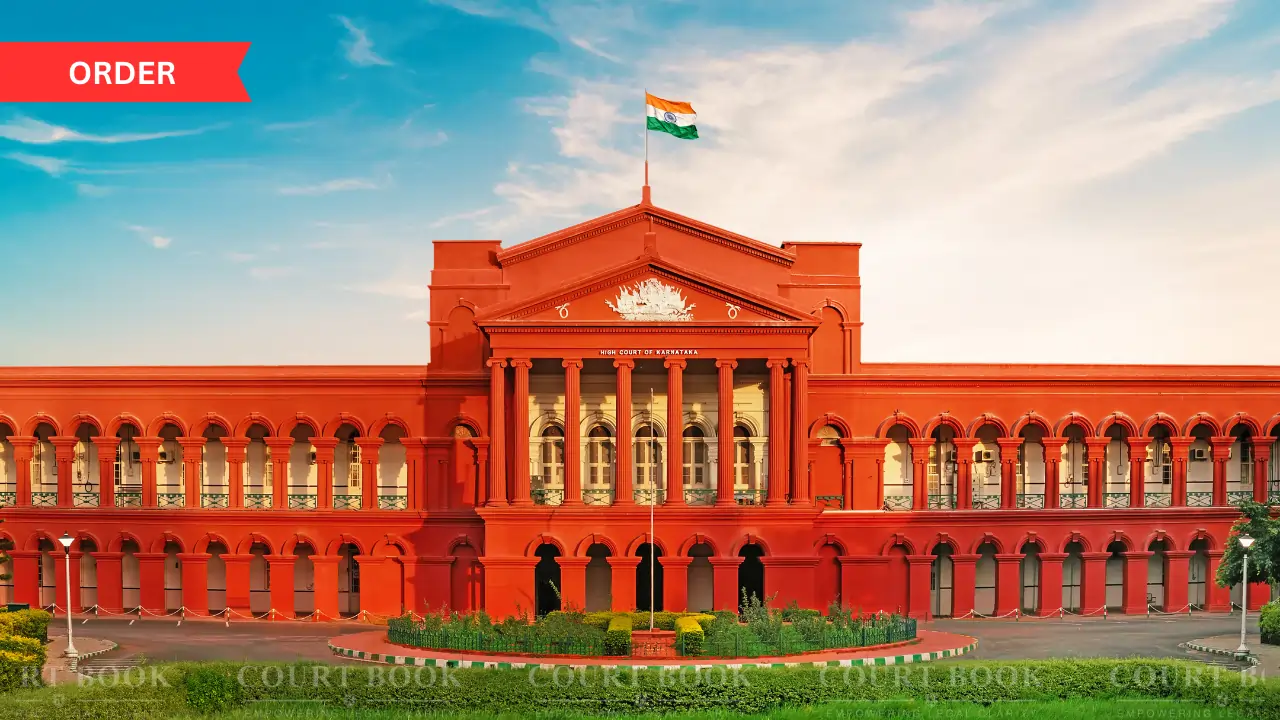
The Karnataka High Court has stepped in to protect an 84-year-old father who said his daughters took his land on the promise of care - and then abandoned him. In a detailed order, the court set aside a gift deed and restored the property to the senior citizen, stressing that the law exists to shield elderly parents from exactly this kind of neglect.
The judgment was delivered by Justice Suraj Govindaraj at the High Court of Karnataka, Bengaluru, on February 2, 2026.
Read also:-Bombay HC Disposes Unmarried Woman’s Abortion Plea, Cites Supreme Court Ruling on MTP Rights
Background of the Case
The petitioner, Sri Venkataiah, an illiterate farmer from Tumakuru district, owned agricultural land measuring over two acres. In April 2023, he executed a registered gift deed in favour of his daughters, Shivamma and Puttamma.
According to the father, the transfer was not a free gift. He told the court that his daughters had assured him they would take care of his food, shelter, medical needs, and daily life in his old age. Trusting them, he put his thumb impression on the document prepared by them.
Soon after the transfer, things changed. The father alleged that he was neglected and left without basic necessities. Feeling betrayed, he approached the Maintenance Tribunal under the Maintenance and Welfare of Parents and Senior Citizens Act, 2007, seeking cancellation of the gift deed.
Read also:-Calcutta High Court Refuses to Quash Forgery Case Linked to 1963 Land Deed, Orders Police Prob
Orders Passed by Authorities Below
The Assistant Commissioner dismissed his plea, holding that the gift deed did not contain any written condition requiring the daughters to maintain him. This view was upheld by the Deputy Commissioner on appeal.
Both authorities took a strict, document-based approach - focusing only on what was written in the deed, not on the surrounding circumstances.
What the High Court Examined
Hearing the writ petition, the High Court framed key questions:
• Is a written maintenance clause compulsory to cancel a gift deed under the Senior Citizens Act?
• Can the obligation to care for a parent be inferred from family relationships and conduct?
• What is the effect when one daughter admits she has no objection to cancellation?
Read also:-Bombay High Court Flags Flawed Tree-Felling Notices, Closes Pune Coconut Trees Case
One important fact stood out during the hearing. Puttamma, one of the daughters and a beneficiary under the gift deed, had filed a memo before the authorities clearly stating that she had no objection if her father’s application was allowed.
Court’s Observations
Justice Govindaraj made it clear that the authorities had misunderstood the law. The court observed that Section 23 of the 2007 Act is a welfare provision and must be applied in a practical, humane manner.
“The statute does not insist on a written maintenance clause,” the bench noted. What matters is whether the property was transferred on the expectation of care - and whether that expectation was later defeated.
The judge also pointed out the social reality behind such cases. Elderly parents, especially in rural areas, rarely demand written safeguards from their own children. Transfers are based on trust, affection, and moral obligation.
The court was particularly critical of ignoring the daughter’s admission. “Once a donee herself admits the father’s case, a grandson claiming through her cannot raise independent objections,” the judge observed.
Read also:-PILs Against Assam CM Himanta Biswa Sarma Over Alleged Hate Speech Reach SC, CJI Seeks Calm
Decision of the Court
Allowing the writ petition, the High Court quashed the orders of both the Assistant Commissioner and the Deputy Commissioner.
The court held that the gift deed dated April 19, 2023, was obtained by misuse of trust and stood vitiated by “constructive fraud” under Section 23 of the Senior Citizens Act.
The gift deed was declared void, and revenue authorities were directed to restore the father’s name as absolute owner of the land within six weeks. The court also clarified that the grandson had no right or interest in the property after annulment.
Case Title: Sri Venkataiah vs State of Karnataka & Others
Case No.: Writ Petition No. 13313 of 2025 (GM-RES)
Decision Date: February 2, 2026


