

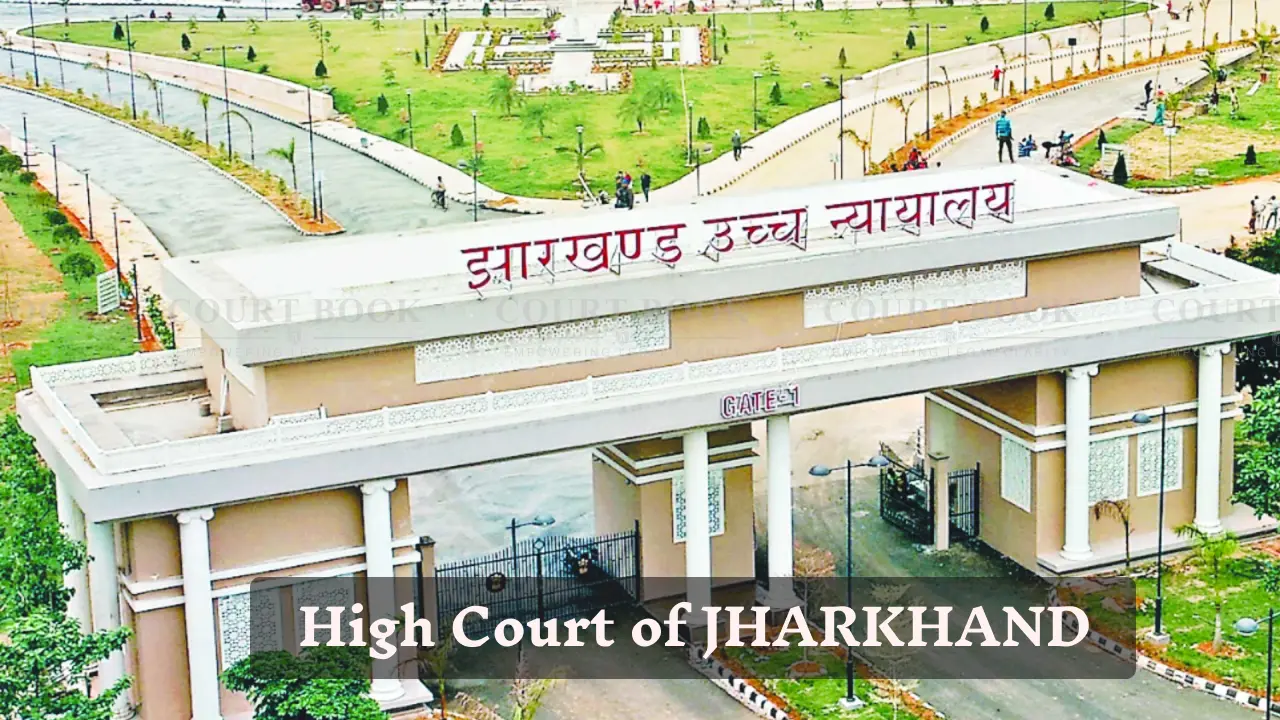
The Jharkhand High Court has refused to grant regular bail to businessman Naveen Kedia, making it clear that a person must be in actual judicial custody before seeking regular bail. The court dismissed Kedia’s plea on February 3, 2026, after a detailed hearing on the scope of “custody” under the new criminal laws.
Justice Sanjay Kumar Dwivedi delivered the verdict after reserving the matter earlier.
Read also:-Supreme Court Revives Cheque Bounce Complaint, Says Justice Demands Restoration of Dismissed Case
Background of the Case
Naveen Kedia is an accused in an Anti-Corruption Bureau (ACB) case registered in Jharkhand involving allegations of cheating, forgery, criminal breach of trust, conspiracy, and corruption. The FIR dates back to May 2025.
Kedia was arrested by the ACB on January 7, 2026, from Goa. The next day, he was produced before a sessions court in Goa, which granted him interim bail for four days. The interim relief was specifically meant to allow him to approach the Jharkhand court for regular bail.
One of the key conditions of the interim bail required Kedia to surrender before the investigating officer of the ACB in Ranchi by January 12, 2026.
Why the Bail Dispute Reached the High Court
Instead of surrendering, Kedia filed a regular bail application before the trial court in Ranchi on January 12. His lawyers requested permission for him to appear through video conferencing, citing practical difficulties.
The trial court rejected the bail plea, stating that Kedia had not physically surrendered or appeared before the court. Challenging this, Kedia moved the Jharkhand High Court, arguing that interim bail amounted to “constructive custody.”
Arguments by the Defence
Senior Advocate Siddharth Agarwal, appearing for Kedia, argued that once interim bail is granted, the accused remains under the control of the court.
“The petitioner was never absconding. He was under the authority of the court at all times,” the defence submitted.
Relying on Supreme Court judgments, the defence claimed that custody does not always mean physical confinement and that the trial court should have decided the bail plea on merits rather than rejecting it on technical grounds.
Stand of the Anti-Corruption Bureau
The ACB strongly opposed the plea. Its counsel pointed out that Kedia had violated the interim bail conditions by not surrendering before the investigating officer.
“The interim bail was conditional. The accused chose not to comply and instead tried to bypass custody,” the ACB told the court.
The agency also highlighted that Kedia never physically appeared before the Jharkhand court, which is mandatory for the first appearance under the law.
Court’s Observations
After examining the record and past rulings, the High Court held that custody is a mandatory pre-condition for seeking regular bail.
“The law is settled that a bail application under Section 483 can be entertained only when the applicant is in custody,” the bench observed.
The court rejected the argument of “constructive custody,” stating that bail itself presupposes detention and surrender.
“If a person released on bail is treated as being in custody, it would make a mockery of justice,” the judge remarked.
The court also noted that Kedia failed to comply with the interim bail directions and did not physically submit to the court’s jurisdiction.
Read also:-CLAT 2026 Answer Key Controversy Lands in Allahabad HC, Merit List to Be Revised
Final Decision
Finding no illegality in the trial court’s order, the Jharkhand High Court dismissed the bail application. The court also rejected Kedia’s plea to ignore procedural defects and denied his request for interim protection.
With this, all pending applications filed by Naveen Kedia in the matter stood rejected.
Case Title: Naveen Kedia vs State of Jharkhand (ACB)
Case No.: B.A. Filing No. 980 of 2026
Decision Date: 03 February 2026


