

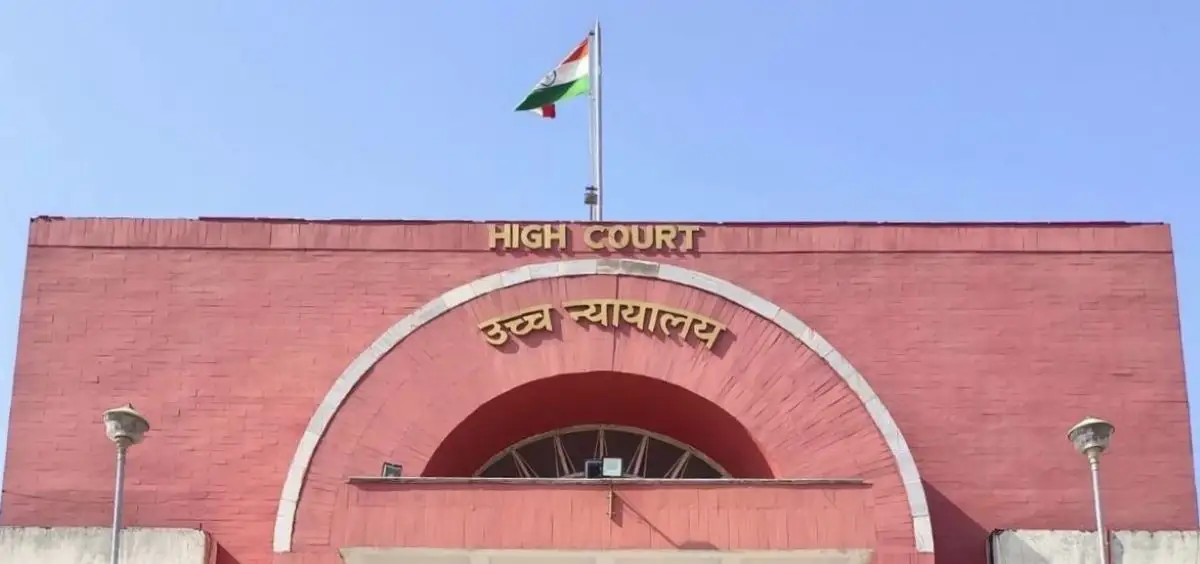
The Bombay High Court has refused to interfere with recruitment policies of public sector banks, holding that past disciplinary action can be a valid factor while assessing a candidate’s suitability for employment. The Aurangabad Bench dismissed a writ petition filed by a former bank employee who challenged his rejection by IDBI Bank due to an earlier removal from service.
The judgment was delivered on January 9, 2026, by a Division Bench of Justice Vibha Kankanwadi and Justice Hiten S. Venegavkar
Background of the Case
The petitioner, Kapil Nugurwar, had earlier worked with Maharashtra Gramin Bank. In April 2024, he was removed from service following disciplinary proceedings. The removal order clearly stated that it would not act as a disqualification for future employment.
Read also:- Bombay High Court Upholds ₹2.97 Crore Compensation to Air India Crew Disabled in 2014 Road Accident
In 2023, while the disciplinary process was ongoing, Nugurwar applied for a recruitment drive conducted by IDBI Bank. His candidature was later rejected on the ground of his past removal from service.
Aggrieved, he approached the High Court in person. He sought two major reliefs: first, a direction to the Union of India to restrain all public sector banks from inserting clauses that disqualify candidates due to past misconduct; second, a direction to IDBI Bank to reconsider his candidature with retrospective effect.
Petitioner’s Arguments
The petitioner argued that once a disciplinary punishment is undergone, it should not carry lifelong consequences. He contended that denying employment on the basis of past removal amounts to “double punishment” and violates Articles 14, 16, and 21 of the Constitution.
Read also:- Supreme Court Revives Criminal Case in Property Deal, Says Forgery Claims Need Trial
Relying on replies received under the Right to Information Act, including one from the Reserve Bank of India, he claimed there was no central rule permanently barring such candidates from future public employment.
He also referred to the Maharashtra Gramin Bank Service Regulations, which state that removal from service shall not disqualify a person from future employment.
Government’s Stand
The Union of India opposed the plea, arguing that public sector banks are autonomous bodies with their own recruitment policies. It was submitted that courts cannot impose uniform eligibility conditions across all banks.
Read also:- Upholds Father’s Conviction in Minor Daughter Rape Case: Delhi High Court
The government also pointed out that the petitioner had not specifically challenged any recruitment rule or advertisement of IDBI Bank, making the petition legally untenable.
Court’s Observations
The Bench found the reliefs sought to be excessively broad. It observed that directing all public sector banks to follow a single recruitment standard would amount to judicial overreach.
“The absence of a centralized rule does not make a recruitment condition unconstitutional,” the court noted, adding that each case must be examined in the context of a specific advertisement and rule.
The judges clarified that while removal from service may not legally bar a person from applying elsewhere, it does not create a right to be considered suitable by every employer.
Read also:- Supreme Court Directs Bihar Authorities to Begin Premature Release Process for Convict After 13.5 Years in Jail
“Suitability is a multifaceted concept,” the Bench observed, emphasizing that banks are entitled to assess past conduct, especially given the trust involved in handling public funds.
The court also rejected the argument of double jeopardy, stating that denial of appointment is not a punishment but a recruitment decision.
Final Decision
Finding no arbitrariness or constitutional violation, the Bombay High Court dismissed the writ petition. The Bench held that no mandamus could be issued without a direct challenge to a specific recruitment rule or condition and declined to interfere with the autonomy of public sector banks in recruitment matters.
The petition was dismissed with no order as to costs, and the rule was discharged.
Case Title: Kapil s/o Ashok Nugurwar v. Union of India & Anr.
Case Number: Writ Petition No. 15495 of 2025
Download Judgment

