

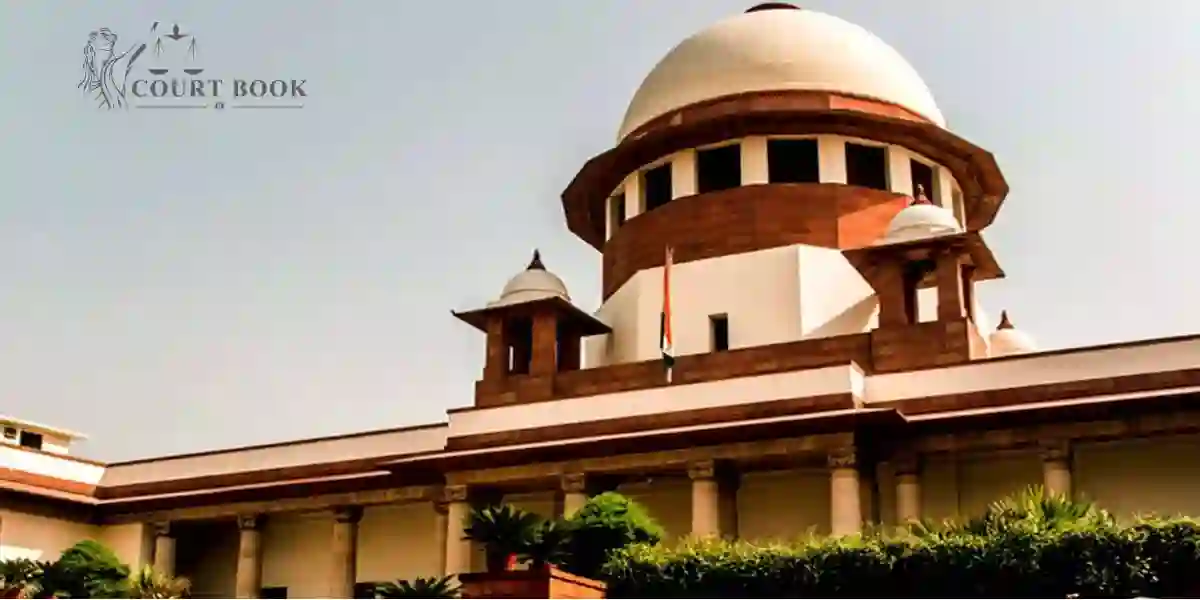
In a significant ruling affecting several government employees in Bihar, the Supreme Court of India has ordered the reinstatement of librarians whose services were terminated because their degrees were obtained from a private university later declared invalid.
A bench of Justice Rajesh Bindal and Justice Vijay Bishnoi held that the employees could not be punished for studying at an institution that was legally established at the time they enrolled and graduated.
Read also:- Gujarat HC Clears Way for Police Recruit, Says Minor, Quashed FIR Can’t Block Appointment
Background of the Case
The appellants, including Priyanka Kumari and others, were appointed as librarians by the State of Bihar in 2010. They had obtained Bachelor of Library Science (B.Lib) degrees in 2004 from the University of Technology and Science, Raipur.
The university had been set up under the Chhattisgarh Niji Kshetra Vishwavidyalaya Act, 2002. However, in 2005, the Supreme Court struck down key provisions of that Act in the landmark case of Prof. Yashpal v. State of Chhattisgarh, declaring them unconstitutional. As a result, universities established under the Act ceased to exist.
Years later, a public interest litigation in the Patna High Court questioned the appointments of certain librarians who had degrees from that university. Eventually, in 2015, the State of Bihar terminated the services of the appellants on the ground that their degrees were from an unrecognized institution.
Their challenge before the High Court failed, leading them to approach the Supreme Court.
What the Appellants Argued
Senior counsel appearing for the librarians told the Court that when the appellants enrolled and completed their courses, the university was legally recognized. Even the Central Government had acknowledged the degrees for employment and higher studies.
The counsel stressed that in the Yashpal judgment, the Supreme Court had protected students who were studying at the time the law was struck down. “If the students who were still studying were protected, those who had already passed out earlier should not suffer either,” the appellants argued.
They also pointed out that the State of Bihar had appointed them in 2010 - five years after the 2005 judgment - despite full knowledge of the situation.
The State’s Stand
The State of Bihar maintained that once the 2002 Act was struck down, degrees awarded by universities set up under it automatically lost validity.
Read also:-Supreme Court Clears Siddhartha Reddy in Actress Pratyusha Death Case, Says No Proof of Abetment
The State argued that protection granted in the Yashpal case was limited only to students who were still studying at the time. Those who had already graduated were not covered.
According to the State, the principle of “prospective overruling” - meaning a judgment applies only to future actions - could not be invoked in this case.
Court’s Observations
After hearing both sides, the bench closely examined the earlier 2005 judgment.
The Court noted that in the Yashpal decision, while striking down the law, it had directed that students studying in those institutions should be shifted to recognized universities to protect their careers.
The bench observed that nothing on record suggested that the university where the appellants studied was “bogus” or non-existent. They had genuinely studied and obtained degrees before the Act was invalidated.
Importantly, the Court took note of the State’s conduct. Even after the 2005 ruling, Bihar appointed the appellants in 2010. Their applications were not rejected at that stage.
Read also:-Supreme Court Clears Siddhartha Reddy in Actress Pratyusha Death Case, Says No Proof of Abetment
“The appellants cannot be said to be at fault,” the bench effectively held, adding that they had studied in a university established under a law enacted by the State Legislature.
The Court also pointed out that the appellants had worked for more than five years before being terminated.
Decision of the Court
In its final ruling, the Supreme Court declared the termination orders illegal.
The bench set aside the Patna High Court’s decision and allowed the writ petitions filed by the librarians. The appellants have been directed to be reinstated in service with continuity.
Read also:-Telangana HC Quashes FIR Against Abundance Café Hookah Lounge, Says Police Cannot Act Without
However, the Court denied back wages for the period during which they were out of service. It reasoned that since they had not actually worked during that time, and the matter involved a complex legal situation, full back pay would not be appropriate.
“The orders vide which the services of the appellants were terminated have to be declared as illegal,” the Court held.
The appeals were accordingly allowed.
Case Title: Priyanka Kumari & Ors. v. State of Bihar & Ors.
Case No.: Civil Appeal No. 797 of 2026 (with connected appeals 798 & 799 of 2026)
Decision Date: February 18, 2026
Download Judgment

