

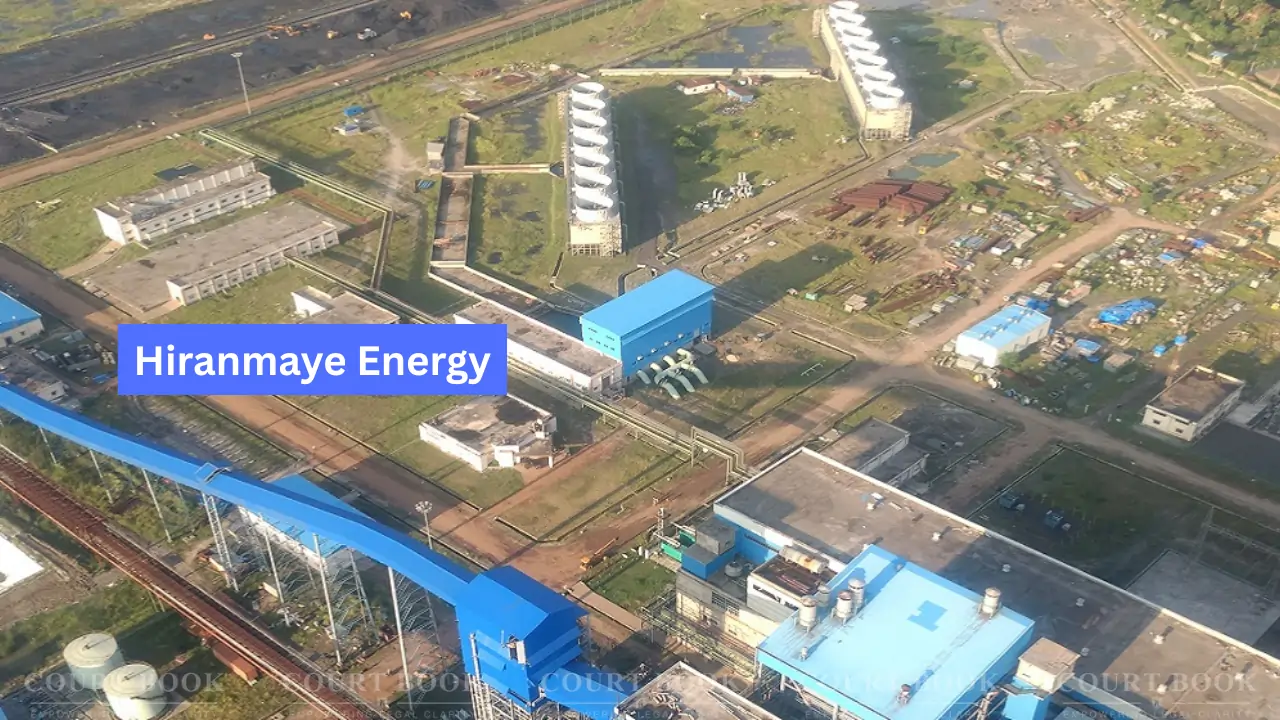
The Supreme Court of India has dismissed a high-stakes appeal filed by Power Trust, promoter of Hiranmaye Energy Ltd., challenging the initiation of insolvency proceedings against the company.
In a detailed judgment delivered on February 18, 2026, the Bench refused to interfere with the admission of a corporate insolvency resolution process (CIRP) against the thermal power producer, holding that the default dated back to 2018 - well before the Covid-era protection under Section 10A of the Insolvency and Bankruptcy Code (IBC).
Read also:- Gujarat HC Clears Way for Police Recruit, Says Minor, Quashed FIR Can’t Block Appointment
The Court also vacated the stay earlier granted on the insolvency process and declined to entertain further settlement proposals from the promoter.
Background of the Case
Hiranmaye Energy Ltd. had availed loans exceeding ₹2,300 crore to set up a thermal power plant in Haldia, West Bengal. The account was classified as a non-performing asset in June 2018 after alleged repayment defaults.
In 2020, lenders approved restructuring plans that extended the repayment schedule up to 2042. However, these plans were subject to strict pre-implementation conditions - including obtaining a favorable tariff order from the electricity regulator, creating a debt reserve account, arranging working capital, and demonstrating full operational capacity of the plant.
According to the lenders, these conditions were never fulfilled.
Subsequently, REC Ltd. filed an application under Section 7 of the IBC before the National Company Law Tribunal (NCLT), Kolkata. The NCLT admitted the plea in January 2024 and initiated CIRP. The decision was upheld by the National Company Law Appellate Tribunal (NCLAT), prompting the promoter to move the Supreme Court.
Promoter’s Main Arguments
The promoter argued that:
• The restructuring agreements reset the repayment schedule, making the first default fall within the Covid protection window (March 25, 2020 to March 24, 2021).
• Section 10A of the IBC barred insolvency proceedings for defaults during this period.
• Lenders had accepted part payments, amounting to deemed approval of restructuring.
• The power plant was operational, commercially viable, and generating revenue.
• The promoter’s settlement offer was higher than the resolution plan approved by lenders.
Relying on the precedent in Vidarbha Industries, the promoter argued that tribunals must consider financial viability before admitting insolvency proceedings.
Read also:-Supreme Court Clears Siddhartha Reddy in Actress Pratyusha Death Case, Says No Proof of Abetment
Court’s Observations
Section 10A Not Applicable
The Bench categorically rejected the Section 10A argument.
“The plea of bar under Section 10A is a non-starter,” the Court observed.
The judges held that the recorded date of default was March 31, 2018 - long before the Covid window. Even assuming the restructuring plan applied, the first installment under the revised schedule was due on March 31, 2021 - outside the protected period.
Further, the Court agreed with the appellate tribunal that the restructuring proposals never became binding agreements because mandatory conditions were not met.
Limited Scope at Admission Stage
The Court reiterated the settled law from Innoventive Industries Ltd. v. ICICI Bank that at the admission stage under Section 7, tribunals only need to verify:
• Existence of a financial debt
• Occurrence of default
“It is of no matter that the debt is disputed so long as the debt is ‘due’,” the Bench quoted from the earlier ruling.
Addressing reliance on Vidarbha Industries Power Ltd. v. Axis Bank Ltd., the Court clarified that its observations in that case were fact-specific and did not dilute the principle laid down in Innoventive.
The judges noted that the company’s outstanding liability exceeded ₹3,100 crore, far beyond the revenues cited by the promoter.
Read also:-Supreme Court Clears Siddhartha Reddy in Actress Pratyusha Death Case, Says No Proof of Abetment
Settlement Proposals Rejected
During the pendency of the appeal, the promoter submitted five settlement offers, ranging from ₹1,101 crore to ₹1,671 crore. All were rejected by the Committee of Creditors (CoC).
On October 29, 2024, the CoC approved the resolution plan of Damodar Valley Corporation with 99.92% voting share.
The Court emphasized that the “commercial wisdom” of the CoC cannot be second-guessed by courts, referring to Committee of Creditors of Essar Steel India Ltd v. Satish Kumar Gupta.
It also held that once Section 12A provides a statutory mechanism for withdrawal of insolvency proceedings with 90% CoC approval, courts cannot routinely intervene.
“Any further direction to stall the CIRP… would be prejudicial to the interest of a swift and timely resolution,” the Bench said.
Read also:-Telangana HC Quashes FIR Against Abundance Café Hookah Lounge, Says Police Cannot Act Without
Decision
The Supreme Court dismissed the appeal and vacated the interim stay on the insolvency process.
It also rejected an application filed by SREI Equipment Finance Ltd. seeking release of ₹125 crore deposited by the promoter during the stay period. The Court directed that the amount be refunded to the promoter along with accrued interest.
All pending applications were disposed of.
Case Title: Power Trust (Promoter of Hiranmaye Energy Ltd.) v. Bhuvan Madan & Ors.
Case No.: Civil Appeal No. 2211 of 2024
Case Type: Civil Appeal under Section 62, IBC
Decision Date: February 18, 2026
Download Judgment

