

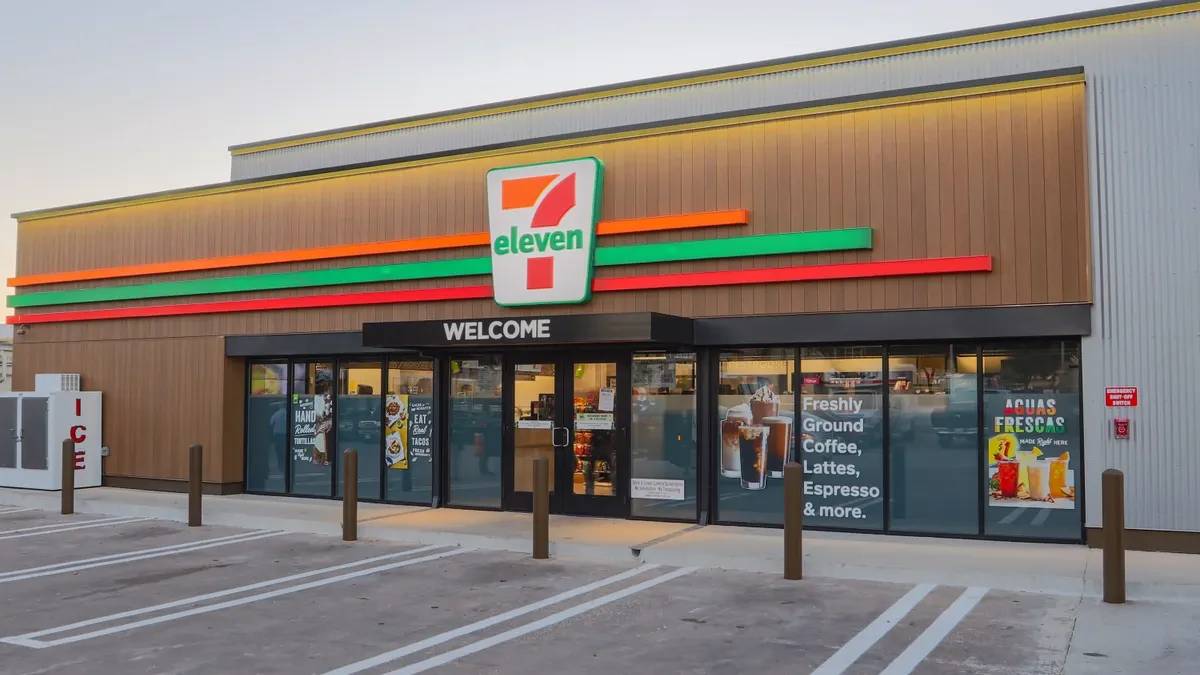
In a significant ruling on trademark law and cross-border reputation, the Madras High Court has dismissed appeals filed by US-based retail giant 7–Eleven International LLC over the use of the mark “Big Bite” in India. The court upheld the registration granted to Ravi Foods Private Limited and refused to interfere with the earlier decision of the Deputy Registrar of Trade Marks .
Justice N. Anand Venkatesh delivered the judgment on February 11, 2026, clarifying how Indian courts must approach claims of international reputation when the mark has not been used in India.
Read also:-Bombay HC Disposes Unmarried Woman’s Abortion Plea, Cites Supreme Court Ruling on MTP Rights
Background of the Case
The dispute centered around the mark “Big Bite” for food products falling under Class 30 (which includes items such as chocolates, biscuits, bread, and confectionery).
7–Eleven International LLC, known globally for its convenience stores, claimed it had used the mark “Big Bite” internationally since 1988 for food items like hot dogs and pizzas. The company had also filed a trademark application in India in 1994.
On the other side, Ravi Foods Private Limited (formerly Dukes Consumer Care Limited) applied for registration of the same mark in 2004 and claimed continuous use in India since then.
In 2014, the Deputy Registrar rejected 7–Eleven’s application and allowed Ravi Foods’ mark. Both sides filed cross-oppositions, leading to the present appeals under Section 91 of the Trade Marks Act, 1999.
Read also:-Calcutta High Court Refuses to Quash Forgery Case Linked to 1963 Land Deed, Orders Police Prob
What 7–Eleven Argued
Senior counsel for 7–Eleven argued that:
• The company was the original adopter of “Big Bite” globally since 1988.
• Its international reputation extended to India through advertisements and online presence.
• The Registrar wrongly applied the Supreme Court’s ruling in Milmet Oftho Industries without appreciating that international prior use must also be considered.
The company relied heavily on the principle of “transborder reputation” - the idea that a brand can acquire goodwill in India even without actual physical sales here.
Ravi Foods’ Stand
Ravi Foods countered that:
• It had been openly and continuously using the mark in India since 2004.
• 7–Eleven had never used the mark in India in trade and commerce.
• Mere website presence or international reputation does not create goodwill in India.
The company argued that Indian trademark law follows the principle of territoriality - meaning trademark rights are generally based on use within the country.
Read also:-Calcutta High Court Refuses to Quash Forgery Case Linked to 1963 Land Deed, Orders Police Prob
Court’s Observations
Justice Venkatesh undertook a detailed analysis of Section 11(3) of the Trade Marks Act, which deals with refusal of registration based on passing off.
The court noted that passing off protects goodwill attached to a business. Goodwill, it said, cannot exist independently of actual commercial activity.
The judge referred to the Supreme Court’s landmark ruling in Toyota Jidosha Kabushiki Kaisha v. Prius Auto Industries Ltd. (2018), which affirmed that “territoriality” — not universality — governs trademark protection in India.
Quoting from that line of reasoning, the court emphasized that international fame alone is not enough.
The bench observed that 7–Eleven had placed no material to show actual business operations in India under the “Big Bite” mark at the relevant time.
There was also no evidence of consumer confusion in India over the past two decades during which Ravi Foods had been selling its products under the same mark.
The court remarked in substance that goodwill must be tied to business presence and customer base in India, not merely global recognition or online visibility.
Read also:-Bombay High Court Flags Flawed Tree-Felling Notices, Closes Pune Coconut Trees Case
On Transborder Reputation
While acknowledging earlier Supreme Court decisions that recognized transborder reputation in certain cases, the court noted that many of those rulings arose at the interim injunction stage.
In contrast, this case involved final adjudication after long use by the Indian company.
The judge observed that allowing a foreign company with no proven commercial activity in India to block a local business would “tilt the balance” unfairly.
The decision reinforced that:
• A foreign company must show substantial goodwill in the Indian market.
• Mere internet presence or sporadic advertisements are insufficient.
• Evidence of actual consumer recognition within India is essential.
Read also:- Karnataka High Court Quashes Cheque Bounce Conviction After Finding Serious Gaps in Trial
The Decision
After reviewing the material on record and the evolving legal position, the Madras High Court declined to interfere with the Registrar’s order.
The appeals filed by 7–Eleven International LLC were dismissed.
The registration of the mark “Big Bite” in favour of Ravi Foods Private Limited stands confirmed, and 7–Eleven’s application for the same mark remains rejected .
Case Title: 7–Eleven International LLC v. Deputy Registrar of Trade Marks & Ors.
Case No.: (T) CMA (TM) Nos.110 & 157 of 2023
Decision Date: 11 February 2026


