

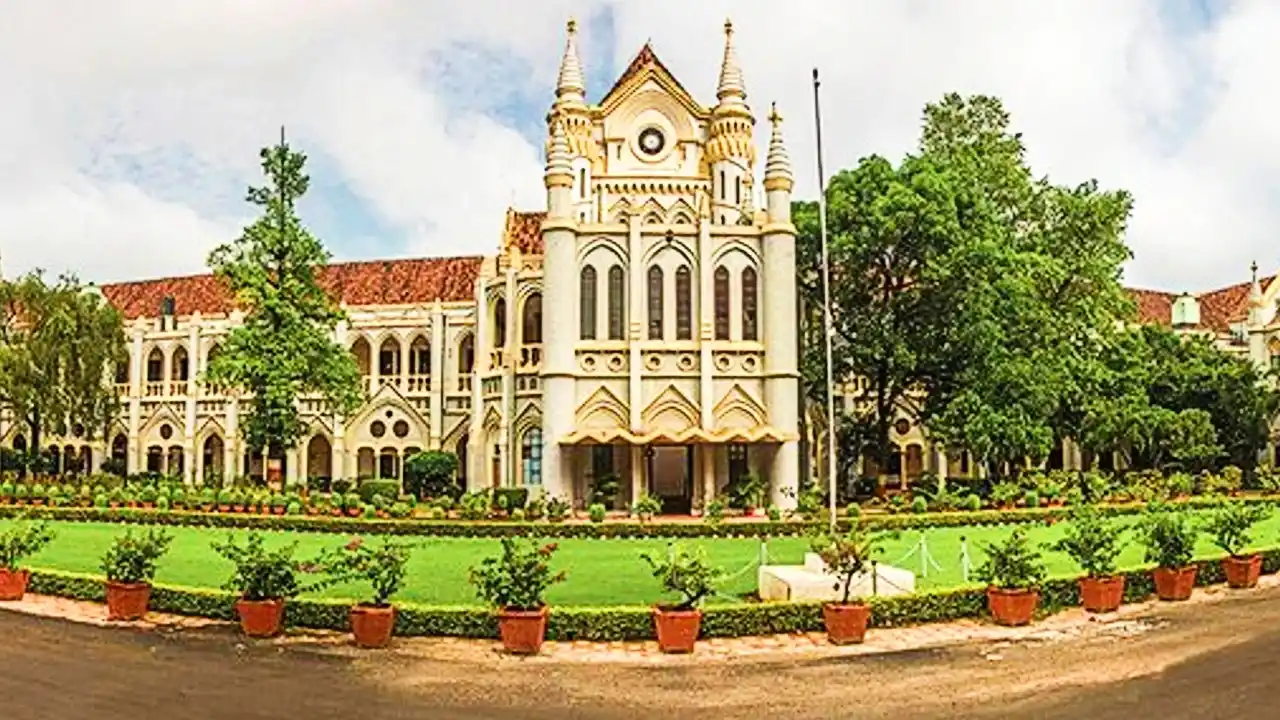
The Madhya Pradesh High Court has partly allowed a petition filed by a journalist accused of demanding money in exchange for not publishing a news report. While the court quashed the cheating charge against him, it ruled that the allegation of extortion must be examined during trial.
The case was heard by the High Court bench presided over by Justice Himanshu Joshi at Jabalpur, which emphasized that journalism is a crucial pillar of democracy but cannot be used as a means to seek unlawful gain.
Background of the Case
The case began with a complaint lodged by Koklal Yadav, who claimed to be the District President of the Yadav community in Seoni district. According to the complaint, an incident took place on 18 July 2023 when several individuals were gathered near Yadav Lodge in Ghansaur.
The petitioner, Lakhan Singh Solanki, allegedly approached the group and introduced himself as a journalist working with the newspaper “Pradesh Today.” He reportedly informed them that a memorial dedicated to former Madhya Pradesh Chief Minister Babulal Gaur was being constructed on land that allegedly belonged to “Gauthan” (village common land).
The complaint alleged that the journalist demanded ₹10,000 and warned that if the money was not paid, he would publish negative news about the construction and the people involved.
When the complainant refused to pay the amount, the journalist allegedly published a report on 22 July 2023 highlighting alleged irregularities in the construction project. The complainant claimed that the article was false and intended to pressure and defame him.
Following the complaint, police registered an FIR under Sections 384 (extortion) and 420 (cheating) of the Indian Penal Code. After investigation, a charge sheet was filed before the trial court.
Arguments Presented in Court
The petitioner argued that he was an accredited journalist and had been serving as the Bureau Chief of “Pradesh Today” in Ghansaur since 2018. His counsel submitted that the news article published on 22 July 2023 was merely a report based on a memorandum submitted to the District Collector by the Gondwana Ganatantra Party, which raised objections about the construction of the memorial.
It was argued that the report was part of routine journalistic work and that the allegations had been given a criminal colour in order to suppress legitimate reporting. The petitioner also pointed out that the FIR was registered with an unexplained delay.
On the other hand, the State opposed the petition and argued that the FIR contained clear allegations that the journalist demanded ₹10,000 while threatening to publish adverse news if the amount was not paid. Witnesses mentioned in the complaint had supported the allegation during investigation, the prosecution told the court.
Court’s Observation
The High Court examined the legal ingredients of the offence of cheating under Section 420 of the IPC. Justice Himanshu Joshi observed that cheating requires deception and fraudulent inducement that leads to delivery of property.
The court found that even if the allegations in the FIR were accepted at face value, there was no claim that the complainant had been deceived or induced into delivering property through fraud.
“The foundation of cheating is deception,” the court noted, adding that the allegations primarily involved a demand for money accompanied by a threat to publish news.
Therefore, the essential elements required to establish the offence of cheating were not present in the case.
However, while analysing the allegation of extortion, the court observed that extortion involves putting a person in fear of injury - including injury to reputation - in order to obtain property.
In this case, the allegation that the journalist demanded money while threatening to publish damaging news could fall within the definition of extortion under the IPC. The court held that the statements recorded during investigation prima facie indicated such a demand.
“Whether the demand was actually made or whether the allegations are false are matters that must be examined during trial,” the bench observed.
Freedom of Press and Its Limits
Before concluding the order, the court made important observations about the role of journalism in a democracy.
Justice Joshi remarked that journalism is a noble profession and serves as a watchdog for society by informing the public about matters of public interest. Reporting on issues such as public land use and compliance with statutory requirements falls within the legitimate scope of journalistic inquiry.
At the same time, the court warned that freedom of the press cannot be used as a tool for personal gain.
“The shield of press freedom cannot be permitted to become a weapon for extracting unlawful gain,” the court said.
Court’s Decision
After analysing the allegations and legal provisions, the High Court passed a partial relief order.
The court quashed the criminal proceedings related to the offence of cheating under Section 420 IPC, stating that the essential ingredients of the offence were not satisfied.
Read also:-Delhi High Court Rules Resignation Ends Past Service Benefits; Ex-KVS Teacher Not Entitled
However, it allowed the prosecution under Section 384 IPC (extortion) to continue. The trial court has been directed to proceed with the case in accordance with law, without being influenced by the observations made in the High Court order.
The petition was accordingly partly allowed.
Case Title: Lakhan Singh Solanki v. State of Madhya Pradesh & Others
Case No.: MCRC No. 43258 of 2024
Decision Date: 25 February 2026


