

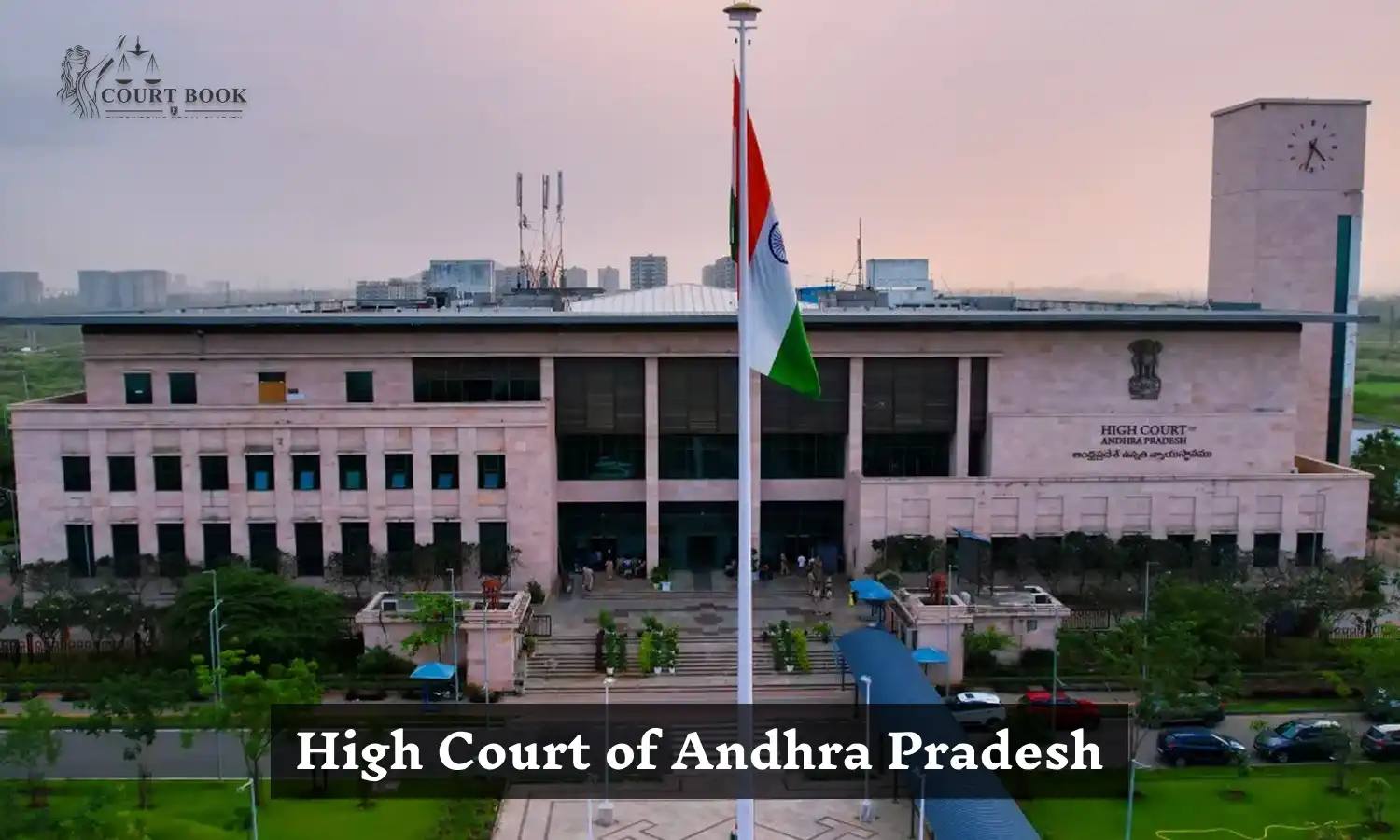
In a strongly worded judgment, the Andhra Pradesh High Court has set aside a tender issued by the Andhra Pradesh State Road Transport Corporation (APSRTC) for allotment of commercial spaces at Yerraguntla Bus Station, holding that the process encouraged monopoly and violated principles of fairness. The Court also dismissed multiple writ petitions filed by a single contractor who had challenged the cancellation of his licences.
Background of the Case
The case arose from four connected writ petitions filed by V. Rabbani Basha, a contractor from YSR Kadapa district. He had earlier secured licences to operate multiple commercial stalls at Yerraguntla Bus Station under tenders issued in 2022.
Read Also:- Ganja Seizure Case: Calcutta High Court Grants Bail Over Violations in NDPS Procedure
According to the petitioner, APSRTC abruptly terminated his licences in November and December 2023 and later issued a fresh tender on January 4, 2024. He challenged both the termination orders and the fresh tender, alleging violation of natural justice and arbitrariness.
The petitioner claimed that he was unlawfully removed despite having valid agreements and that the fresh tender was issued without resolving his grievances.
Corporation’s Stand
APSRTC, however, told the Court a different story.
The transport corporation submitted that the petitioner had violated licence conditions by sub-letting multiple stalls to third parties, which was expressly prohibited. It placed on record written statements from sub-tenants who admitted paying rent to the petitioner. Bank transaction details were also produced to support this claim.
APSRTC argued that the petitioner had not only defaulted on licence conditions but had also misused public property for personal gain.
Court’s Observations
After examining the records, Justice Gannamaneni Ramakrishna Prasad made sharp observations on both the petitioner’s conduct and the tendering process adopted by APSRTC.
“The petitioner approached the Court with unclean hands,” the Bench observed, noting that despite clear evidence of sub-letting, he claimed illegal occupation by others.
The Court held that:
• The petitioner violated licence conditions by sub-letting shops.
• He failed to rebut documentary evidence produced by APSRTC.
• Termination of licences was justified.
• His challenge to the tender lacked merit.
The Court also criticized APSRTC for allowing one individual to hold multiple licences, calling it a “pernicious practice” that encourages monopoly and misuse of public property.
“The State cannot distribute its resources in a manner that creates vested interests or monopolies,” the Court said, referring to constitutional principles under Articles 38 and 39.
Strong Words on Public Property and Fairness
The judgment extensively referred to Supreme Court rulings to stress that public property must be allotted transparently and fairly.
The Court noted that government contracts and licences are not private favors but public trust. It warned that allowing one person to corner multiple stalls defeats the purpose of equitable distribution and violates the spirit of the Constitution.
“The State is a trustee of public resources. Any action that promotes concentration of wealth or unfair advantage is against public interest,” the Court observed.
Final Decision
• The writ petition challenging termination of licences was dismissed.
• The tender notification dated January 4, 2024 was quashed.
• APSRTC was directed to issue a fresh tender, ensuring one person cannot bid for multiple stalls.
• All deposits paid by bidders must be refunded within three weeks.
• Other connected petitions were declared infructuous.
The Court concluded by directing APSRTC to reform its tender process to prevent monopolies and ensure fair access to public resources.
Case Title: V. Rabbani Basha v. State of Andhra Pradesh & Ors.
Case Numbers: WP Nos. 31871 & 32835 of 2022; 30041 of 2023; 1690 of 2024
Case Type: Writ Petition (Service / Contractual Dispute)
Decision Date: 05 January 2026


